
 By 3dzyk
 Multi-color printing is good, but it still doesn’t compare to multi-heads.
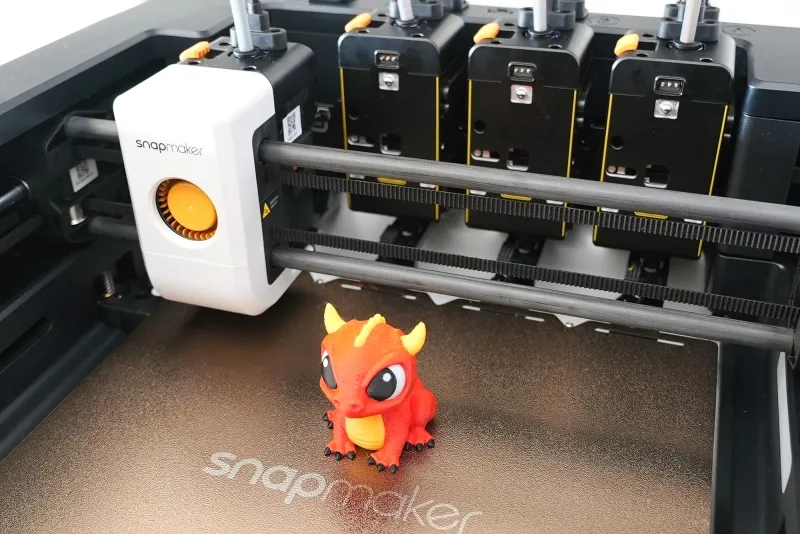
Undoubtedly, Snapmaker is the pioneer of this wave. So, let’s start by talking about its story.
To be honest, there was a time when Snapmaker nearly vanished from the domestic market. No one expected it to become so popular now.
Snapmaker was founded in August 2016 and is headquartered in Nanshan District, Shenzhen. It is a technology enterprise specializing in the research, development, production, and sales of desktop multifunctional 3D printers. Its legal representative is Chen Xuedong.
Its core product is the all-in-one Snapmaker 2.0 3D printer, which integrates 3D printing, laser engraving, and CNC carving capabilities.
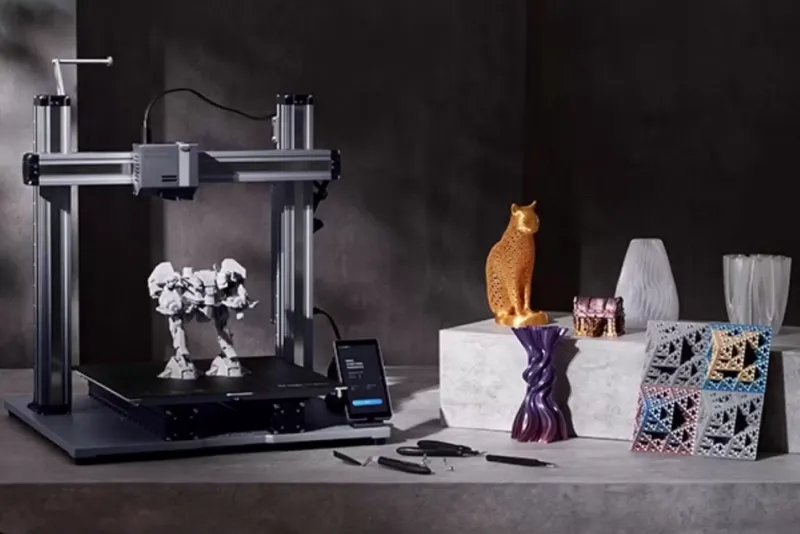
In the past, this device priced at over 2K USD made it seem somewhat “out of place” in the consumer-grade 3D printing market. Moreover, its primary market was concentrated overseas, leading many audiences in China to assume that “Snapmaker” was a foreign brand upon hearing the name.
It wasn’t until August 2025, when the Snapmaker U1 was launched, that the situation changed. By attracting 20,680 backers on the Kickstarter crowdfunding platform and raising a total of $20.61 million, it set a new global crowdfunding record for 3D printers. Shortly after, in October, KuaiZao Technology completed its Series B financing round, securing joint investments from institutions such as Meituan and Hillhouse Capital.

Just like that, Snapmaker skyrocketed to fame with a multi-material device, and the launch of the U1 ignited public enthusiasm for multi-material technology.
Alright, that wraps up the story of Snapmaker. Now, let’s look ahead to 2026 and explore how multi-material technology in consumer-grade 3D printing will evolve.
Before talking about multi-heads, let’s speak of multi-color
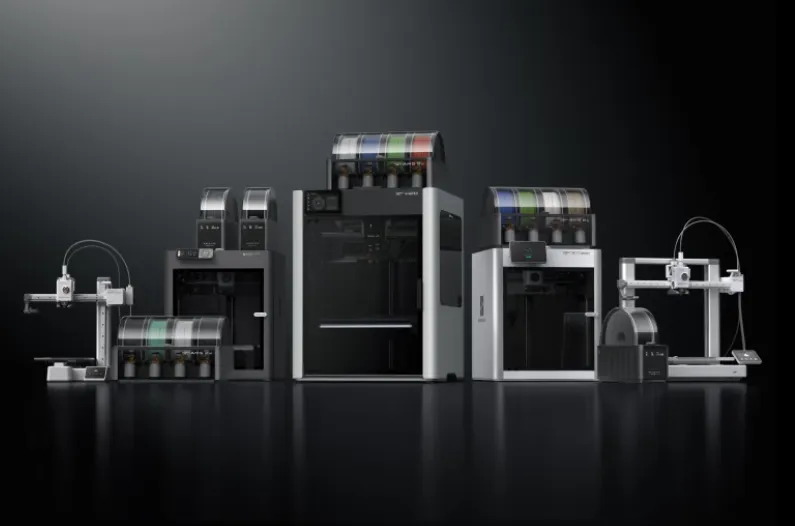
Indeed, when it comes to multi-color printing, how can we not mention Bambu Lab? It was Bambu Lab that propelled consumer-grade 3D printers into the 2.0 era, making high speed and multi-color printing the new industry standards.
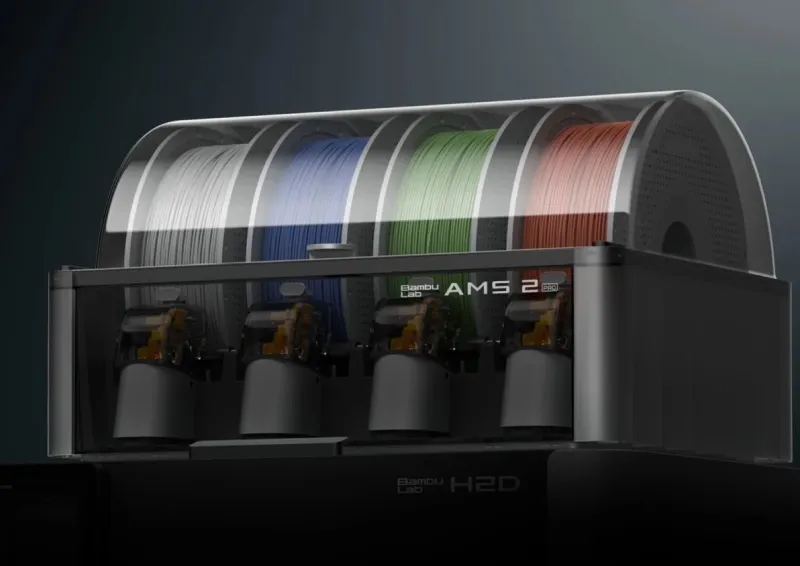
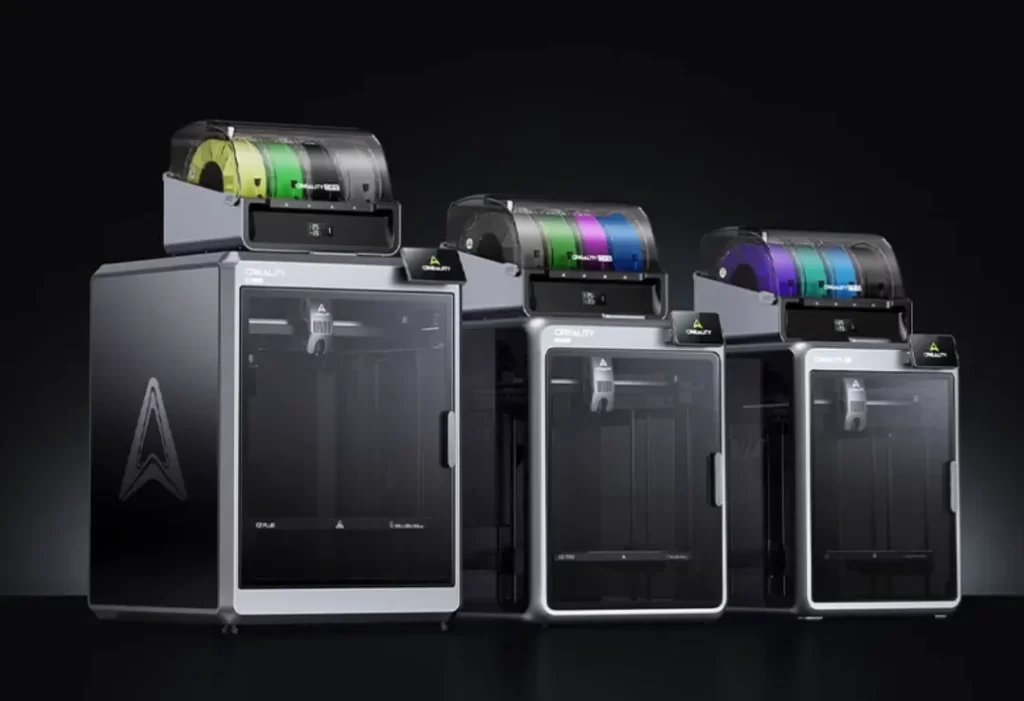
Especially its AMS (Automatic Material System), combined with H2D dual-nozzle technology, enables printing with up to 25 colors. Following this, Creality introduced the CFS multi-color system based on a similar technical approach, and Anycubic launched the ACE system as well.
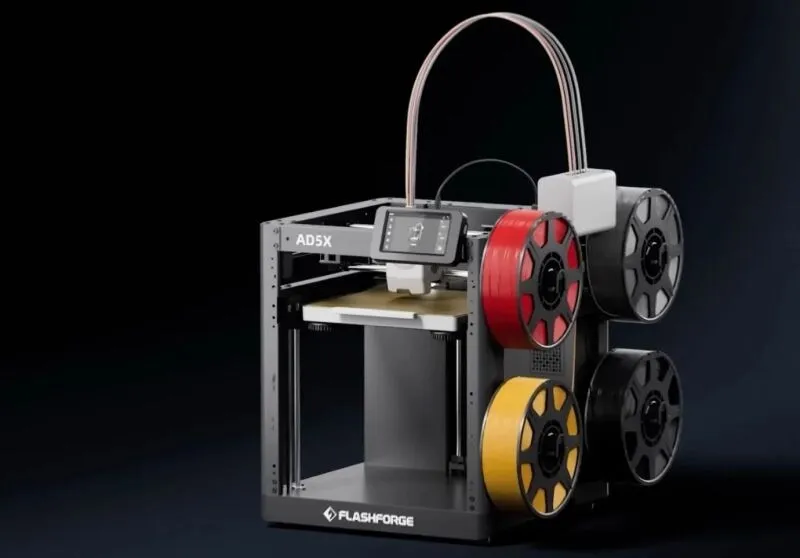
Another solution is Flashforge’s IFS four-color system, which is integrated with the AD5X 3D printer and mounted on the side of the machine. Similarly, Elegoo’s CC2 adopts a comparable approach, achieving four-color expansion through the CANVAS main unit, and comes with an enclosed chamber by default.
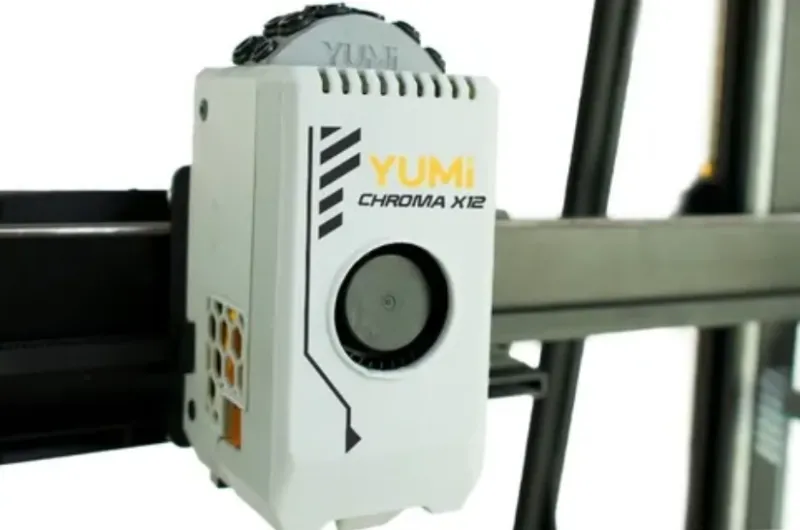
Finally, there is another multi-color solution that has not yet been officially launched. The YUMI 3D printer, which successfully raised funds on Kickstarter, achieves 12-color printing through its YMS material feeding series. Each box is responsible for one color, and the entire machine uses a single extruder and nozzle.
Additionally, Anycubic previously hinted at a four-in-one-out multi-color solution, which is expected to be unveiled soon.
With Bambu Lab officially announcing its entry and newcomers like Atom Remodeling joining the fray, the multi-color 3D printing landscape is heating up.
When it comes to multi-color 3D printing, the most common complaints are material waste and excessively long printing times—precisely the issues that multi-material technology aims to solve. So, which players will enter the scene in 2026? Clearly, Bambu Lab is poised to claim a significant share. Unlike Snapmaker, which replaces the entire toolhead, Bambu Lab focuses only on swapping the “hotend”.
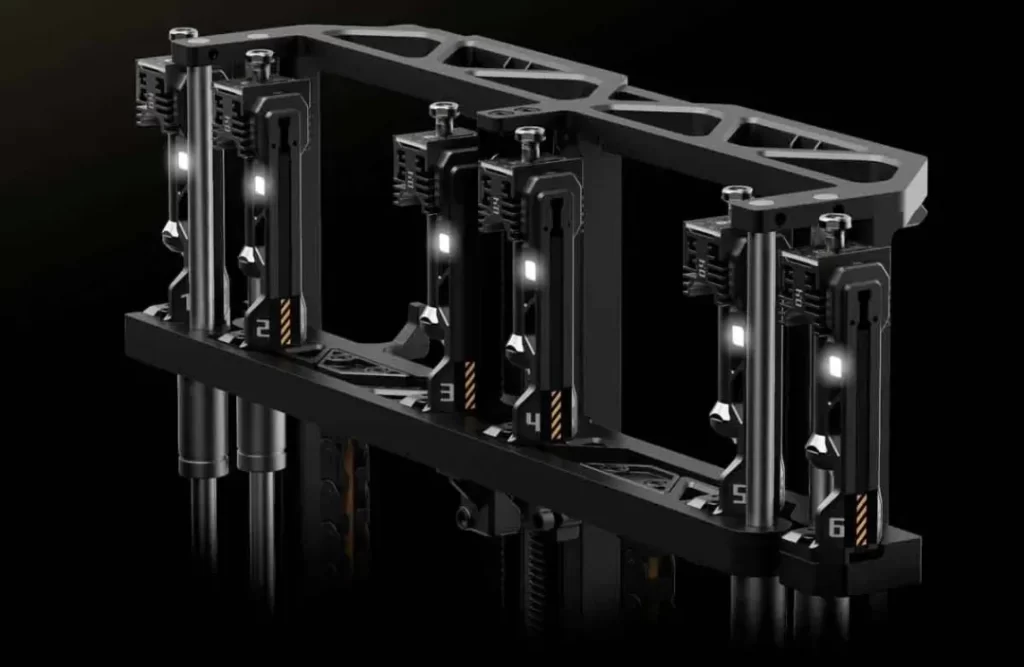
August 26th: Bambu Lab officially announced that its new H2C 3D printer, developed over three years, will be launched before the end of 2025. The H2C will be equipped with a brand-new Vortek automatic ‘hotend’ switching system, supporting free switching between up to 7 hotends.
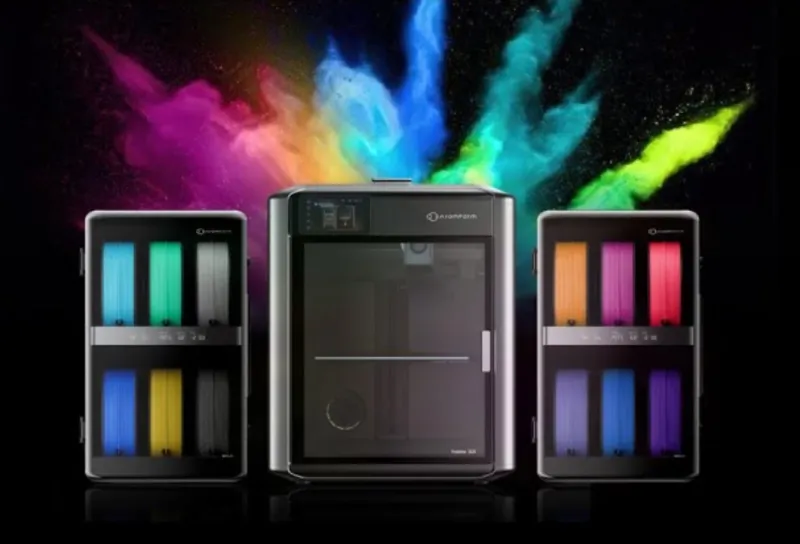
Also in August, the 3D printing startup Atom Remodeling announced the launch of the Palette 300, which features a 12-nozzle automatic tool-changing design. Currently, there is no further information available. The brand maintains a low profile, rarely making public statements.
It is understood that Lightweight Manufacturing, founded by Wang Zhiyu, the former head of Anker Innovation’s 3D printer division, is also developing a multi-material machine and already has a prototype.
Furthermore, according to industry sources, leading companies such as Creality, Anycubic, and Flashforge are also developing multi-material machines, with specific release dates expected in 2026.
The above primarily mentions domestic Chinese companies, and I almost forgot to mention the Czech company Prusa Research.
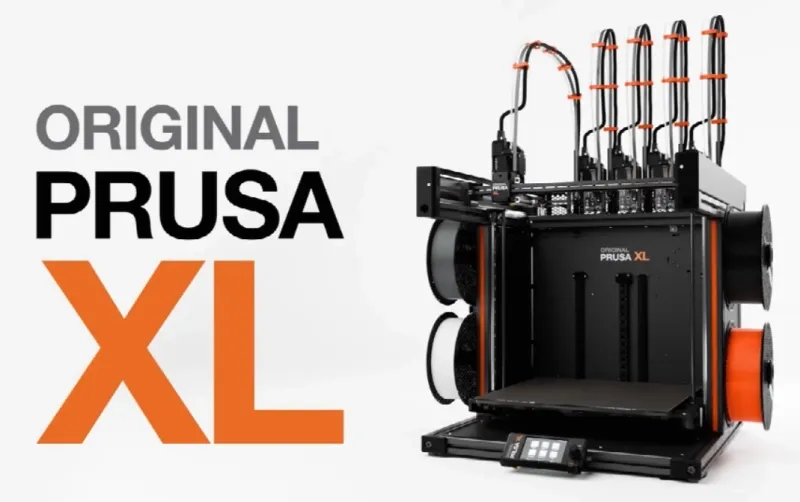
This veteran 3D printing company, founded in 2012, is truly remarkable for its resilience. It was also one of the first to launch a commercial multi-nozzle printer, with its Prusa XL supporting up to 5 nozzles for printing. However, its price tag of over 20,000 yuan has deterred many, leading to its relatively low profile in the broader market.
Moving Left, consumer adoption accelerates; Moving Right, the farm may usher in the 2.0 era.
Some may question if we are overstating the advantages of multi-nozzle technology, but I believe time will provide the answers.
In 2025, a key term increasingly mentioned by media in relation to 3D printers is “consumer product.” And just in September, eight departments including China Ministry of Commerce jointly issued the “Guiding Opinions on Vigorously Developing Digital Consumption and Co-creating a Better Life in the Digital Age,” which explicitly includes desktop-grade 3D printing equipment as a key focus area for “digital product consumption.”
In the past, consumer-grade 3D printers achieved high sales volumes YoY, and over 80% were exported overseas. According to the latest statistics, it is estimated that 4.5 million 3D printers will be exported in 2025. By simple math, this means domestic sales this year will only be about 1.1 million units, indicating there is still significant potential for growth.
Now, the price of machines has dropped by approximately 60% compared to three years ago, with many manufacturers pushing prices into the two to three thousand yuan range. This is just the beginning. With the launch of multi-head technology next year and a new wave of machine upgrades, prices are expected to fall further. The day when 3D printing enters ordinary households is getting closer.
If multi-head 3D printers see widespread adoption in 2026, the emerging field of 3D print farms may also enter its 2.0 era. Most farms still focus on mass-producing toys, with popular items on the market like Chinese dragons, dragon eggs, and retractable swords often coming from these farm operators.

The current bottleneck lies in the limited color variety. If toys could be produced in more colors, they would undoubtedly attract a larger audience. And when multi-color printing no longer requires exponentially more time and material, it will drive a wave of machine upgrades. At that point, farms are likely to scale up significantly. Of course, the barrier to entry will also rise—perhaps requiring at least 500 units to start operating.
This is what we’ve considered so far. We forgot to mention that multi-head isn’t just about multiple colors; it also supports multiple materials.
This opens up even greater possibilities. It could be used not only for printing toys but also for shoes, and many other applications we haven’t yet discovered.
In conclusion, 2026 will be the inaugural year for the explosion of multi-head 3D printing, potentially reshaping the existing market landscape.
Without a doubt, Snapmaker, which fired the first shot in domestic multi-head 3D printing, has already emerged as the biggest winner.
 li, chen