
 By li, chen
Introduction: In the past, LPBF metal 3D printing often meant expensive equipment, complex powder handling, and cumbersome post-processing. Now, SnowX Technology has brought a rather different desktop-grade metal 3D printer, attempting to make metal 3D printing as simple as FDM.

To what extent must a metal 3D printer be refined before it can truly reach an ordinary person’s workbench?

Metal powder installed like a copier toner cartridge, automatic recovery and sieving of powder after printing, support structures removable with a pair of pliers, and even slicing operations made as simple as possible—like FDM.
At the 2026 TCT Shenzhen exhibition site, Xu Fangda, head of SnowX Technology, demonstrated to 3Dzyk this desktop-grade LPBF metal 3D printer called SnowPod.

In his view, to enable more people to use metal 3D printing, three issues must first be addressed: printing precision, safety and health, and ease of use and cost.
01 Can metal powder be used like a toner cartridge?
For LPBF metal 3D printing, powder handling has always been an important factor affecting the barrier to equipment use.
SnowX Technology first changed the traditional powder feeding method.
The SnowPod uses independent sealed powder bottles. Users simply insert the powder bottle into the device, just like installing a copier toner cartridge.
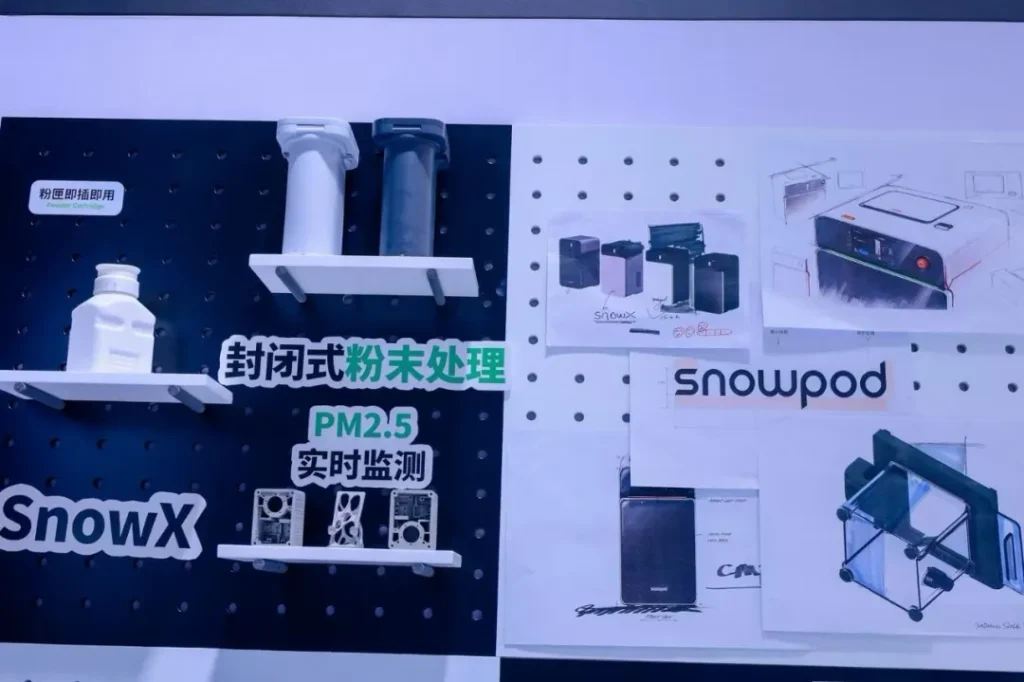
After printing is complete, the device’s built-in vacuum recovery system automatically recovers remaining powder, filters coarse particles through a sieving device, and returns usable powder to the bottle for cyclic reuse.
More noteworthy is the part retrieval process.
The SnowPod features a double-layer chamber door design. When the outer door is opened, the inner door remains closed. After the user installs a sealed transfer box, the device automatically sends the build plate along with the parts into it, reducing powder exposure.
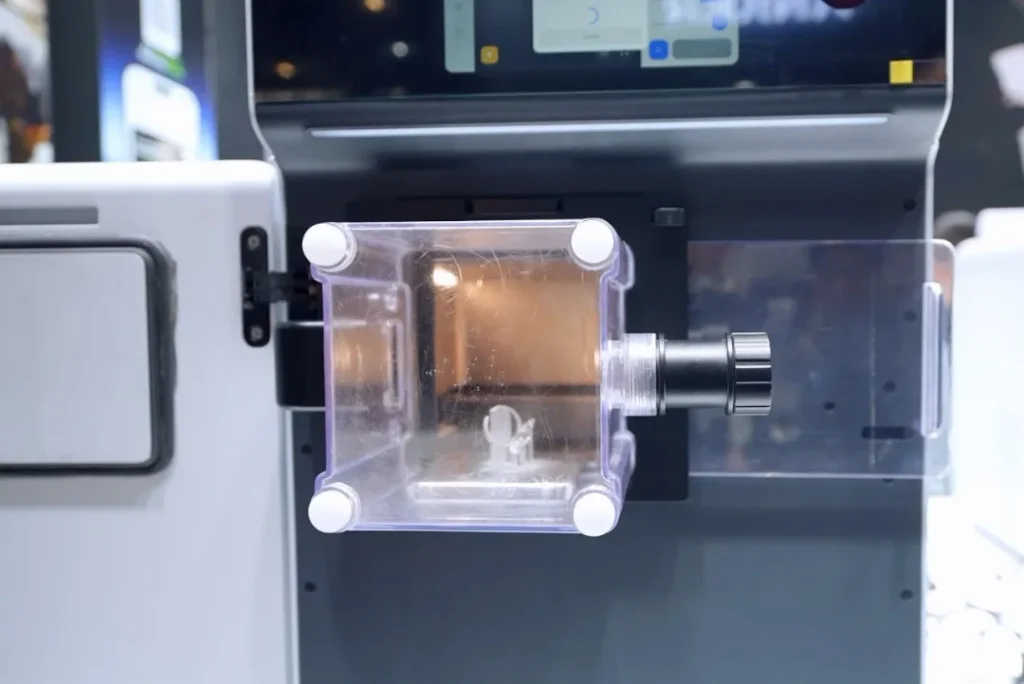
Before retrieving parts, an appropriate amount of water can be added according to operating procedures to moisten residual powder and reduce dust risk.
Additionally, the device integrates two sets of HEPA H13 filters and a terminal H14 filter, and is equipped with a PM2.5 monitoring sensor.
From powder feeding, printing, and recovery to part retrieval, SnowX Technology is working to confine metal powder within a closed system as much as possible. And powder safety is precisely an important reason why many people have previously been deterred from metal 3D printing.
02 After printing, supports can be removed with a pair of pliers
Beyond powder management, post-processing of metal 3D printing is equally troublesome.
Traditionally, LPBF-printed parts usually require wire cutting or machining to remove supports, which also means additional equipment investment and time costs.
At the interview site, we picked up a pair of pliers and experienced the support removal process on a SnowPod-printed part. It must be said that the operation is indeed simple—just grip the support structure and give it a gentle twist, and it comes off.
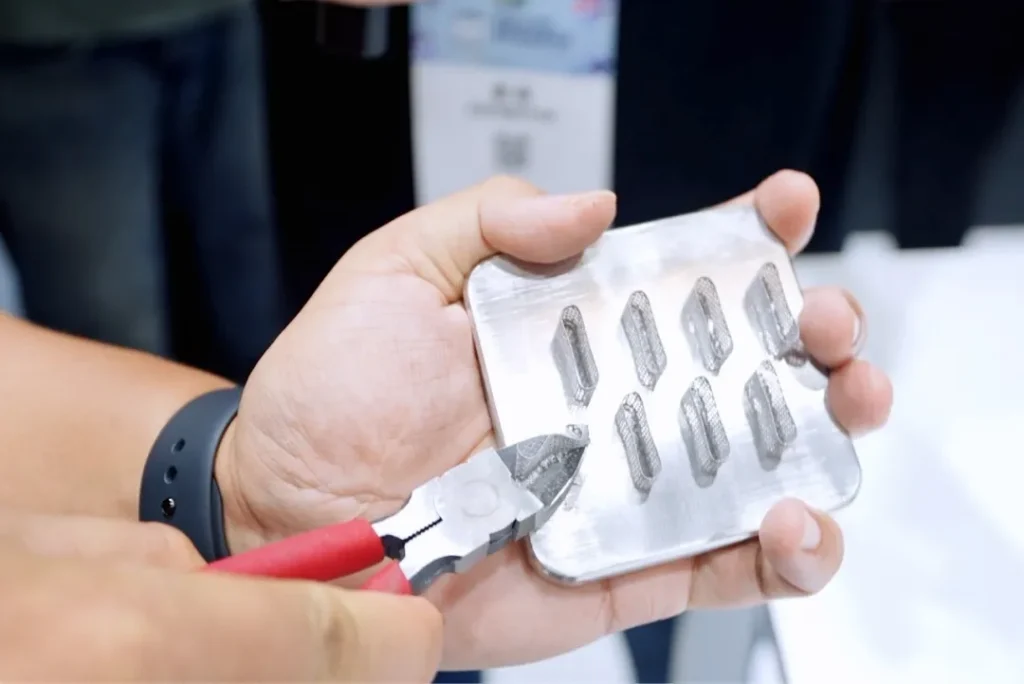
Why is this possible?
On one hand, the SnowPod uses a 40-micron laser spot, capable of manufacturing fine support structures; on the other hand, SnowX Technology has specifically optimized the support geometry so that it maintains necessary strength in the vertical direction while being easier to break in specific horizontal directions.
In this way, the headache-inducing support removal problem in traditional metal 3D printing also has a simpler solution.
03 Software operation like FDM, minimizing the barrier to use
If powder management and post-processing solve operational issues, then slicing software directly relates to the barrier to use.
The SnowPod comes with free slicing software that supports importing STL, 3MF, and other format models.
Users can directly select process modes such as standard, high quality, or efficiency-first, and the software automatically generates printing paths and support structures.
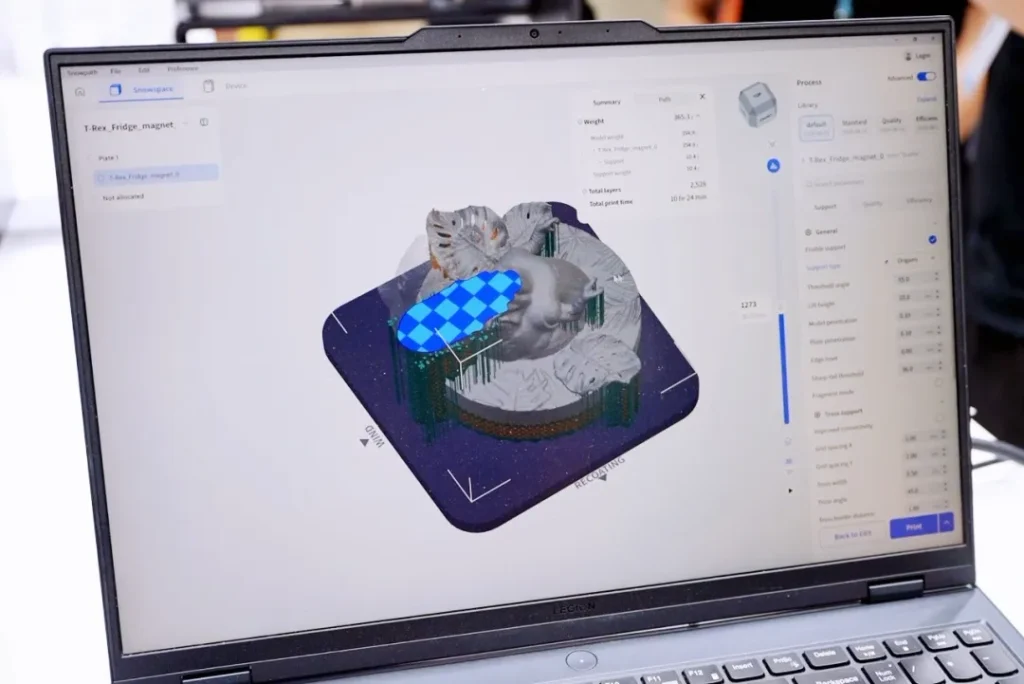
Although the operation flow looks similar to conventional FDM slicing, behind it there is still a need to consider issues such as thermal stress, warping deformation, and scanning path optimization in metal printing.
Xu Fangda admitted: “LPBF slicing is much harder than FDM, but we want to give users an experience that is even simpler than FDM.”
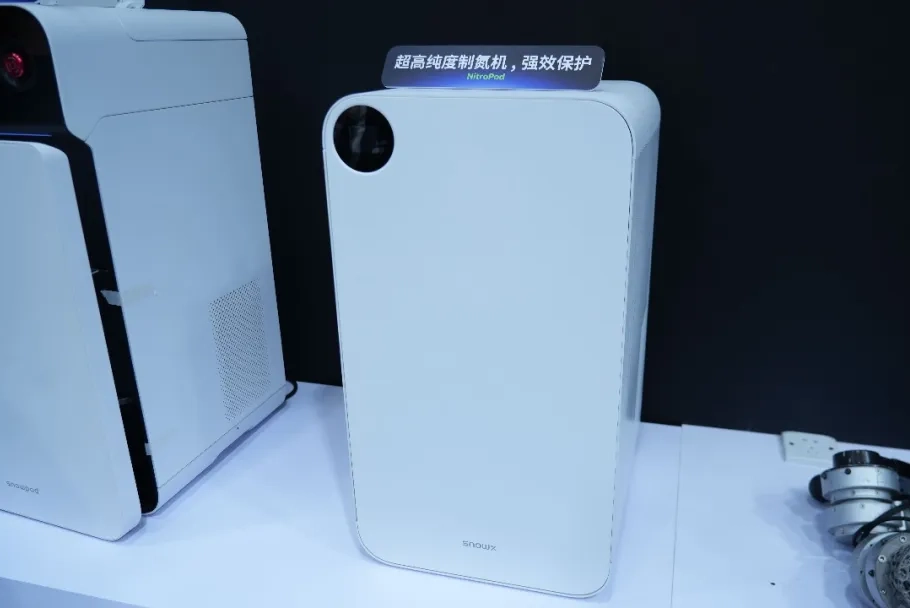
At the same time, SnowX Technology has also developed a companion nitrogen generator with a purity of 99.9%. For printing materials that require nitrogen protection, users simply connect it to the SnowPod to obtain the required protective atmosphere.
The device itself already integrates functions such as powder recovery, sieving, and filtration, minimizing dependence on peripheral equipment.
04 Desktop metal machine SnowPod, expected to launch crowdfunding in November
Regarding pricing, Xu Fangda revealed that the SnowPod is expected to be priced in the range of several tens of thousands of yuan, with specific pricing to be announced soon.
The product is expected to land on the Kickstarter crowdfunding platform before the end of 2026, and domestic users can also participate in ordering. The first batch of equipment is expected to be delivered in summer 2027, with some orders possibly extending into autumn.
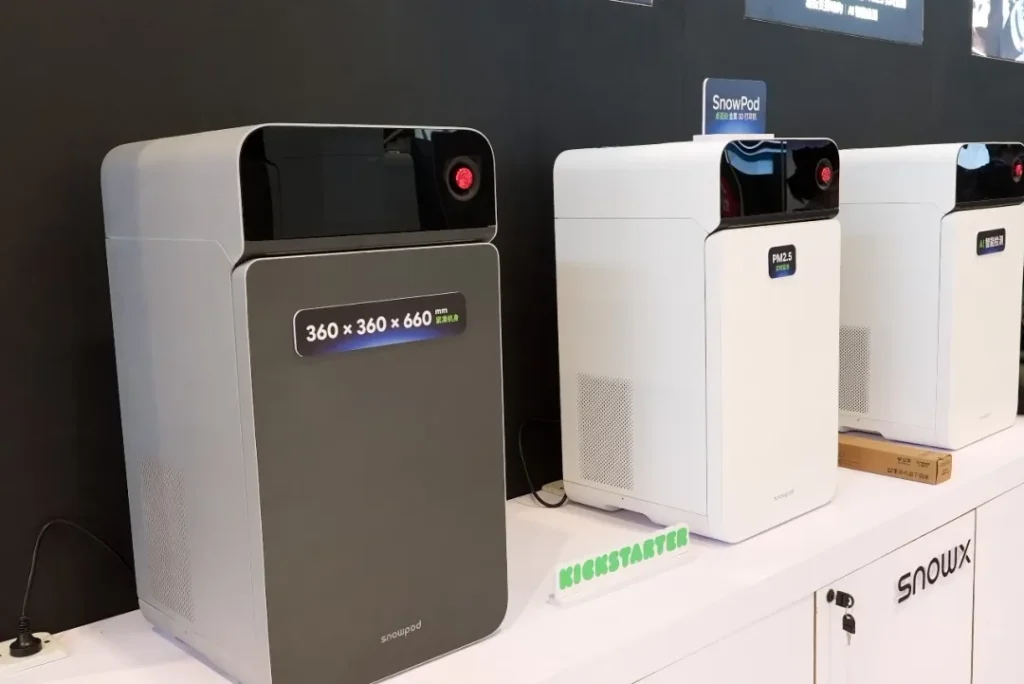
However, desktop-grade does not mean it can be casually used at home.
Xu Fangda stated that users are not advised to place the device in a bedroom or living room; it is more suitable for studios with independent operating space, small R&D teams, and professional creators.
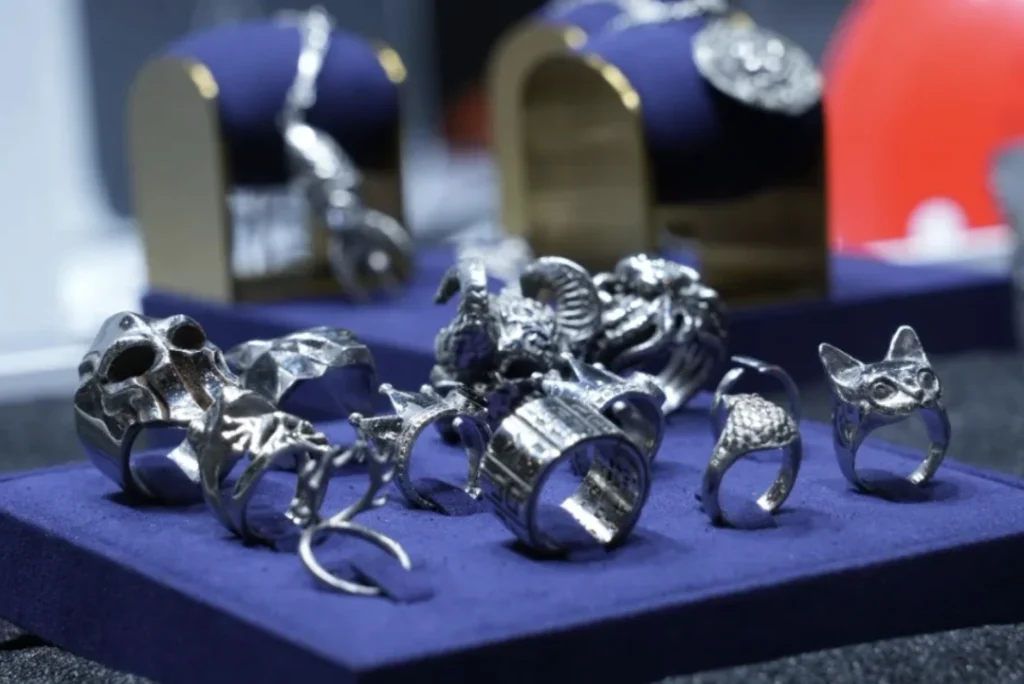
Therefore, what the SnowPod is targeting at this stage is perhaps not ordinary households, but rather users who have metal 3D printing needs but find it difficult to afford the cost of traditional industrial-grade SLM equipment.
Final thoughts
As the saying goes, seeing is believing. When we previously reported on this product, we were somewhat worried about whether it might just be a concept machine that existed only on “presentation format.”

But this time, after seeing the entire operation process with our own eyes on site, we are indeed more confident. SnowX Technology wants to bring metal 3D printing to the desktop, and this really has a chance of succeeding.
When metal 3D printing becomes safer, simpler, and more affordable, it may truly not be far from more people’s workbenches.
And now, SnowX Technology has taken the lead in delivering its answer.
 3dzyk