
 By 3dzyk
In the first half of 2026, Hyundai Motor Group’s combined global sales of Hyundai Motor and Kia reached approximately 3.5973 million units, solidifying its position as the world’s third-largest automotive group.
And this automotive giant—with annual revenue approaching one trillion yuan—is now increasingly ramping up its application of 3D printing technology.

Recently, Hyundai Motor and Kia have further elevated additive manufacturing to a new strategic level by establishing the Additive Manufacturing Solution Center (AMSC) at their Namyang R&D Center in South Korea—a facility dedicated exclusively to additive manufacturing research and production.
Hanwoo On, Senior Manager of the Additive Manufacturing Solutions Team at Hyundai Motor and Kia, stated: “As the application of additive manufacturing continues to expand within the group, we are accelerating the internalization of related technologies. Beyond automotive components, this technology is also gradually expanding into high-value-added application areas such as equipment consumables and manufacturing tools.”
Two material types, multiple processes
It is understood that AMSC currently demonstrates at least 5 different 3D printing processes, capable of printing both plastic parts and manufacturing metal parts.
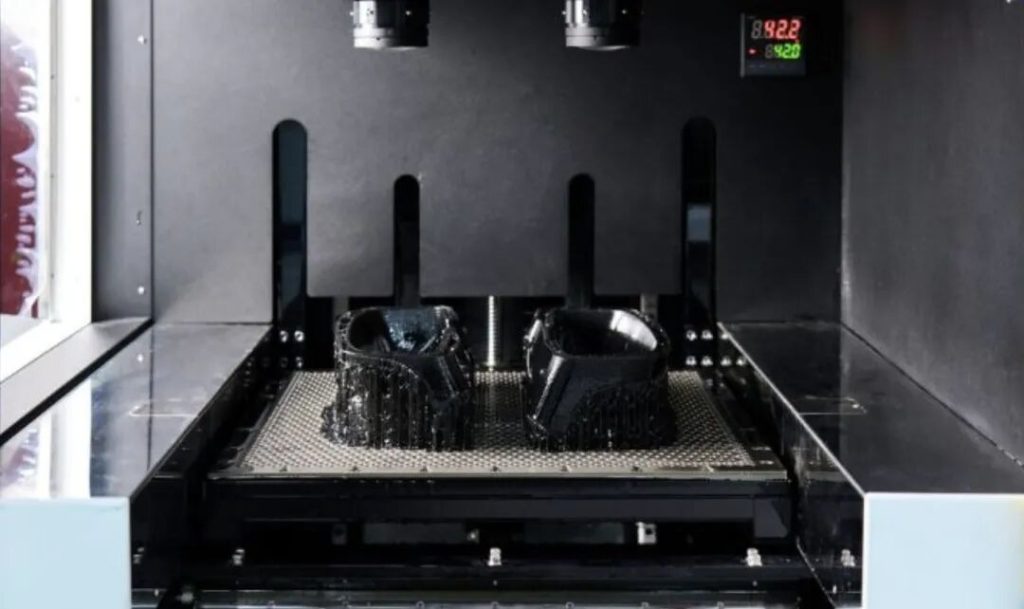
In polymer 3D printing, AMSC primarily employs two types of technologies.
One is Digital Light Processing (DLP) and Stereolithography (SLA), both of which cure liquid resin through light exposure to print parts, making them more suitable for design validation parts and prototypes that require high dimensional accuracy and fine surface details.
The other is Selective Laser Sintering (SLS), which primarily sinters powder materials with a laser to form parts, making it more suitable for manufacturing larger, higher-strength components.
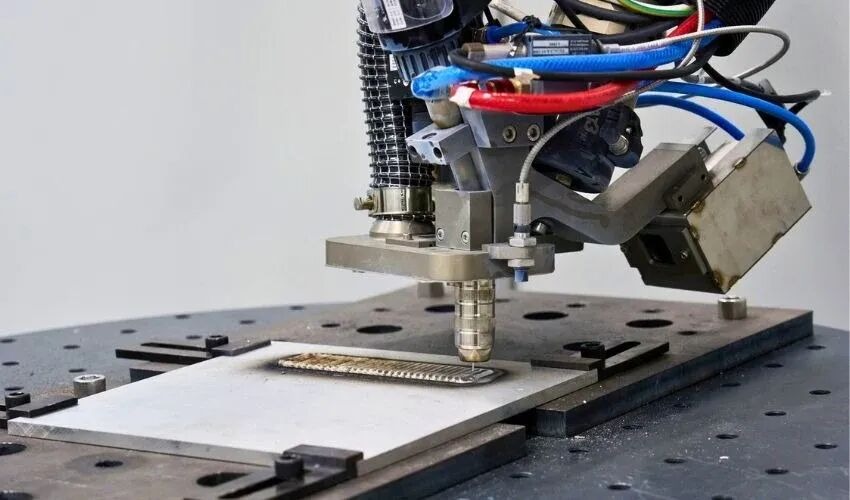
In metal 3D printing, AMSC primarily uses Laser Powder Bed Fusion (LPBF) and Directed Energy Deposition (DED) technologies. Among these, DED also includes Wire Arc Additive Manufacturing (WAAM), which can be used for the processing and manufacturing of various metal materials including steel, stainless steel, aluminum, and titanium.
Additive and subtractive integration, forming a complementary relationship
In fact, within Hyundai Motor’s production workshops, 3D printing and CNC machining are not replacing each other, but rather leveraging their respective strengths in coordination.
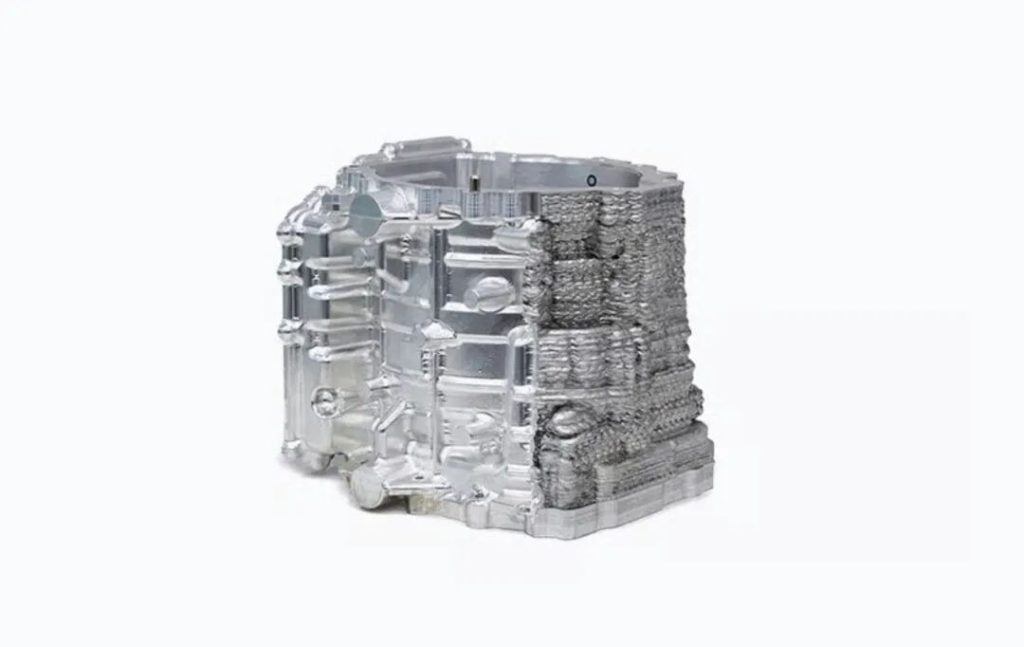
Hyundai Motor demonstrated two states of the same automotive engine housing on site: one was a near-net shape part printed using WAAM (Wire Arc Additive Manufacturing) technology, and the other was the final finished product after CNC finishing based on the printed part.
WAAM can quickly manufacture larger metal parts and bring their shapes as close as possible to the final design; subsequently, CNC machining further improves dimensional accuracy and surface quality, bringing the part up to final usage requirements.
Beyond prototyping
In addition to prototype development, AMSC also undertakes the manufacturing of fixtures, maintenance parts for discontinued models, and racing components. For some older models, since the original molds are no longer in use and re-tooling would be too costly, 3D printing becomes a more flexible and economical choice.
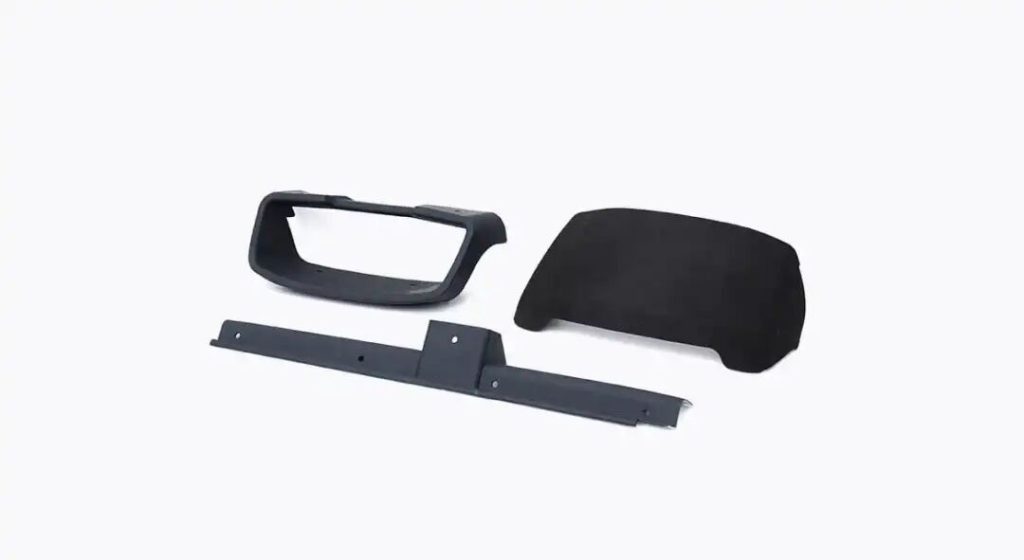
Currently, its applications have already covered components such as anti-roll bar blades, shock absorber brackets, and brake ducting.
Engineers also combine 3D scanning and reverse engineering to digitally reproduce old parts that are discontinued and difficult to source. For example, in a classic car restoration project, AMSC remanufactured side skirts for Hyundai’s first production model, the Pony.
Notably, AMSC concentrates design, 3D printing, post-processing, and quality inspection in one location, not only shortening part manufacturing cycles but also enabling engineers to more flexibly optimize part weight, structure, and performance.
Final thoughts
In fact, Hyundai Motor is not the only automotive giant to establish a dedicated additive manufacturing center. BMW, General Motors, Ford, and other automakers have long set up similar facilities, gradually expanding 3D printing from prototyping to fixtures, spare parts, and final component manufacturing.
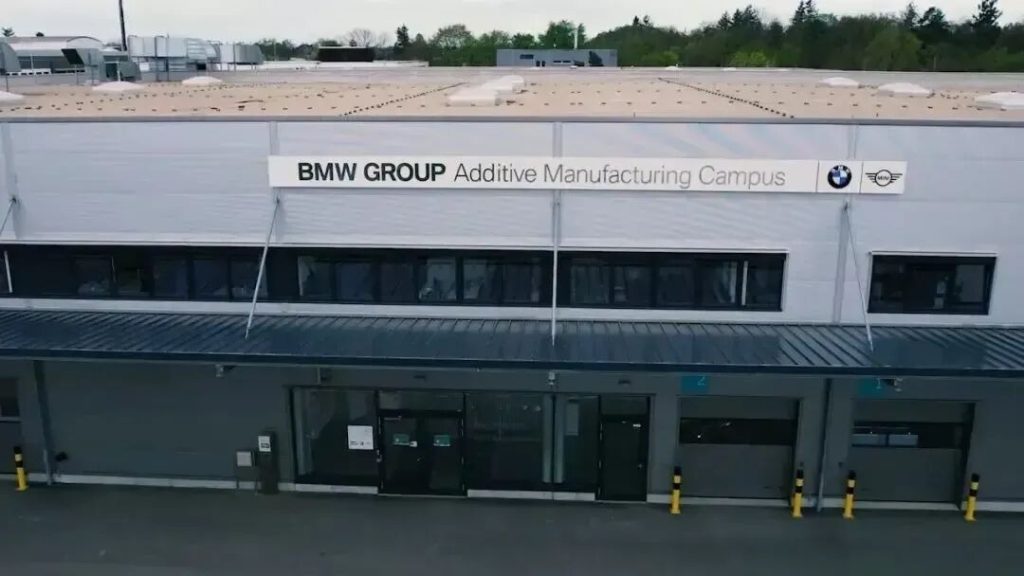
Among them, BMW’s Additive Manufacturing Campus (AMC) was officially put into operation in 2020. Since its launch, the campus has cumulatively produced more than 1.6 million additive manufacturing parts.
As Timo Goebel, Head of Additive Manufacturing at BMW Group, said: Today, additive manufacturing has been fully integrated into the entire product lifecycle. It is foreseeable that more and more automakers will follow this path in the future.
 li, chen
 tan, wenjie