
 By tan, wenjie
 Acquisitions, bankruptcies, delistings… In 2025, the “finale” for 3D printing SPAC companies: a total wipeout.

On July 28, 2025, Desktop Metal announced that it had filed for Chapter 11 bankruptcy protection in the United States.Once hailed as a “3D printing unicorn” and valued at tens of billions of dollars, this star company ultimately met its end in bankruptcy. It is particularly poignant to note that just months earlier, it had been acquired by Nano Dimension for $179 million. Now, it seems even this parent company is attempting to distance itself from it.

For a company, perhaps the most terrifying fate is not “failing to raise funds” nor “being sold,” but rather “becoming worthless.”
Desktop Metal’s predicament is not merely an individual failure but rather a reflection of an era: The age when 3D printing companies could raise capital simply by going public via a SPAC and telling a compelling story has come to an end.
From riding the wave of hype to crashing back down to earth—it took only five years.
In 2020, Desktop Metal pioneered the path for 3D printing companies to go public by merging with the SPAC Trine Acquisition Corp., listing on the New York Stock Exchange (NYSE). Subsequently, companies like Markforged, Velo3D, and Shapeways followed suit, also going public via SPACs. For a time, 3D printing became the new darling of capital markets, with unprecedented hype surrounding expectations of “the next industrial revolution.”
However, by 2025, almost none of these once-high-flying public companies had lived up to their promises, ultimately meeting with failure. Next, let’s review the trajectories of these typical SPAC-listed companies.
1. Desktop Metal
Desktop Metal was founded in 2015 and is headquartered in Massachusetts, USA. It is a high-tech company specializing in metal and composite 3D printing. Its core technology is Binder Jetting, starting with “desktop metal printing” and later expanding into industrial-grade equipment. In December 2020, the company went public on the New York Stock Exchange via a SPAC merger, with a valuation of approximately $2.5 billion at listing, once regarded as a 3D printing “unicorn.”
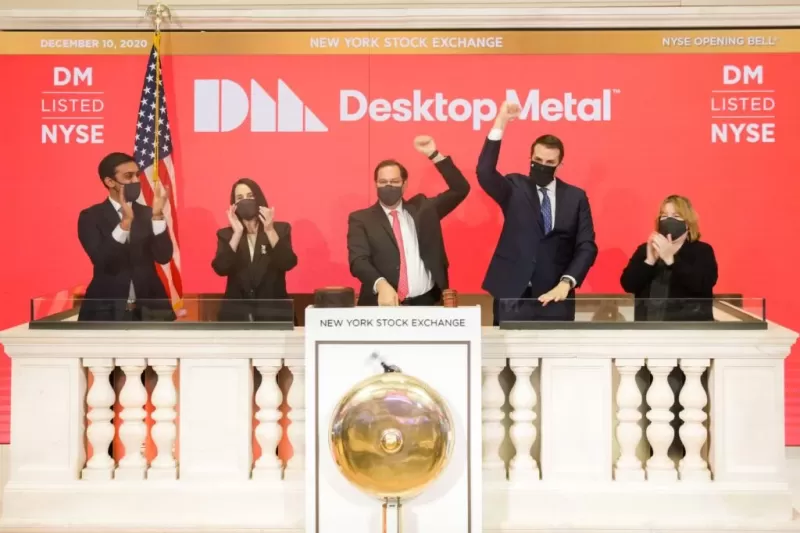
However, the post-IPO large-scale mergers and acquisitions failed to deliver the expected synergies, instead creating financial burdens and integration chaos. Revenue growth stagnated, and cash flow continued to deteriorate, with its stock price plummeting from a high of nearly 30 dollars to less than 1 dollar. In April 2025, Desktop Metal was acquired by **Nano Dimension** for a total of $179 million. In July 2025, Desktop Metal filed for bankruptcy protection.
2. Markforged
Markforged was founded in 2013 and is headquartered in Massachusetts, USA. It is renowned for its continuous fiber reinforcement composite and metal 3D printing technologies. Its products are known for industrial strength and high reliability, widely used in manufacturing, defense, automotive, and other fields. In July 2021, Markforged went public through a merger with SPAC, with a valuation of approximately $2.1 billion.
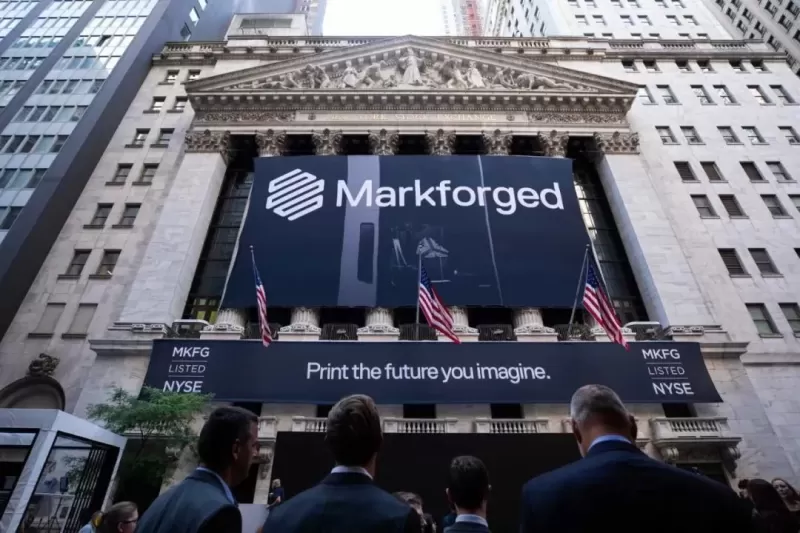
However, since its listing, the company’s growth has fallen short of expectations. Starting in 2023, it implemented layoffs and streamlined operations to focus on high-margin industries. While its equipment is innovative, its high price point and long B2B sales cycles have limited its ability to scale. In 2024, its stock price fell below $0.50, and continuous losses persisted. In April 2025, Markforged was acquired by Nano Dimension for $116 million.
3. Velo3D
Velo3D was founded in 2014 and is headquartered in California, USA. It is a 3D printing company focused on metal Laser Powder Bed Fusion (LPBF) technology, with breakthroughs such as “support-free printing.” Its equipment is widely used in aerospace, energy, and high-end industrial manufacturing, gaining significant attention for orders from clients like SpaceX. The company went public via a SPAC in September 2021, with a valuation of approximately $1.7 billion.

Initially, the market had high expectations. However, due to high equipment costs, concentrated orders, long delivery cycles, and frequent supply chain and management issues, revenue growth remained weak. In 2024, its stock price fell below $1, prompting the company to initiate a reverse stock split in an attempt to maintain its listing qualification. In September 2024, Velo3D was formally delisted from the New York Stock Exchange and now trades under the ticker VLDX on the OTCQX market.
4. Shapeways
Shapeways was founded in 2007 and is headquartered in New York, USA. It started as an online 3D printing service platform, offering on-demand custom printing services to consumers and small-to-medium-sized enterprises. The platform supports multiple materials and printing processes, including plastic, metal, and resin. In September 2021, Shapeways went public via a SPAC, with a valuation of approximately $600 million.
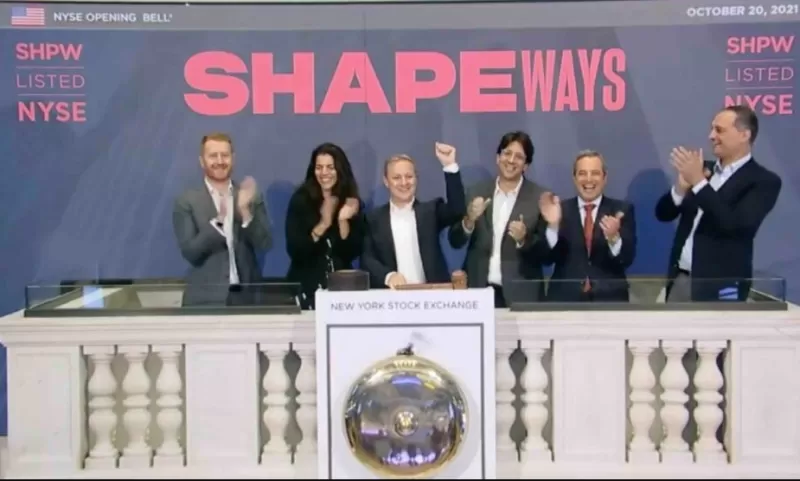
The company attempted to transform into a “digital manufacturing platform” by providing cloud-based design, automated quoting, and manufacturing services. However, its core business grew slowly, and customer retention remained low. After years of continuous losses post-listing, the company underwent multiple rounds of layoffs and closed some overseas sites. In July 2024, Shapeways filed for bankruptcy protection with the U.S. Securities and Exchange Commission, becoming another typical case of the SPAC bubble bursting.
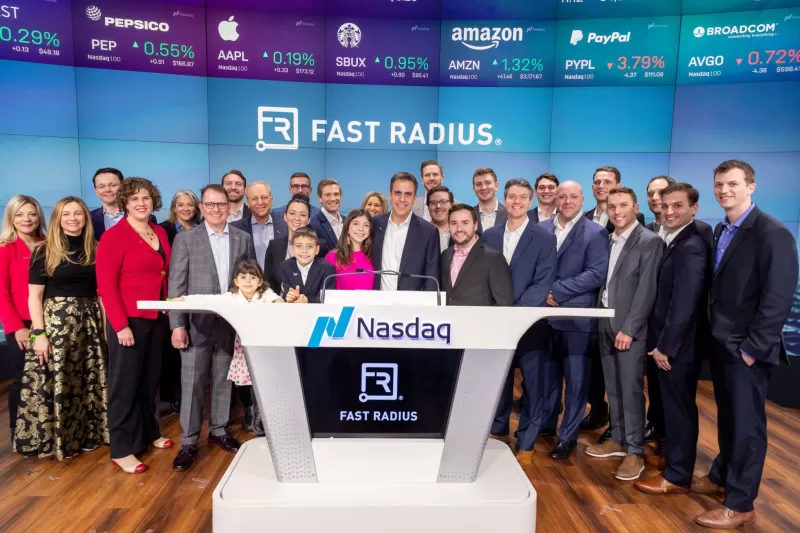
In addition to the four companies mentioned above, there is another named Fast Radius. It was a U.S.-based on-demand manufacturing and 3D printing service platform. It went public via a SPAC in 2022 with a valuation of nearly $1 billion, but due to severe losses, it filed for bankruptcy just nine months later, becoming the fastest-falling publicly listed 3D printing company.
Why all of them are wiped out?
When the veil was lifted, we finally saw: the hype had been blown out of proportion.
Technological leadership does not guarantee commercial success. At the time of their IPOs, they sold a grand narrative about “3D printing imminently revolutionizing manufacturing,” making it seem as if the technology was already omnipotent and on the verge of mass adoption. But the reality is that technological maturity does not equate to market explosion, much less a sustainable business model.
It must be acknowledged that these companies each had their strengths: Desktop Metal focused on metal binder jetting, Markforged specialized in continuous carbon fiber printing, and Velo3D bet on high-performance LPBF systems. Yet the reality is that manufacturing is not rewritten by “disruption,” but rather through gradual “incremental substitution.”
Another crucial point cannot be overlooked: their ability to go public so quickly was largely due to choosing the SPAC path, bypassing the stringent scrutiny of financial health and profitability required in traditional IPOs. Precisely because of this, the seeds of valuation bubbles were sown from the very beginning of their public listings.
When the story ended and the market turned back to examine the “fundamentals,” the problems became gradually obvious. With unproven business models, weak revenue growth, and profitability seemingly out of reach, capital naturally stopped paying the bill.
Key takeaway from mistakes, manufacturing grows step by step
This wave of the SPAC bubble has served as a clear warning: developing a technology doesn’t guarantee profitability; going public via a SPAC merger doesn’t mean the company is mature; and a high valuation certainly doesn’t equate to having a real industry moat.
Another point worth vigilance is avoiding reckless expansion. Take Desktop Metal, for example, which spent billions acquiring peers like ExOne and EnvisionTEC in one go. However, poor integration ultimately backfired, failing to deliver growth and instead piling up more problems.
In the end, capital markets can help solve short-term growth challenges, but long-term sustainability ultimately depends on customers and orders.
Not all publicly listed 3D printing companies have “fallen into the pit.” Established players like 3D Systems and Stratasys have followed a noticeably steadier path.
They started early, have a long history, mature technological roadmaps, and broader process coverage, built on a foundation laid step by step. Whether in technological capability, product portfolio, or channels and after-sales service, these companies have long established closed-loop systems, with healthier business models and stronger risk resilience.
Finally, if we’re talking about the most substantive publicly listed companies in the 3D printing sector, we have to look at Bright Laser Technologies(BLT) and Farsoon Technologies.

These two STAR Market-listed companies are not only the face of Chinese 3D printing industry but have also stepped onto the global stage. As of now, Bright Laser Technologies has a market capitalization of approximately 23.1 billion yuan, and Farsoon Technologies about 22.5 billion yuan, solidly holding the top two positions in the global market capitalization ranking for listed 3D printing companies.
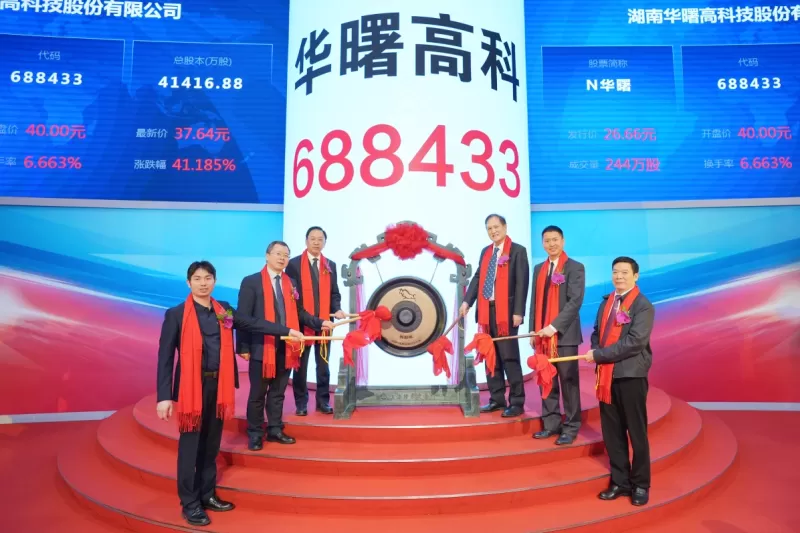
Their strength lies not in how many “concepts” they promote, but in their long-term, deep cultivation of technology and industrial application, truly refining their products and processes to meet the actual needs of their customers. What the 3D printing industry needs is more companies like these—pragmatic, steady, and forward-moving.
It is encouraging to see that a cohort of equally outstanding Chinese companies is also advancing toward the capital markets, including Eplus3D, UnionTech, Creality, BMF Material Technology, eSUN, and Polymaker, which have either initiated or are currently undergoing IPO guidance.
2025 marks the official entry of 3D printing into its next phase. This time, there are no bubbles—what remains is pure substance.
 3dzyk
3dzyk
 li, chen