
 By li, chen
 The exhibition this year was expansive in scale. While numerous opinions have already highlighted the new product launches, rather than delving into technical specifications, I would like to share my observations and impressions from the event. This review is organized into five sections: The Show Itself, The Exhibitors, The Audience, The Media, and The Era of Global Expansion.
1. The Show Itself
Keywords: Premier, Attendance, Distinction
Undoubtedly, this is the largest 3D printing exhibition in China and the broader Asia-Pacific region. Debate continues over whether its scale now surpasses that of Formnext in Germany. In my view, the two events are comparable in size, yet they present distinctly different perspectives on the additive manufacturing industry. Attending both is essential to forming a complete picture of the global landscape.
Halls 7 and 8 represent two distinct worlds: metal versus polymer. Hall 7 exhibits the characteristics typical of industrial trade shows—attendees are formally dressed, and the crowd visibly thins out on the final day. Hall 8, in contrast, has the lively atmosphere of a wholesale market. Crowds are significantly larger, with visitors lining up for free giveaways such as printed toys, filament spools, and subscription vouchers. The entire consumer ecosystem is on full display here. Statistics indicate that 90% of the global consumer-grade 3D printer OEMs are based in China.
This year’s TCT Asia featured 550 exhibitors and welcomed over 40,000 visitors from around the world. While official figures are still pending, my impression is that the number of international attendees reached an all-time high.
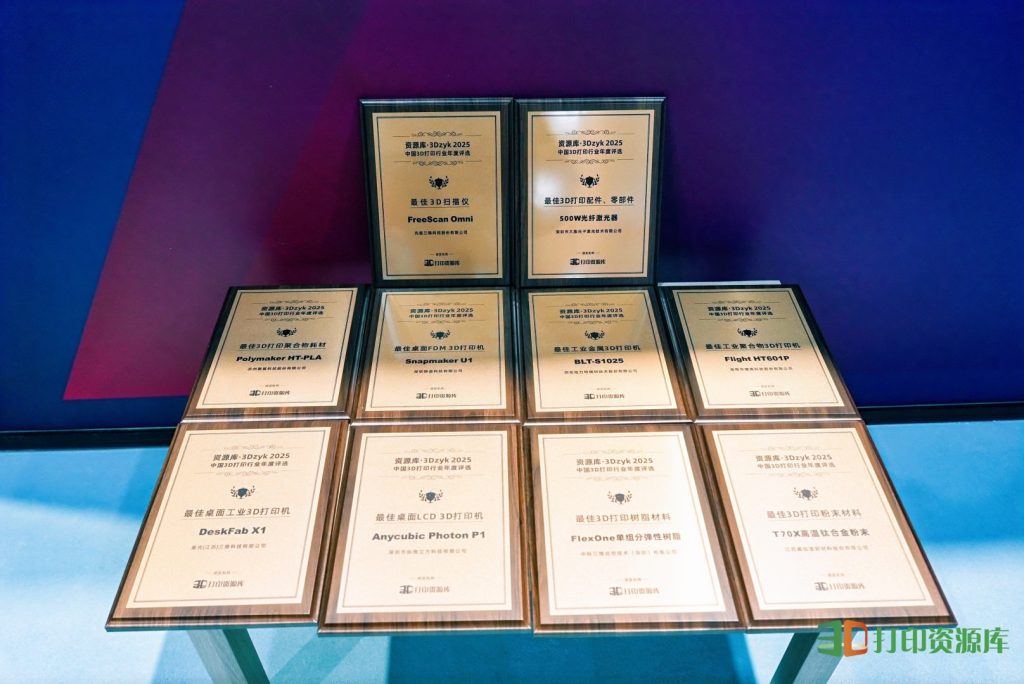
It is also worth noting that this year marked the inaugural 3Dzyk Award, with a trophy ceremony held for the winners.
2. The Exhibitors
Keywords: Polarization, Consumer, Industrial, Ecosystem
2.1 Metal Sector – Hall 7
We dedicated considerable effort this year to interviewing metal equipment manufacturers, including AMpro, CNPC, VMP, and Raycham. Copper samples and production-grade parts were widely displayed across LPBF booths. While some companies focus on niche areas such as dental or drone applications, the majority continue to serve highly regulated or heavy industries such as aerospace, offshore engineering, and oil and gas.
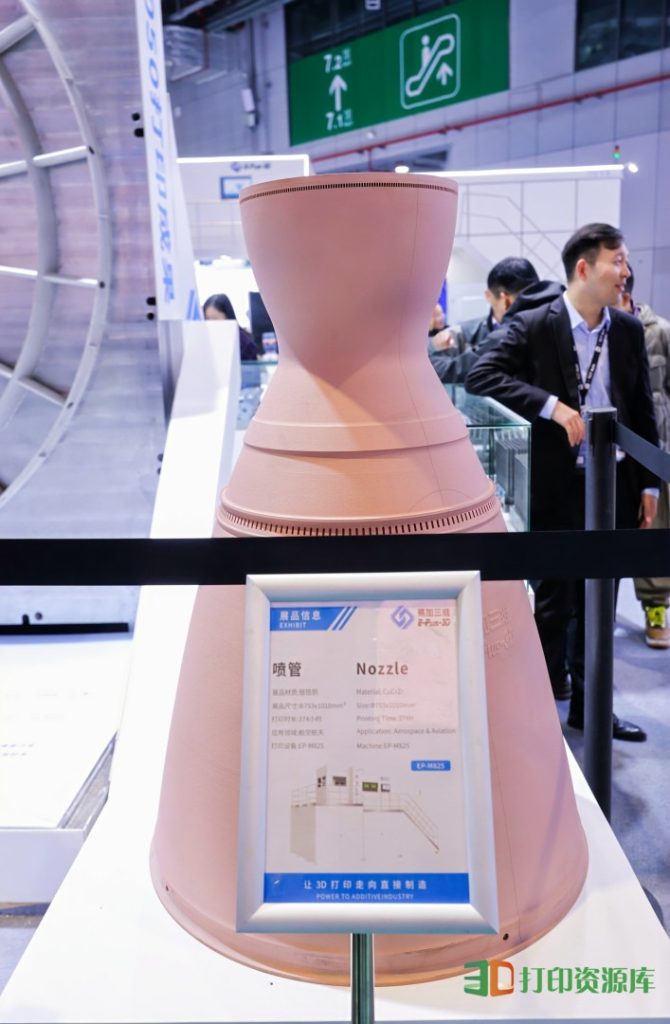
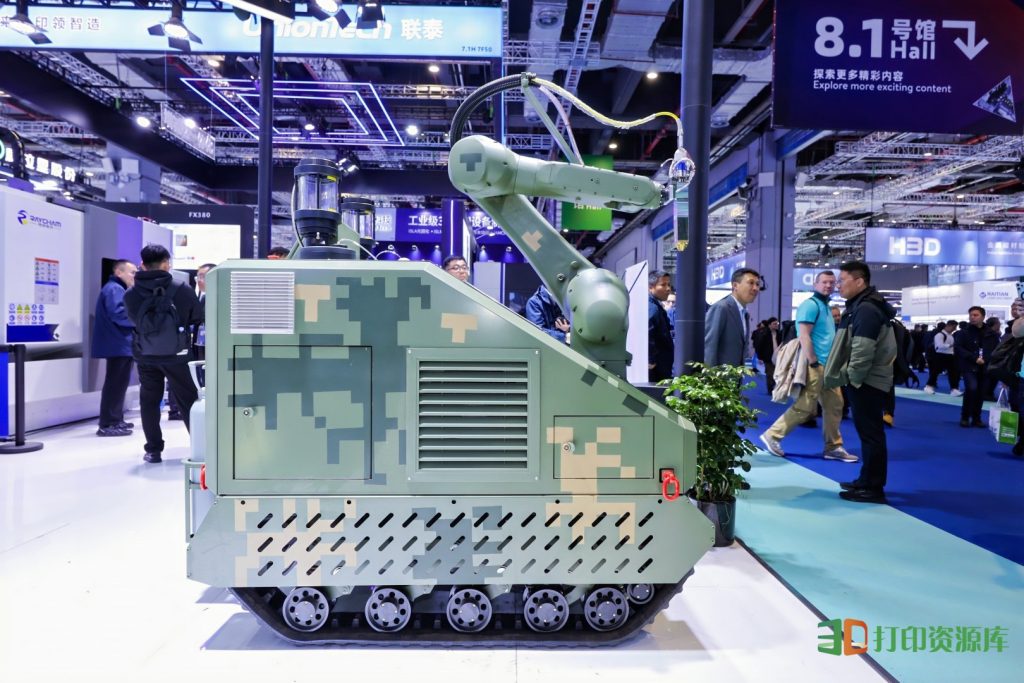
A notable observation is that Chinese companies exhibit on a significantly larger scale at their home show compared to Formnext in Germany. Some booths, particularly those likely associated with the defense sector, feature no English signage whatsoever. The number of such booths is not negligible, suggesting either substantial adoption of additive manufacturing within China’s defense industry or that defense applications may have been a primary driver of its development.
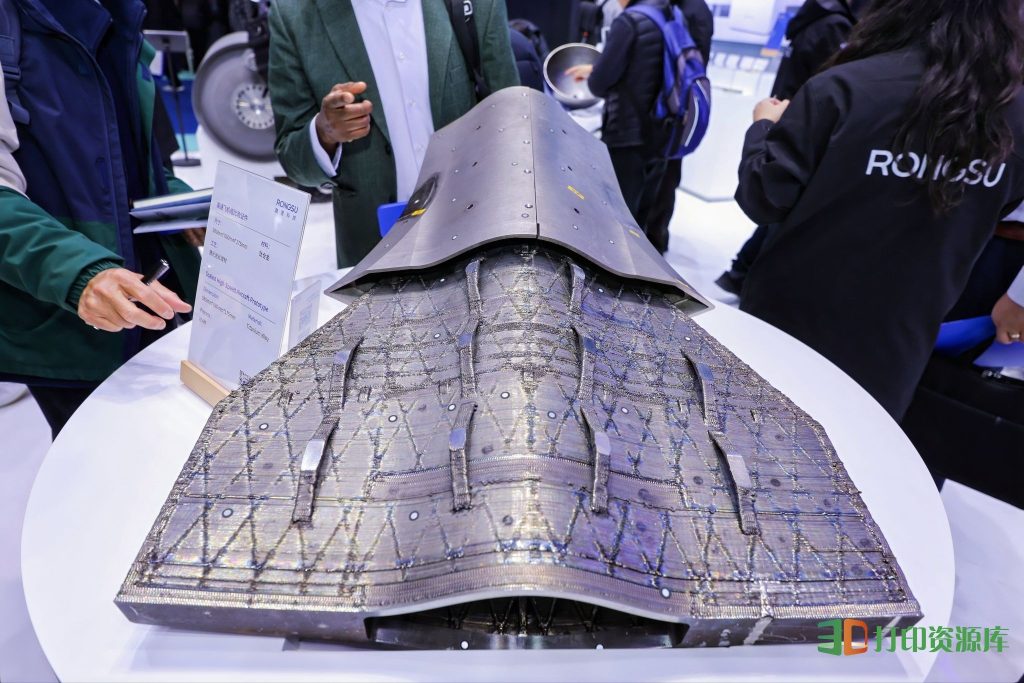
Beyond LPBF, technologies such as cladding, DED, and WAAM were also represented. Companies like Raycham, which offer comprehensive metal solutions covering all major technologies except binder jetting, exemplify the trend toward full-service offerings. More details can be found in 3Dzyk’s interview with Raycham.
Metal powder suppliers, though often occupying smaller booths, play a critical role in the ecosystem. Materials such as copper, recycled stainless steel, titanium, and zirconium serve not only LPBF, DED, and WAAM processes but also markets beyond additive manufacturing. Their global market share may well exceed that of printer OEMs. We had the opportunity to visit CNPC and VMP, both of which are modest yet innovative companies that launched new products this year. There is speculation that China’s metal powder exports may face increasing restrictions, a development 3Dzyk will continue to monitor.
2.2 Consumer Ecosystem – Hall 8
Hall 8 presents a vibrant scene with a much broader audience. Given its diversity, I will break it down into several subsections.
The consumer 3D printing market is led by Bambu Lab, which drew a significant number of visitors. Other notable product launches included the Flashforge C5 and the Atomform Palette 300, while the Snapmaker U1 continued to attract attention. The pace of new model releases and the emergence of new players now closely resemble that of the consumer electronics industry.
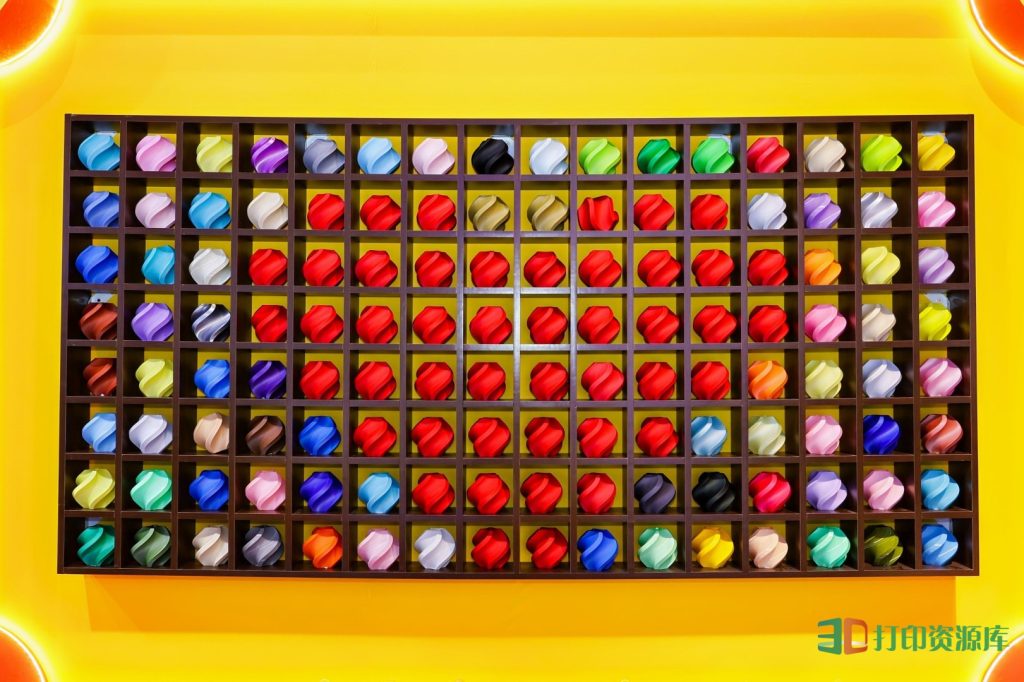
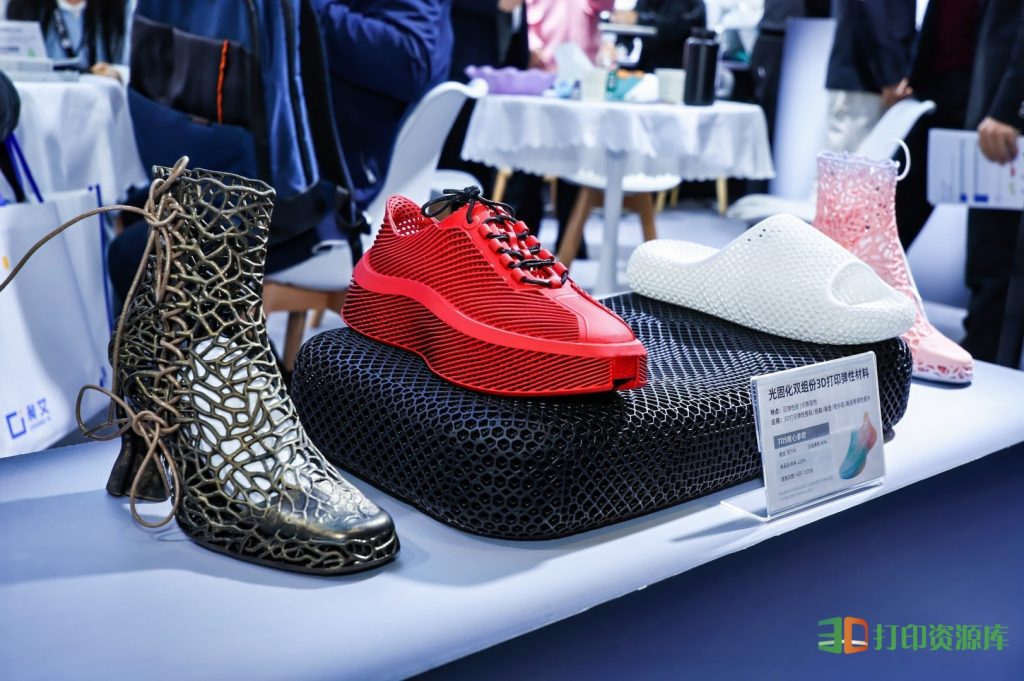
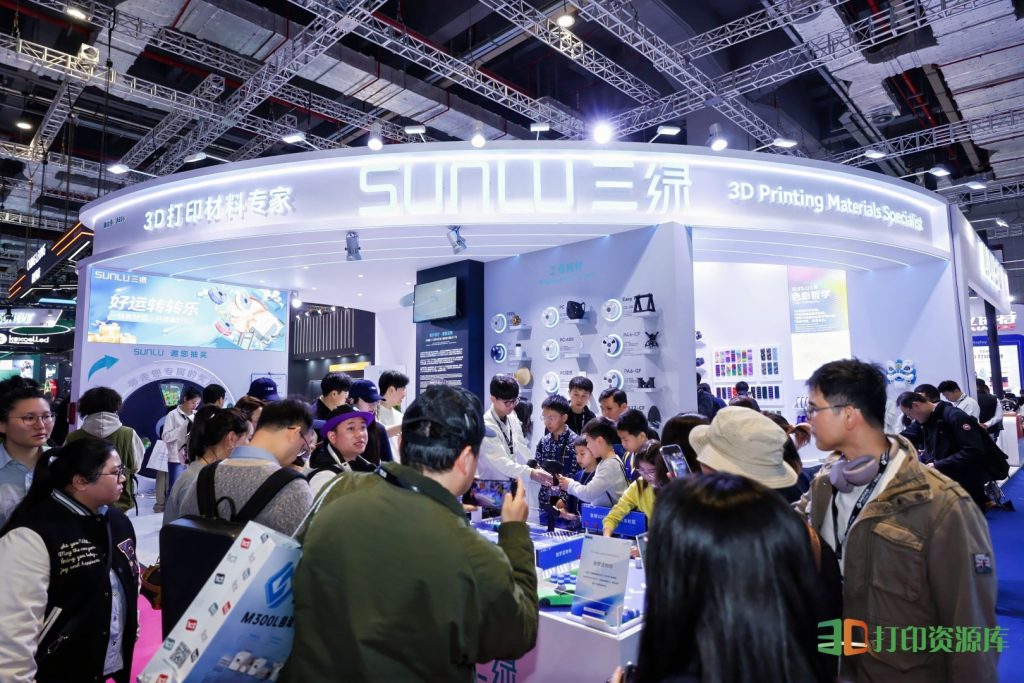
The term “vibrant” also applies to the material suppliers, which constitute a substantial portion of exhibitors. Leading brands such as Sanlu and Kexcelled showcased elastomers and high-performance materials, while other major players displayed multi-color PLA and flexible materials for footwear applications.
The consumer-grade 3D scanner market also made its presence felt. Jimuyida introduced a new model priced under 2,000 CNY, aiming to lower the barrier to reverse engineering for home users.
2.3 Footwear and Toys – Hall 8
The enthusiasm for giveaways reached remarkable levels. The longest queue I observed, stretching over 100 people, formed at a material supplier’s booth. Visitors lined up for items ranging from filament to printed toys and shoes. This level of engagement—spanning children to the elderly—reflects the growing adoption of 3D printing among the general public in China.
2.4 Software and AI
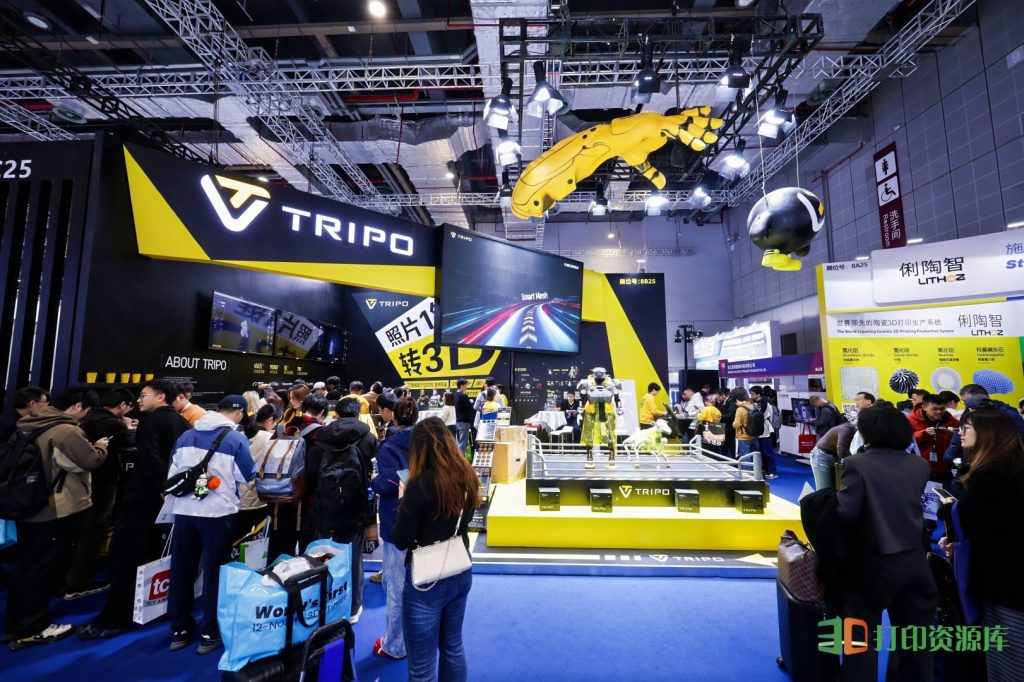
Software is playing an increasingly important role in making 3D printing more accessible. Between eye-catching models, robotics demonstrations, and on-site token giveaways, I found little opportunity to conduct interviews. As the simplest pathway to generating 3D printable files, this sector attracted a substantial number of attendees eager to explore business opportunities.
2.5 Other Segments
International brands such as Stratasys and Formlabs occupied prime locations. Their focus appeared to be more on applications than on the printers themselves.
It is regrettable that we were unable to engage with exhibitors in certain industrial technology segments, such as SLS and metal binder jetting, during this visit.
3. The Audience
Keywords: International Visitors, Dinner, Capacity Attendance
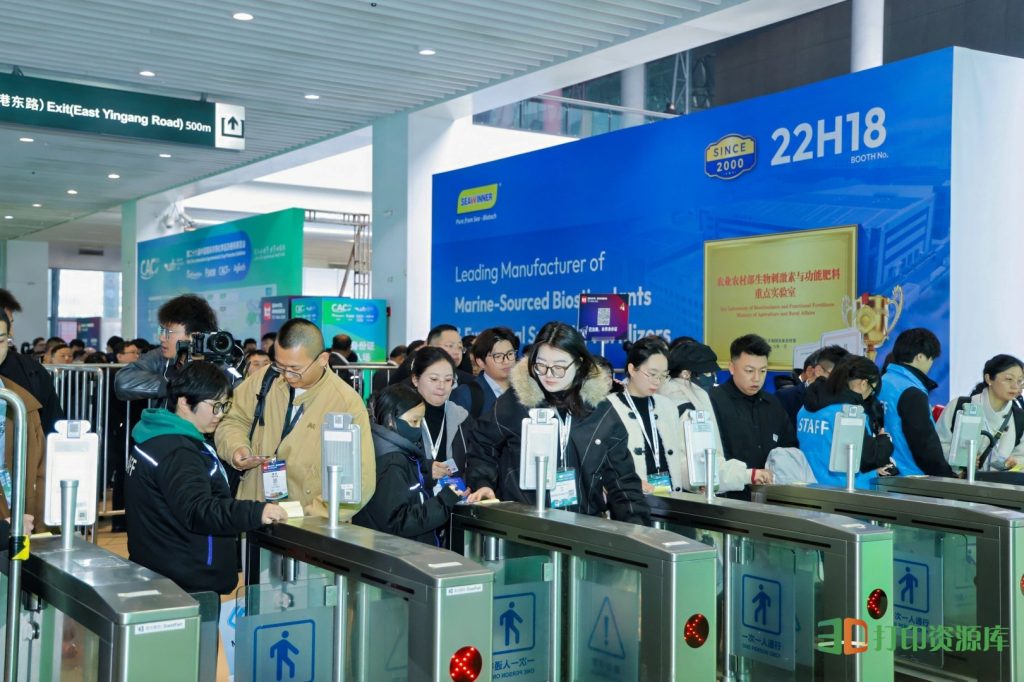
A dinner gathering on the first day brought together international influencers, including journalists, media professionals, independent content creators, and KOLs. Despite our diverse origins, a shared passion for additive manufacturing made for lively conversation and a warm atmosphere. I am not alone in recognizing the growing international interest—this year, I saw more foreign faces at the show than ever before. I was particularly pleased to meet my old friend Asipol from Thailand, who was attending TCT Asia for the first time.
The polarization of the audience between the two halls was striking. Hall 7 was dominated by formally dressed business professionals, while Hall 8 had a decidedly casual atmosphere. To accommodate such diversity and continued growth, TCT will likely need to expand further. I anticipate that future editions may see the emergence of more specialized sub-events, as each technology segment now has its own distinct ecosystem.
4. The Media
Keywords: Fragmentation, Record-Breaking, Diversity
Having attended TCT events for the past nine years, this was my first time participating as a media representative. The shift in perspective was profound. Previously, I stood at my own booth, engaging with visitors to understand their needs. This time, I approached exhibitors and spoke with peers to hear what the industry wanted to communicate.
My overriding impression is one of fragmentation. Additive manufacturing has permeated diverse manufacturing sectors, much like blood vessels within a body—metal and polymer applications serve fundamentally different purposes and audiences. I learned a great deal from conversations with machine OEMs, material suppliers, marketers, designers, and fellow media professionals.
The media presence itself was noteworthy. A multitude of independent content creators and makers from various countries attended, alongside all major Chinese official media outlets and several international media organizations. This may well be the largest media gathering TCT has ever hosted, reflecting the growing global prominence of additive manufacturing, particularly in China. I take pride in this development and look forward to greater cross-continental collaboration in the future.
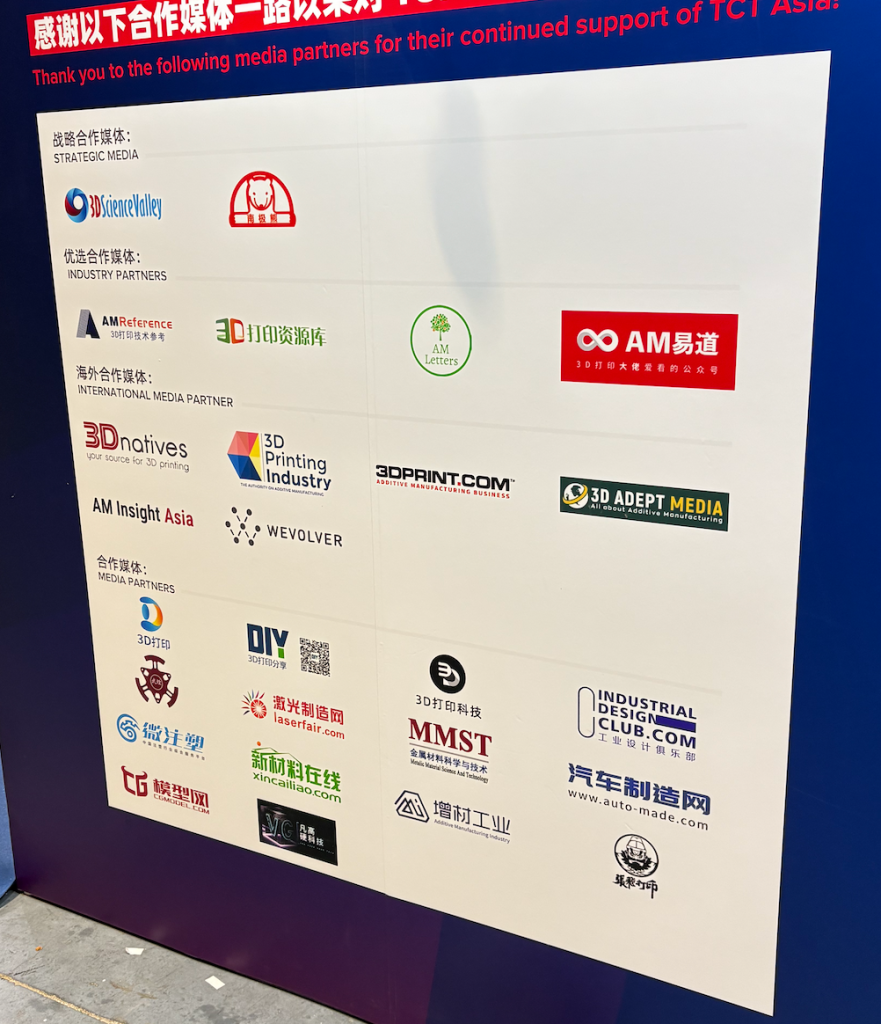
3Dzyk’s name was located in the second row, second position.
5. The Time for Global Expansion Is Now
Keywords: International, Political, Economic
A Goldman Sachs research report released in early 2026 highlighted China’s distinctive economic trajectory within Asia. It noted that ahead of the 15th Five-Year Plan announcement, China’s 2026 GDP growth is forecast at 5%, with exports remaining a key driver and the country’s share of global manufacturing expected to continue expanding. From both economic and political perspectives, this direction appears set to persist.
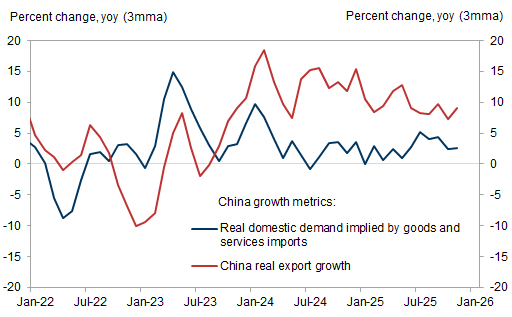
Source: Haver Analytics, Goldman Sachs Global Investment Research
During the show, I routinely asked exhibitors whether they had plans to expand internationally. Among all the companies I spoke with, only one cited specific reasons for not being ready. The most common responses were either that such plans were already underway or that they had already established customers in various countries.
Follow-up conversations with several OEMs and investors after the show reinforced a clear consensus: Chinese brands must go global. One OEM noted that building brand recognition overseas would enable them to return to the domestic market with enhanced brand value. Another observed that competition in China has become saturated, making overseas markets the next battleground—and mentioned only domestic competitors such as BLT and Farsoon, not Western brands. Investors pointed out that, despite ongoing political uncertainties, the overseas market remains critically important; companies lacking an international strategy may find it difficult to secure substantial investment under current market conditions.
These observations were evident at TCT itself: consumer brands across the board have prioritized the European and American markets, a trend that shows no sign of reversing. Last year, China exported over 70% of its 3D printers, with Chinese brands accounting for more than 90% of the global consumer market. These figures are remarkable and show no indication of decline. With the entire global AM supply chain working to expand the market, I believe the momentum for Chinese brands to go global will persist for the next decade—spanning desktop FDM printers, materials, metal and composite systems, and eventually the surrounding value chain of software and accessories. Notably, software and services, which face lower country-specific barriers than hardware or materials, appear particularly well-positioned for overseas expansion.
About 3Dzyk
As an international additive manufacturing media platform based in China, 3Dzyk has been committed from its inception to promoting Chinese AM technologies worldwide. In One Piece, the first ship to carry Luffy and his crew was named the Going Merry. 3Dzyk aspires to serve as your Going Merry, accompanying you on the journey of discovery and adventure.