
 By li, chen
On November 3, 2026, Bambu Lab officially released its third-generation flagship 3D printer—the H3C.
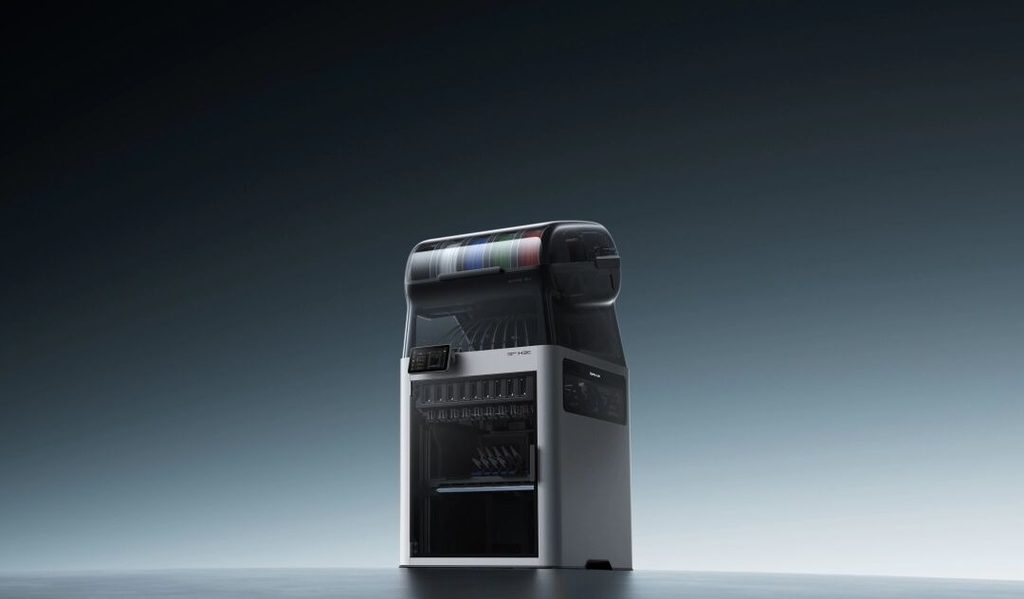
As the first third-generation desktop machine, the H3C directly carries 9 printheads, completing automatic switching in as fast as 6 seconds. Combined with multi-diameter mixed printing, variable filament diameter extrusion, and the integrated AMS 3H, a single machine can achieve multi-color, multi-material, and soft-hard material combination printing, elevating the capabilities of consumer-grade 3D printing to a new height.
If you’ve been waiting for a 3D printer that is almost “capable of everything,” then this time, perhaps you really don’t need to wait any longer.
The Bambu Lab H3C—it’s here.
In fact, there had already been quite a few leaks about the H3C, and now with the official release, the core information has basically been confirmed.
But the moment it truly unveiled itself was still somewhat exciting. Original price 16,499 yuan, and during the first seven days of launch, combined with national subsidies, the final price is just 13,999 yuan. 9 toolheads with automatic switching and multi-material compatibility—looking across the consumer market, it’s hard to find a rival.
01
Starting from scratch: 9 printheads, 6-second flash switching
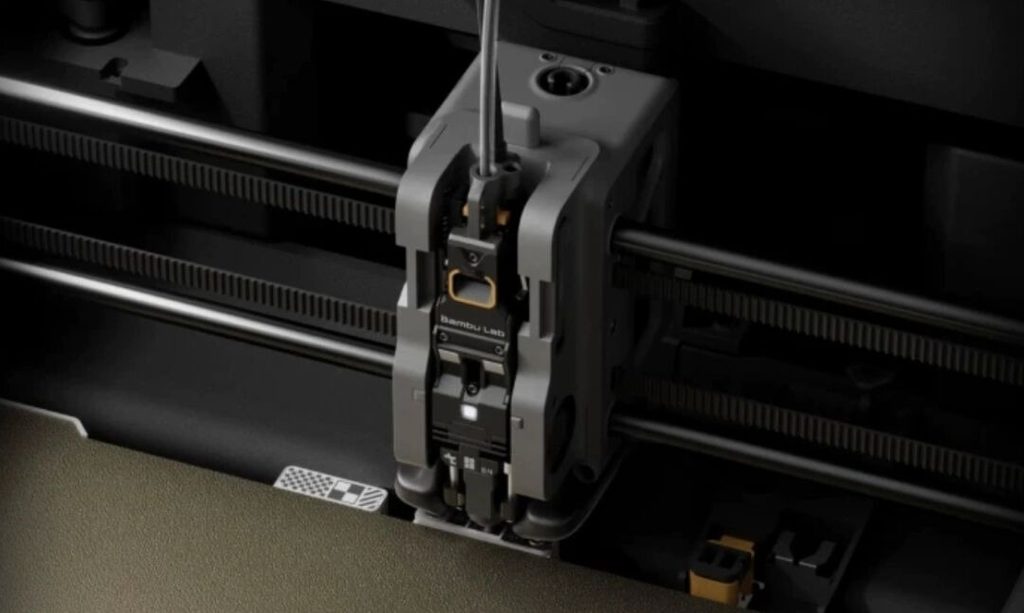
Strictly speaking, this is Bambu Lab’s first multi-head 3D printer. Unlike the previous H2C nozzle switching, the H3C debuts the Swaptek™ multi-head flash switching system, integrating 9 independent printheads. Each channel can independently feed and preheat, with filament always in a ready-to-print state.
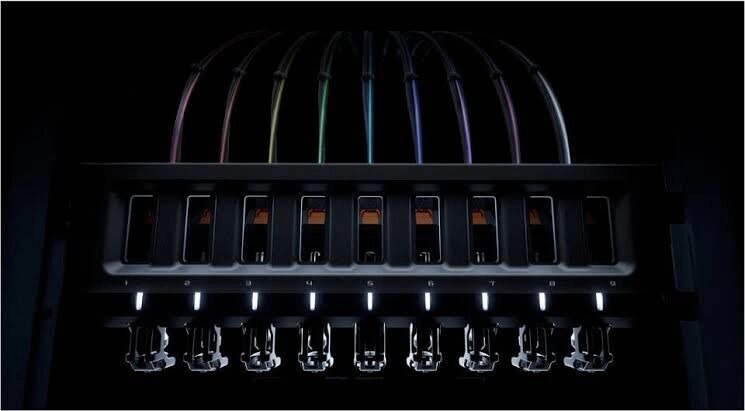
This means that when switching materials, there’s no need to repeatedly retract and feed like traditional solutions. Toolhead and material changes can be completed in as fast as 6 seconds, with waste per material change as low as about 38mg.
In addition, with the lightweight toolhead, precision compensation, and fully automatic calibration, the H3C maintains stable printing even with frequent toolhead changes, making multi-color and multi-material printing simpler than ever.
02
Variable filament diameter extrusion: breaking through 75A TPU, soft-hard mixed printing
In the past, we’ve always looked forward to a 3D printer that can directly print shoes, and now the Bambu Lab H3C has provided the answer.
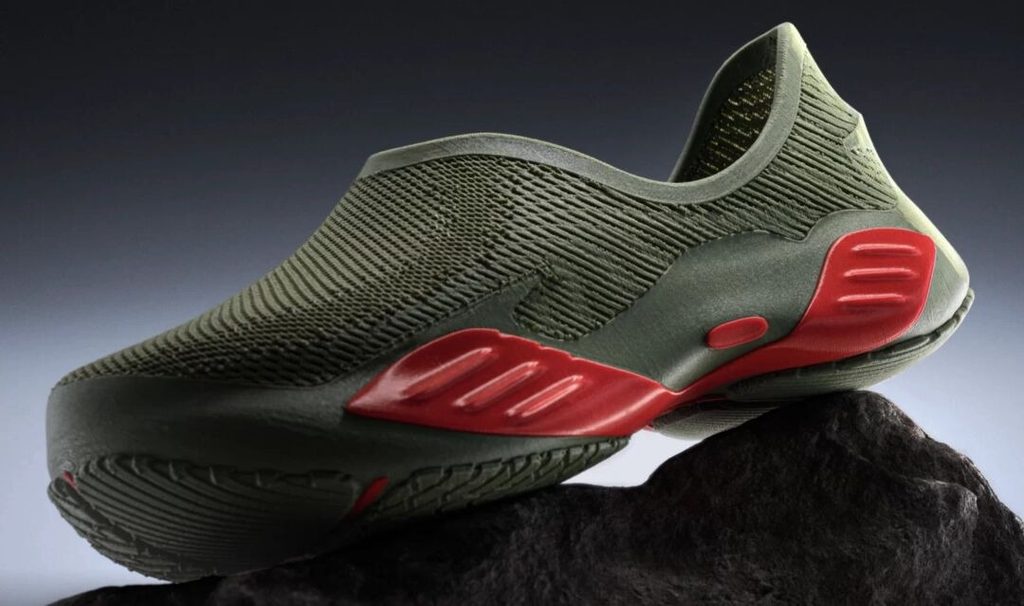
Footwear printing is inseparable from TPU material, but 75A ultra-soft TPU has always been a challenge for consumer-grade 3D printing. Because the material is too soft, traditional 1.75mm filament bends easily, making feeding difficult, forcing low-speed printing with unreliable stability.
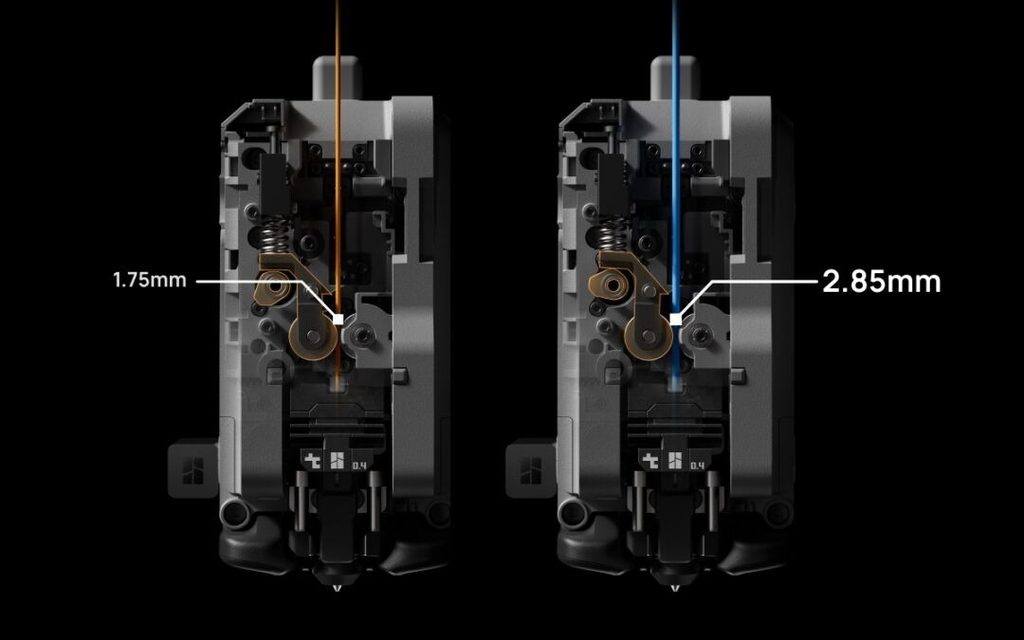
To address this, the H3C introduces a variable filament diameter extruder, adding a 2.85mm channel alongside the conventional 1.75mm channel. The thicker filament improves feeding rigidity, and combined with a dedicated hotend, 75A TPU can achieve a maximum volumetric flow of 10mm³/s—about 5 times that of traditional solutions—with printing speeds increased 3 to 5 times.
Currently, the H3C may be the only consumer-grade 3D printer supporting dual 1.75mm and 2.85mm filament diameters, which also provides more possibilities for soft-hard material mixed printing.
03
Multi-diameter mixed printing + color layering: speed, precision, and color all in one
Beyond soft-hard material mixed printing, the H3C brings another practical feature: support for free combination of nozzles with different diameters.

For example, a single printed part can simultaneously use 0.2mm and 0.4mm nozzles, matched with different layer heights. Fine details use the 0.2mm nozzle, while parts pursuing efficiency use the 0.4mm nozzle, achieving both printing precision and speed.
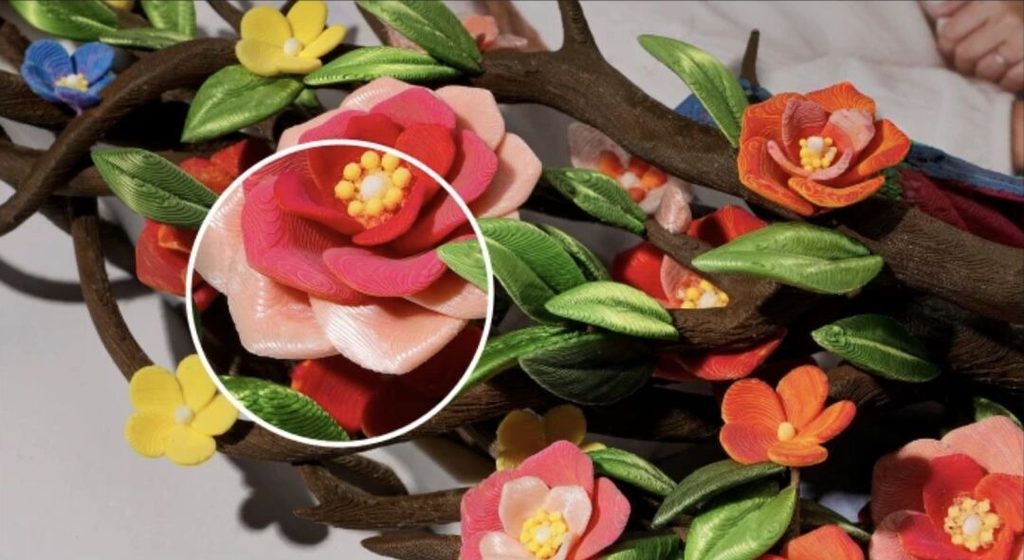
Additionally, traditional color layering printing has also been upgraded. In the past, it was mostly four-color layering; now, with CMYKW five-color palette filament, the H3C can mix and reproduce rich colors, covering nearly the entire color wheel, giving desktop 3D printing richer color expression.
04
All-new AMS 3H: top-mounted integration, automatic feeding and drying
To make multi-head switching and multi-material printing smoother, Bambu Lab has also equipped the H3C with the all-new AMS 3H.
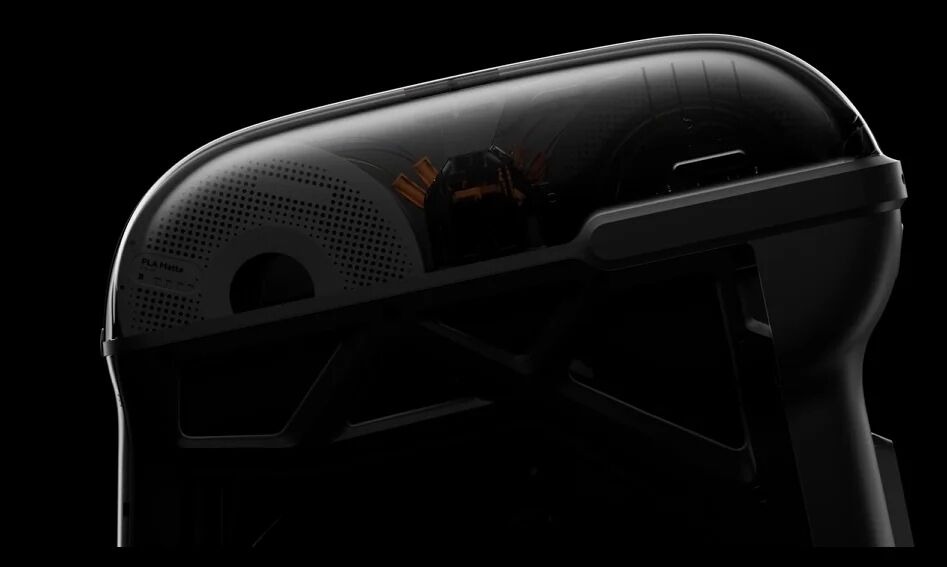
This system is specially designed for multi-head flash switching. Filament placed in any slot is automatically identified as official filament type and loaded.
Beyond automatic feeding, the AMS 3H also handles filament storage and drying.
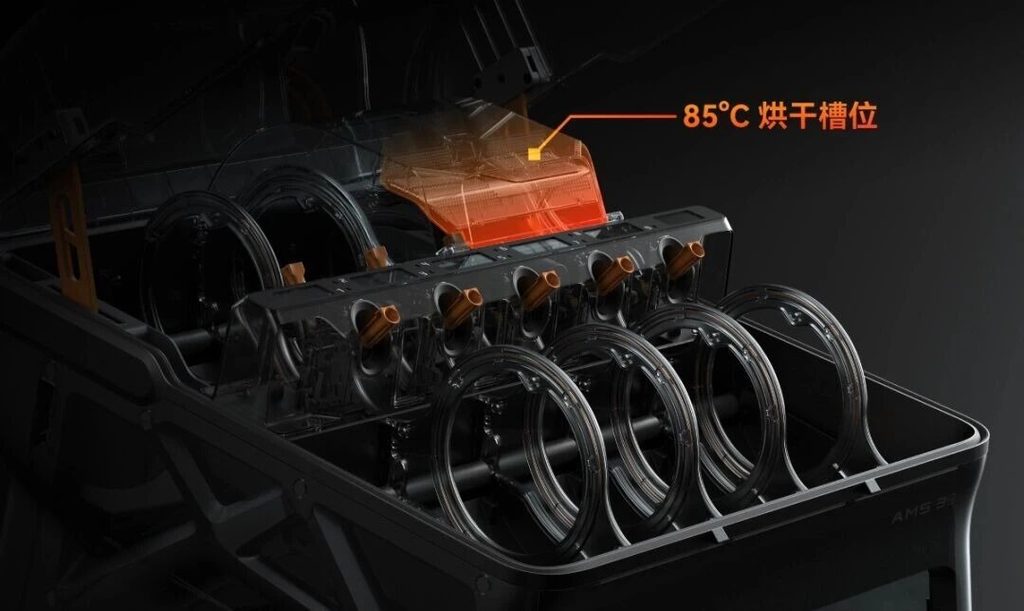
It features a fully sealed design, with each roll of filament placed in an airtight chamber, and is equipped with 2 independent slots supporting drying at up to 85°C, enabling drying while printing, reducing filament moisture absorption, and providing more stable printing conditions for moisture-sensitive materials like TPU.
Additionally, the top-mounted integrated design saves desktop space and makes cable routing neater. The AMS 3H is also compatible with Bambu Lab’s first through third-generation AMS systems, supporting up to 24-color printing.
05
Beyond printing: multi-process expansion and home accessories
Beyond 3D printing, the H3C continues the multi-functional design of the H series.
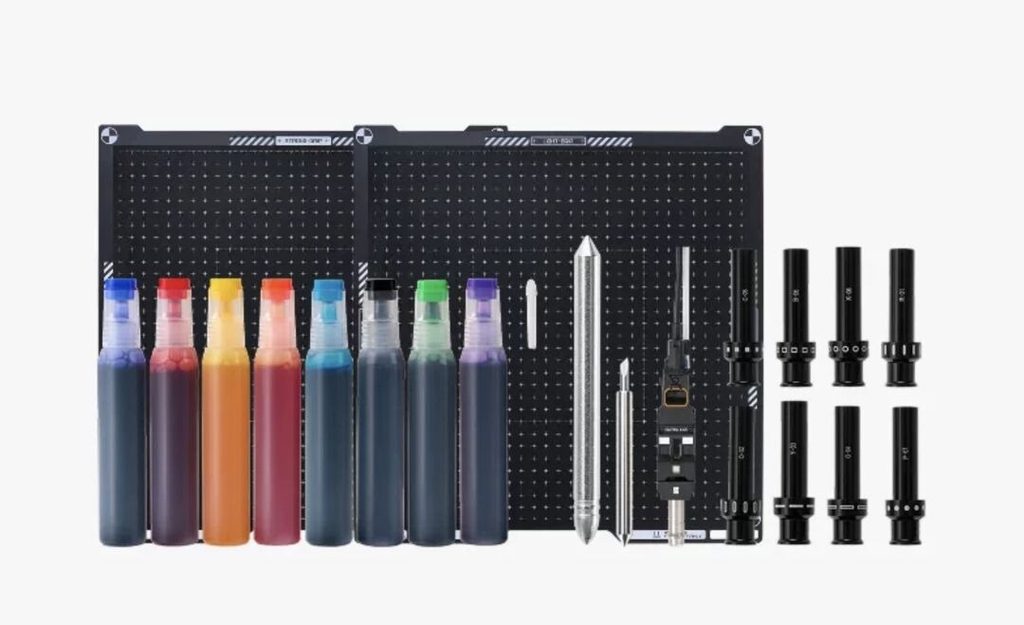
Relying on the multi-head flash switching system, it supports automatic switching among various tools such as knife cutting, drawing, embossing, and cold foil stamping. Different tools can be pre-installed and parked on the rack, automatically switched when needed, allowing a single machine to complete printing and multiple processing techniques.
If used at home, it can also be paired with Bambu Lab’s latest Workstation L and Air Purifier E1.
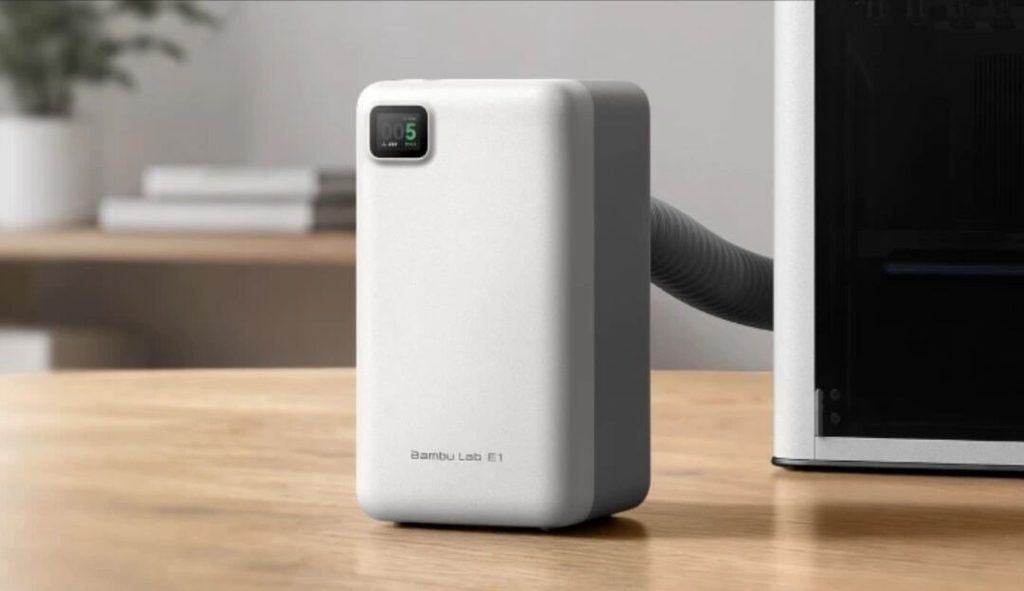
Workstation L raises the device to a more comfortable operating height, with additional storage space at the bottom; the Air Purifier E1 can link with the H3C, automatically starting when printing begins to purify the air in real time, making home use more convenient and worry-free.
Final thoughts
From traditional multi-color printing with repeated filament retraction and cleaning, to the multi-head solution with 9 automatically switching printheads, the H3C makes multi-color and multi-material printing simpler, and sets a new reference for third-generation desktop 3D printers.
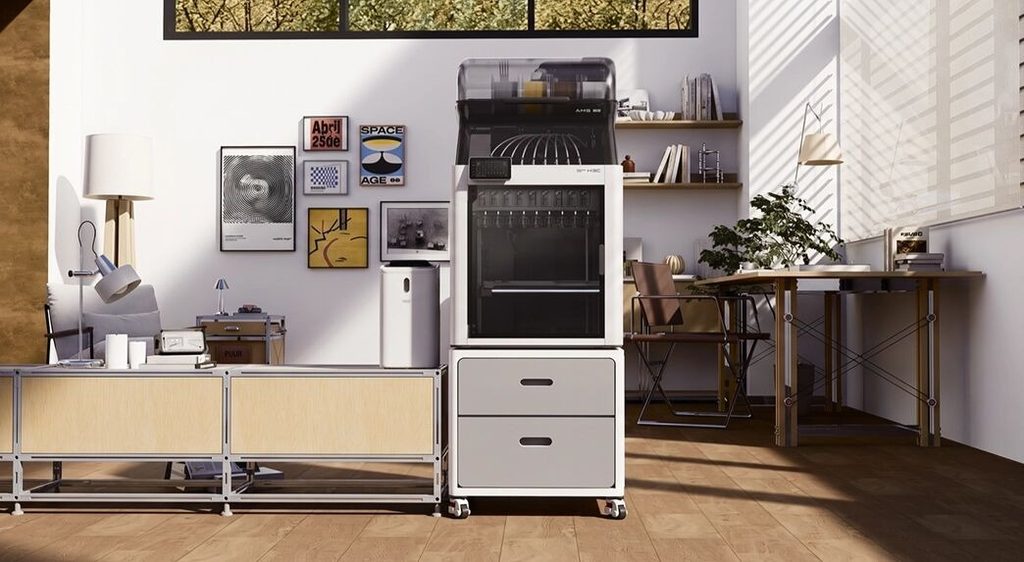
In 3Dzyk’s view, the iteration of consumer-grade 3D printers is also accelerating, and one generation per year may become the new industry rhythm.
As for the future fourth generation, we look forward more to AI being deeply integrated into modeling, slicing, and print execution, making machines smarter and accelerating 3D printing’s entry into millions of households.
 3dzyk