
 By li, chen
 SnowX launches the SnowPod, bringing metal 3D printing closer to ordinary people.
Over the past year, we’ve noticed a very clear change: metal 3D printers are getting smaller and smaller.
Previously, an LPBF machine would take up an entire room, some even several stories tall, with prices ranging from hundreds of thousands to tens of millions of yuan. Today, they are gradually moving into laboratories, offices, and even personal workbenches.
But making the machine smaller is only the first step.
Compared to the already mature desktop FDM, metal 3D printing still has to deal with issues such as powder, shielding gas, powder removal, supports, and safety. To truly reach the desktop of ordinary people, these aspects also need to be equally simple.
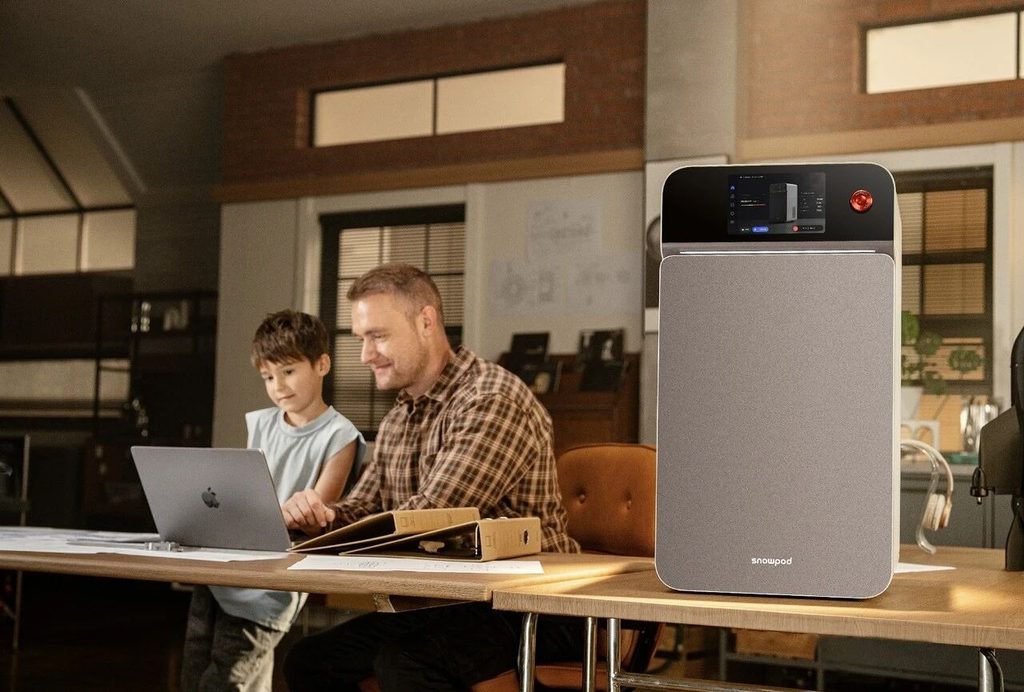
Recently, SnowX Technology launched its new product, the SnowPod.
It’s not simply shrinking the machine down another size—it’s one of the few metal 3D printers on the market truly redesigned as a desktop device.
In fact, the SnowPod doesn’t keep emphasizing parameters like laser power and scanning speed. We think this is the right approach, because for real users, what they care about isn’t how impressive the paper specifications are, but whether the machine can be used and whether it’s easy to use.
For years, the industry has been discussing when “manufacturing metal at home” will become a reality. Now, the step taken by SnowX Technology may be making this truly possible.
—
01 — Smaller than a Bambu Lab P1S, putting LPBF truly on the desktop
The SnowPod features a compact, integrated design, with overall dimensions of just 360×360×660mm—more compact than many consumer-grade FDM devices. Even compared to the Bambu Lab P1S with AMS, the SnowPod takes up less space.
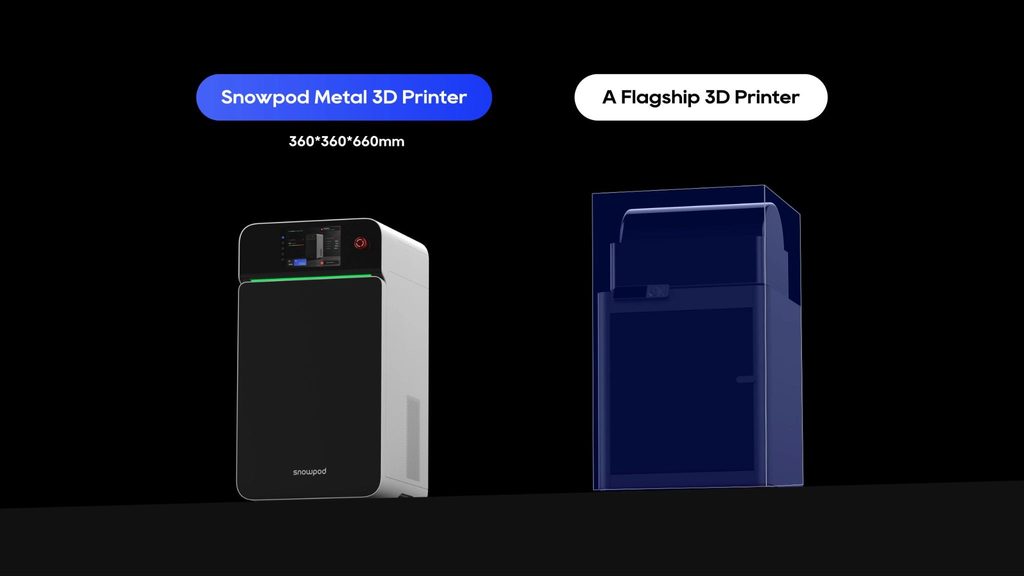
This means it is no longer a “small industrial device” in the traditional sense, but is truly beginning to approach a desktop device form factor—you can buy it and place it on the same desk as your FDM machine.
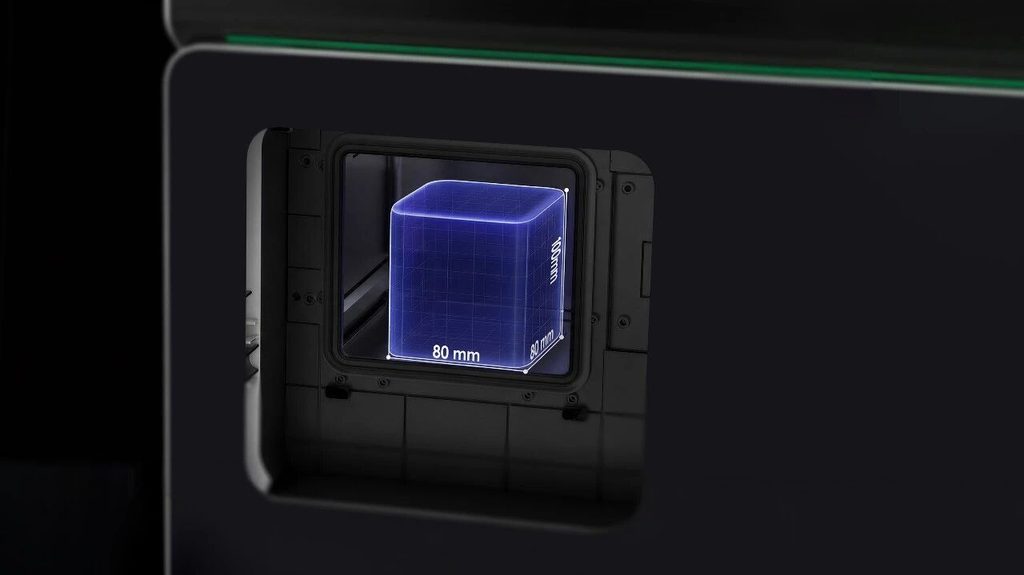
The device offers an 80×80×100mm build volume and currently supports ER316L stainless steel printing, primarily targeting small metal parts such as mechanical components, robot accessories, jewelry, artwork, tools, and product prototypes.
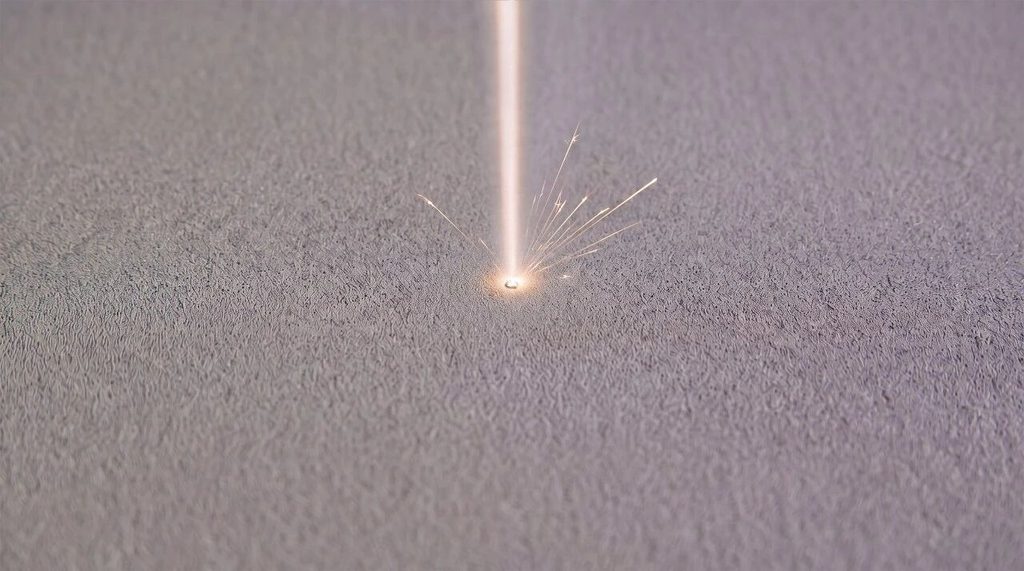
Although the machine has become smaller, precision has not shrunk along with it. The SnowPod uses a 40μm laser spot and 3μm Z-axis movement precision, capable of meeting the fine forming requirements of small metal parts.
For desktop metal 3D printing, it doesn’t blindly pursue a larger build volume, but instead makes trade-offs between device size, powder usage, and actual operating costs.
But what truly makes it worth attention isn’t just being “small and precise”—it’s that it begins to solve a series of usage issues that arise once metal 3D printing moves onto the desktop.
—
02 — Making metal powder as easy to manage as plastic filament
Compared to device size, powder management actually has a greater impact on whether LPBF can truly move to the desktop.
FDM uses rolled filament, making material changes relatively simple. LPBF, on the other hand, uses fine metal powder, which requires more careful handling from powder loading, printing, to part removal and recycling.
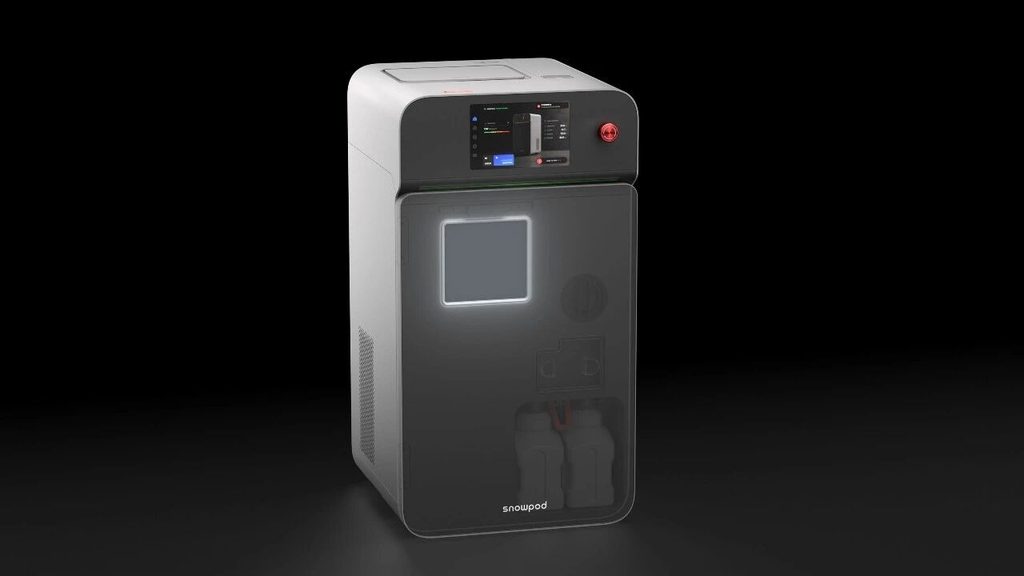
The SnowPod therefore adopts a closed powder management system.
The device uses pre-sealed powder cartridges combined with a sealed build chamber to reduce powder exposure during use. After printing is complete, parts can be transferred and remaining powder processed through a transfer box, reducing the chance of users directly contacting loose powder.
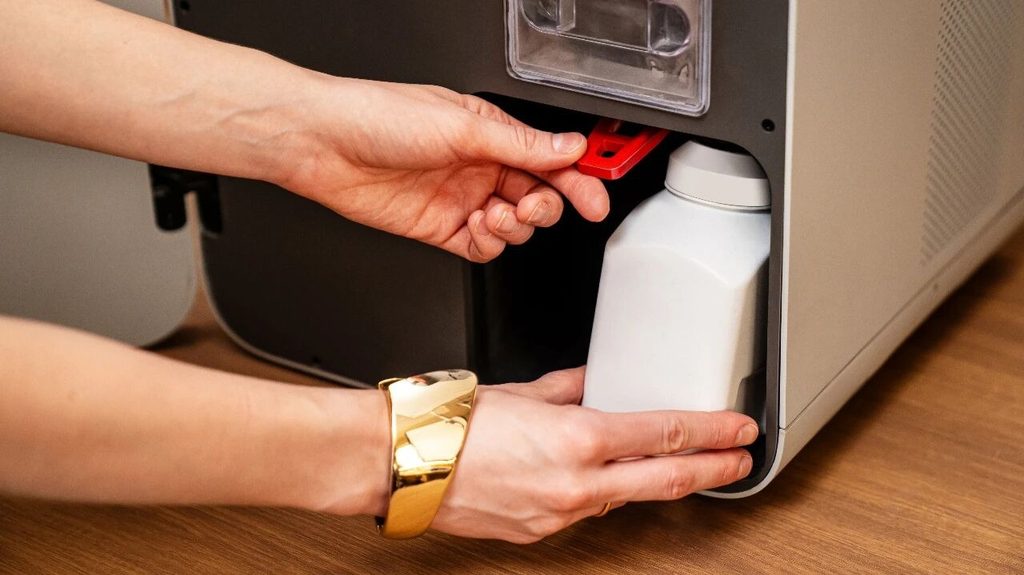
At the same time, the device is equipped with a HEPA13/14-grade filtration system. Unsintered metal powder after printing can also be recycled, with a recovery efficiency of over 90%. When refilling or changing powder is needed, simply replacing the powder cartridge completes the task.
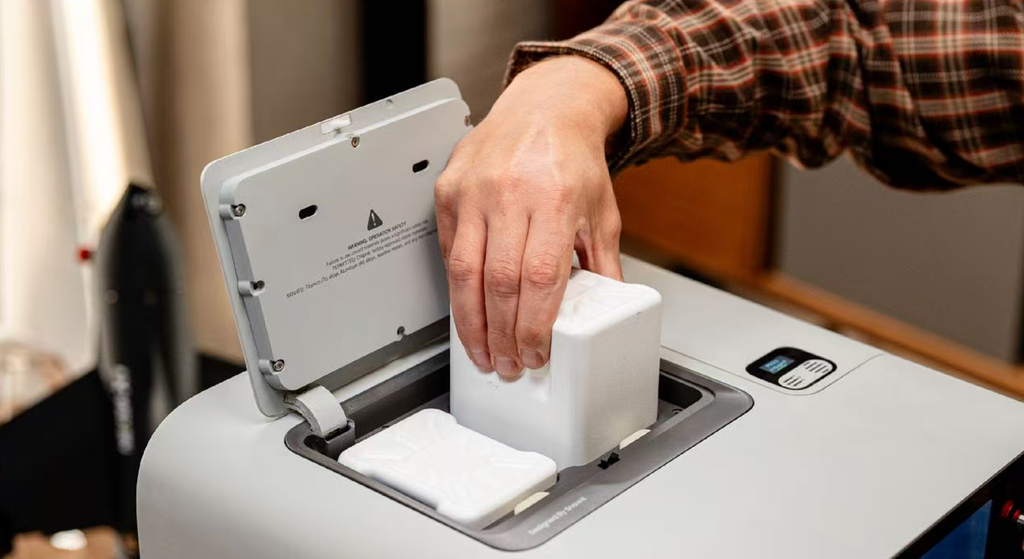
For individual users, this design reduces direct contact with metal powder and makes it less likely to dirty the workbench, turning what was once complex powder management into something more like daily consumable replacement.
—
03 — The machine judges safety itself, no longer relying on user experience
After LPBF printing is complete, whether there are still suspended particles inside the build chamber and whether the air condition is suitable for opening the door previously required professional personnel to judge according to procedures.
But as a device truly suited for the desktop, the SnowPod doesn’t leave these judgments to the user—it leaves them to the machine.
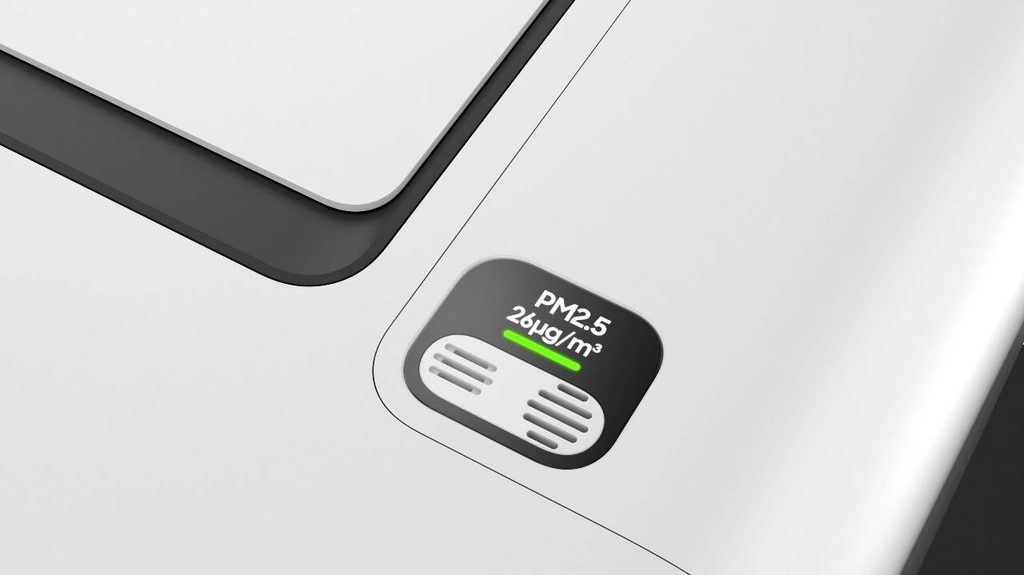
The device can monitor PM2.5, gas content, temperature, and humidity in real time, and coordinate with the chamber door, filtration system, and operating status. Only when the internal environment meets the set conditions will the device allow the door to open, making it simpler and more reassuring for ordinary users.
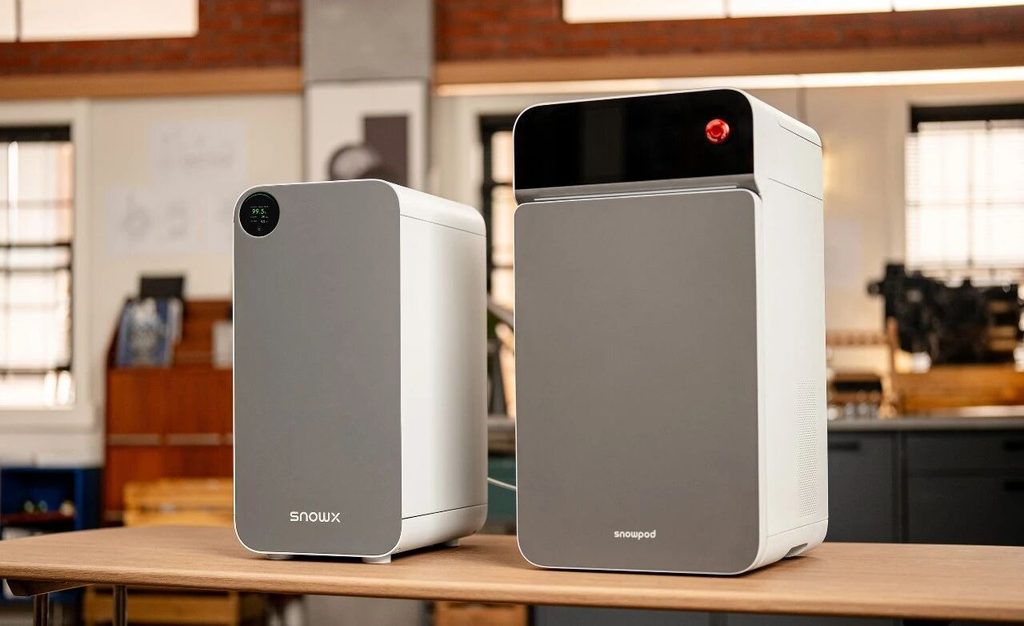
In terms of shielding gas, the SnowPod also comes with a self-developed NitroPod nitrogen generator, which can generate the nitrogen needed for printing on demand, eliminating the need for additional nitrogen cylinders and complex gas supply systems.
It’s clear that what the SnowPod aims to solve isn’t just how to make the machine smaller, but to reduce dependence on professional personnel, professional environments, and external auxiliary facilities all at once.
—
04 — Truly desktop-oriented: support removal should be as simple as FDM
There’s another often-overlooked issue in metal 3D printing: post-processing. In the past, the printer became desktop-friendly, but post-processing remained industrial.
After traditional LPBF parts are printed, they usually still need cutting, support removal, grinding, and even CNC machining. For industrial users, these aren’t difficult, but for individual creators and small teams, they bring considerable additional equipment and operations.
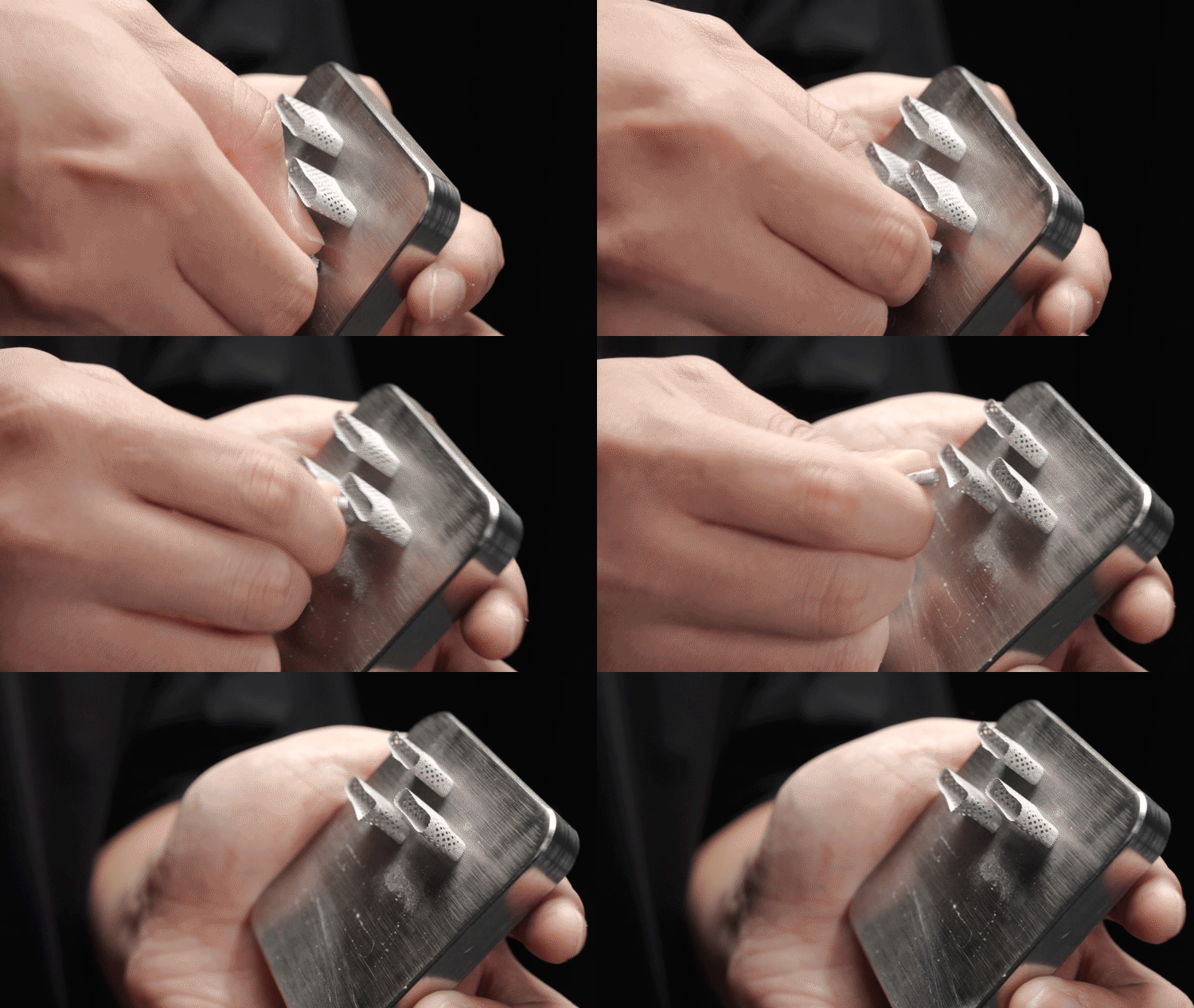
The SnowPod addresses this issue with an easy-to-remove support structure.
By optimizing support geometry, connection methods, and force direction, it ensures printing stability while making supports easier to remove after printing is complete. Users can peel away supports gradually from local areas, reducing additional cutting and machining.
This is especially important for individual users. If supports in metal 3D printing can be removed as easily as in FDM, users can get finished parts faster after printing, undoubtedly lowering another barrier to use.
—
05 — Desktop metal 3D printing begins moving toward true consumer-grade
Over the past few years, desktop metal 3D printing devices have clearly increased in number. Devices targeting dentistry, research, and small-batch manufacturing have continued to shrink, with prices gradually declining. The SnowPod further focuses on the complete usage process for individual users.
How to load powder, how to recycle it, when the air is safe, where the shielding gas comes from, how to remove supports—these issues that were previously handled by professional engineers are now beginning to be incorporated into product design.
The same applies to the software side.
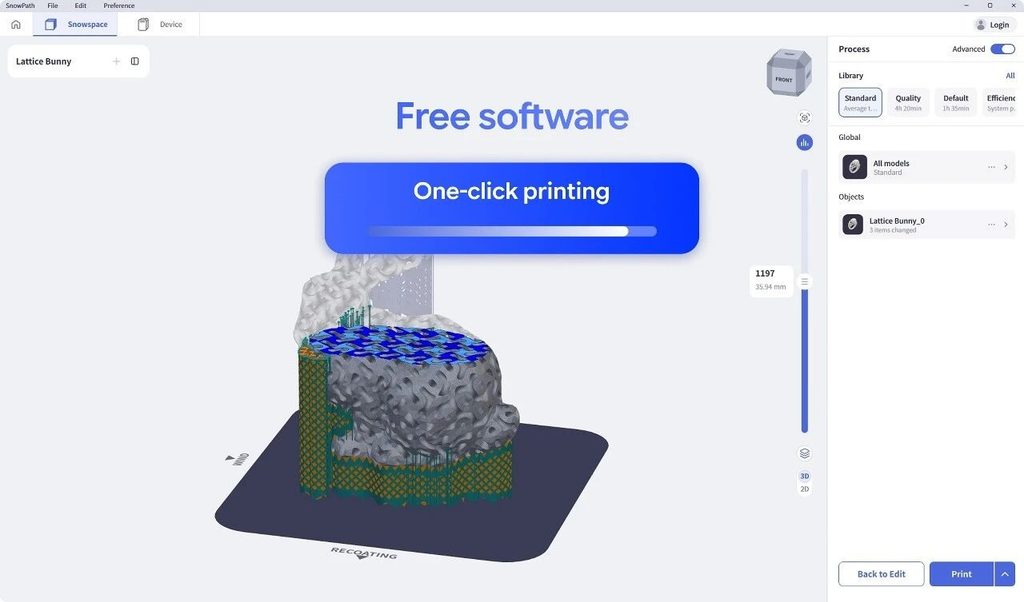
The SnowPod comes with self-developed SnowPath, which can complete slicing, path planning, and task sending, and detect printing anomalies through cameras and AI algorithms.
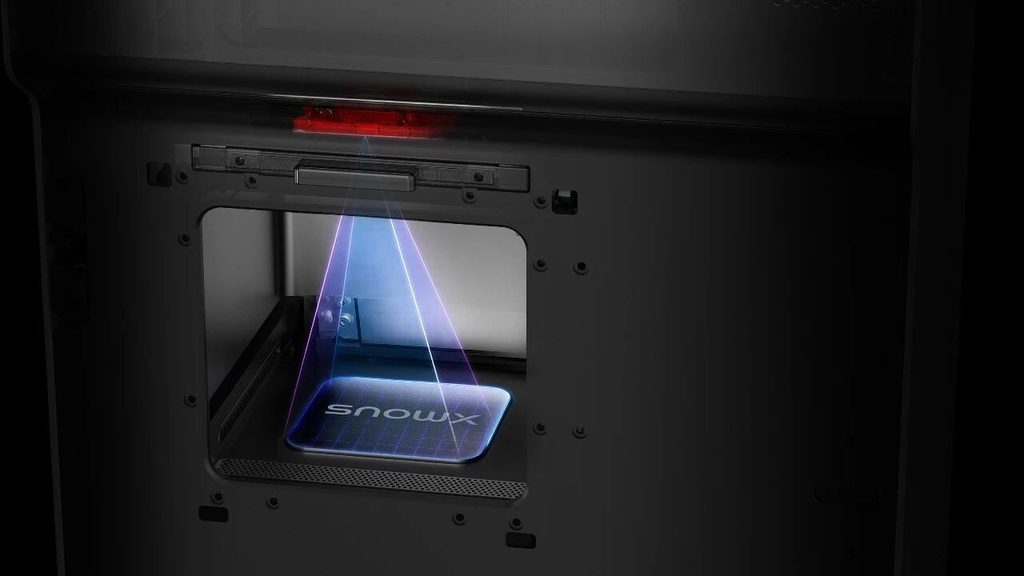
For users already familiar with FDM slicing workflows, the overall operation logic won’t feel too unfamiliar.
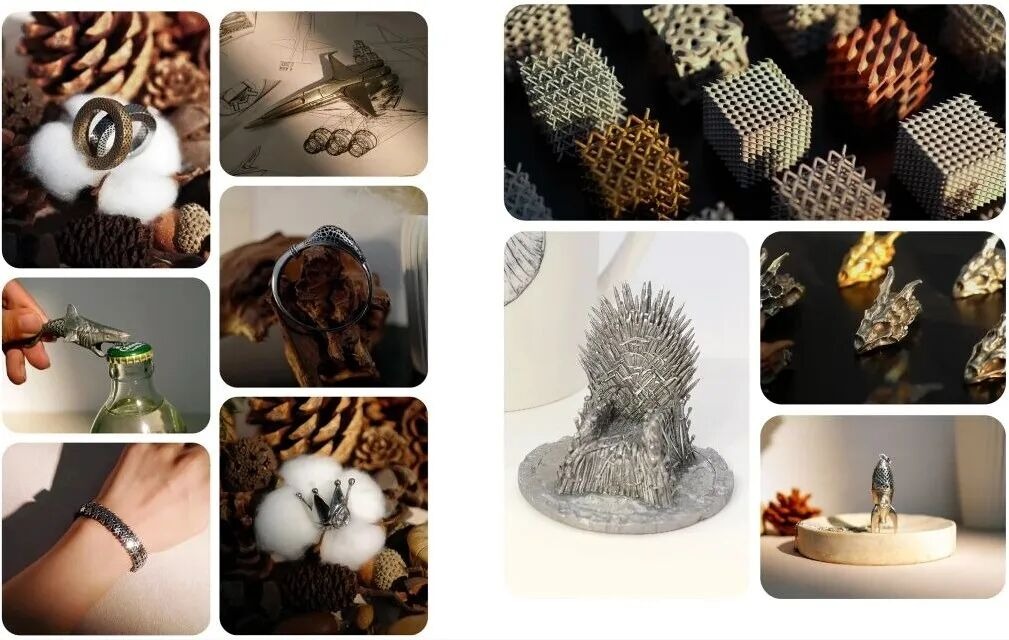
SnowX Technology is also simultaneously building the SnowX community, hoping to provide more model content suitable for metal printing around artists and creators.
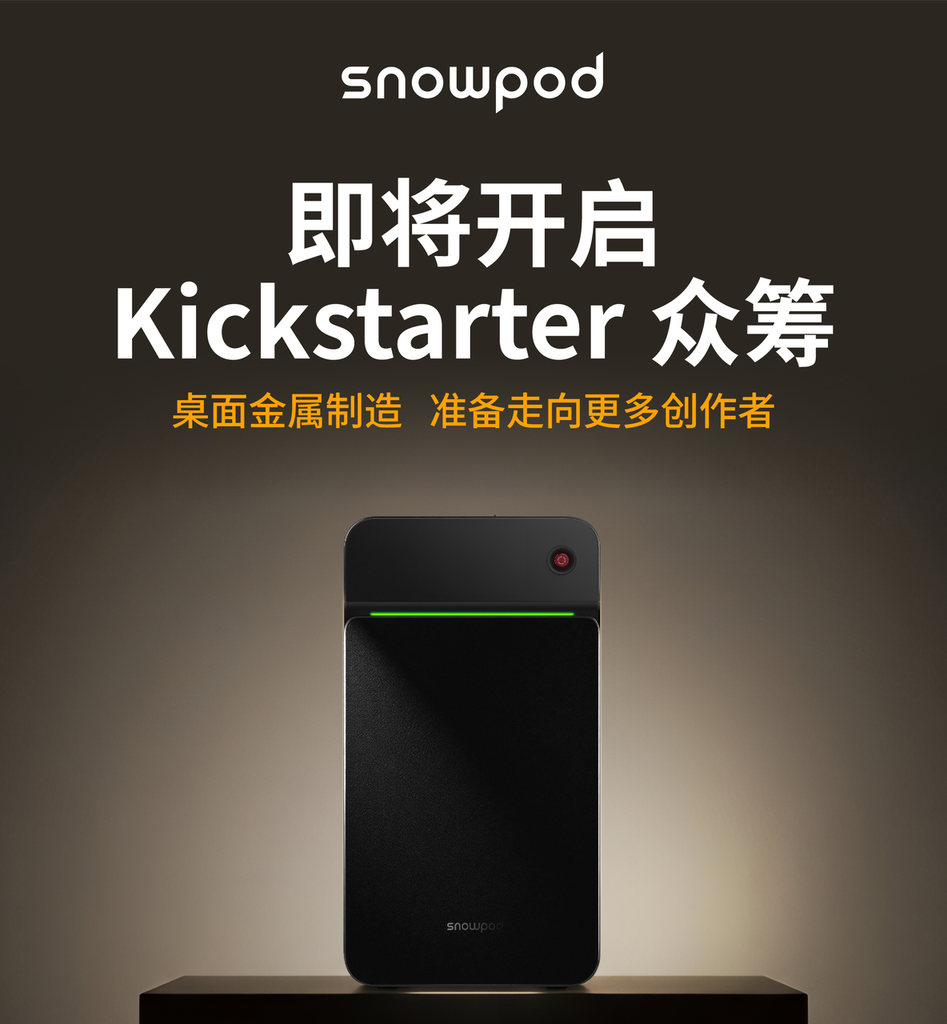
According to the plan, the SnowPod will launch on Kickstarter in the fourth quarter of this year, opening its first global crowdfunding round, with domestic users also able to choose China region delivery.
Final thoughts
Over the past few years, the biggest change in desktop FDM 3D printing hasn’t been a change in printing principles, but that machines have become increasingly easy to use.
Auto-leveling, auto-calibration, material management, remote monitoring, and simpler software operations have gradually handed over much of the work that used to be done by enthusiasts themselves to the machine.
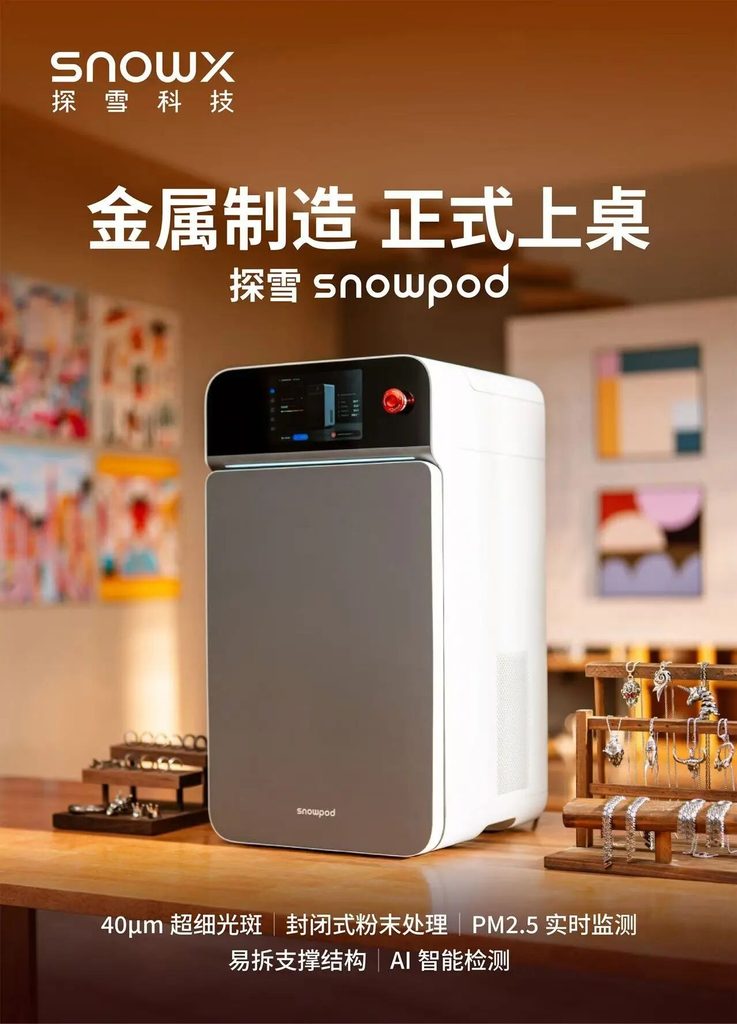
Today, metal 3D printing is undergoing a similar transformation, and SnowX Technology is at the forefront.
Sealed powder cartridges lower the barrier to powder handling, NitroPod reduces external gas supply needs, air monitoring and safety interlocks reduce manual judgment, easy-remove supports lower post-processing difficulty, and SnowPath continues to simplify software operations.
The various concerns we once had about desktop metal 3D printing now seem to have found corresponding solutions in the SnowPod.
And a truly easy-to-use “metal version of Bambu Lab” may be exactly the most anticipated product of the next stage of desktop manufacturing.
 3dzyk
3dzyk