
 By 3dzyk
 The final threshold for 3D printing to truly enter the home is being dismantled by Bambu Lab.
Over the past few years, the consumer 3D printing industry has been focused on solving the problems of “Does it work?” and “Is it easy to use?” Now, users are shifting their focus to a different question: “Is it safe to use?”
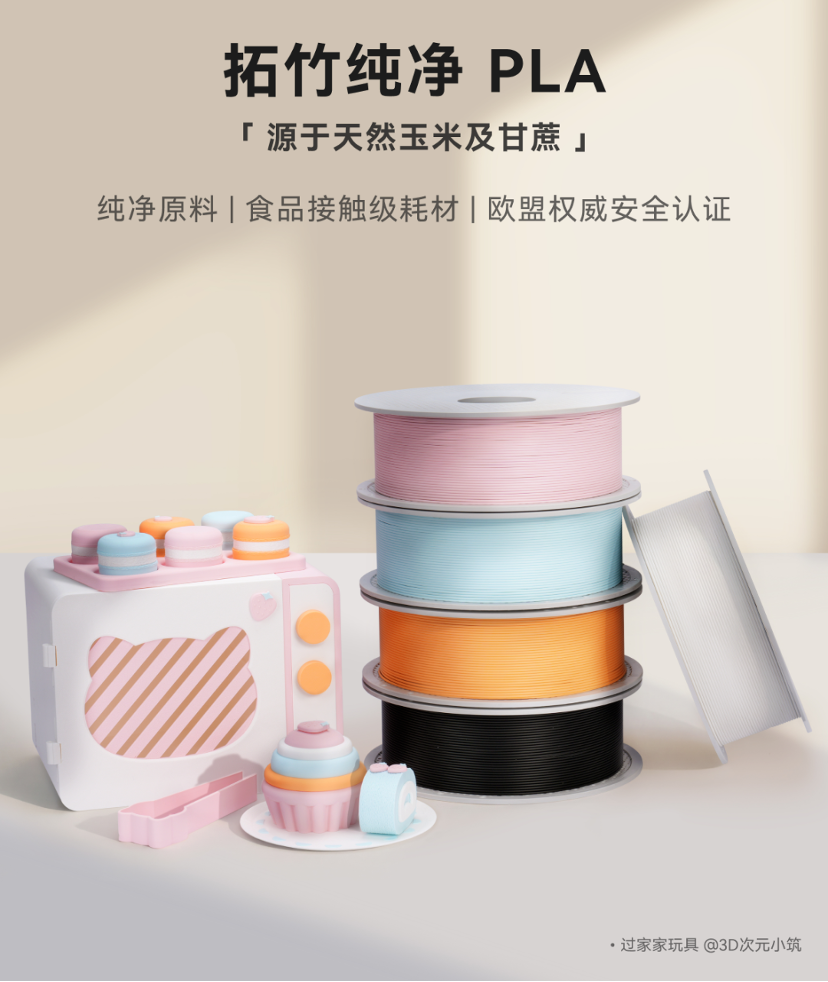
On May 11, Bambu Lab introduced PLA Pure, a 3D printing filament designed to eliminate these lingering concerns.
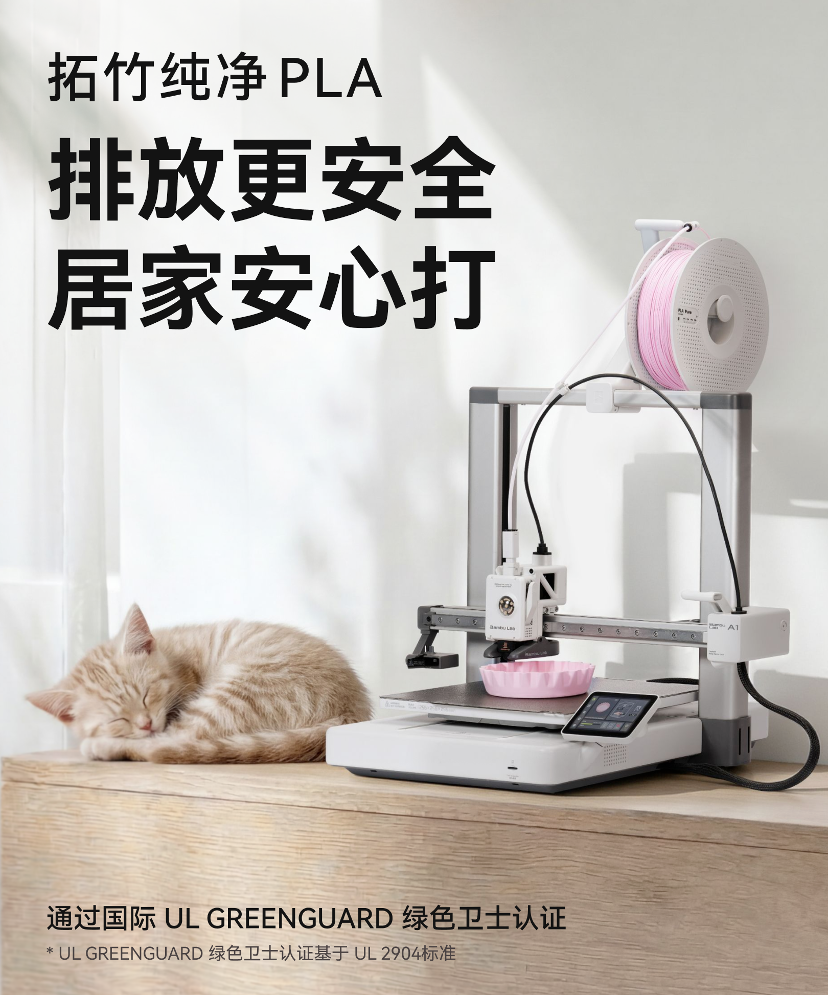
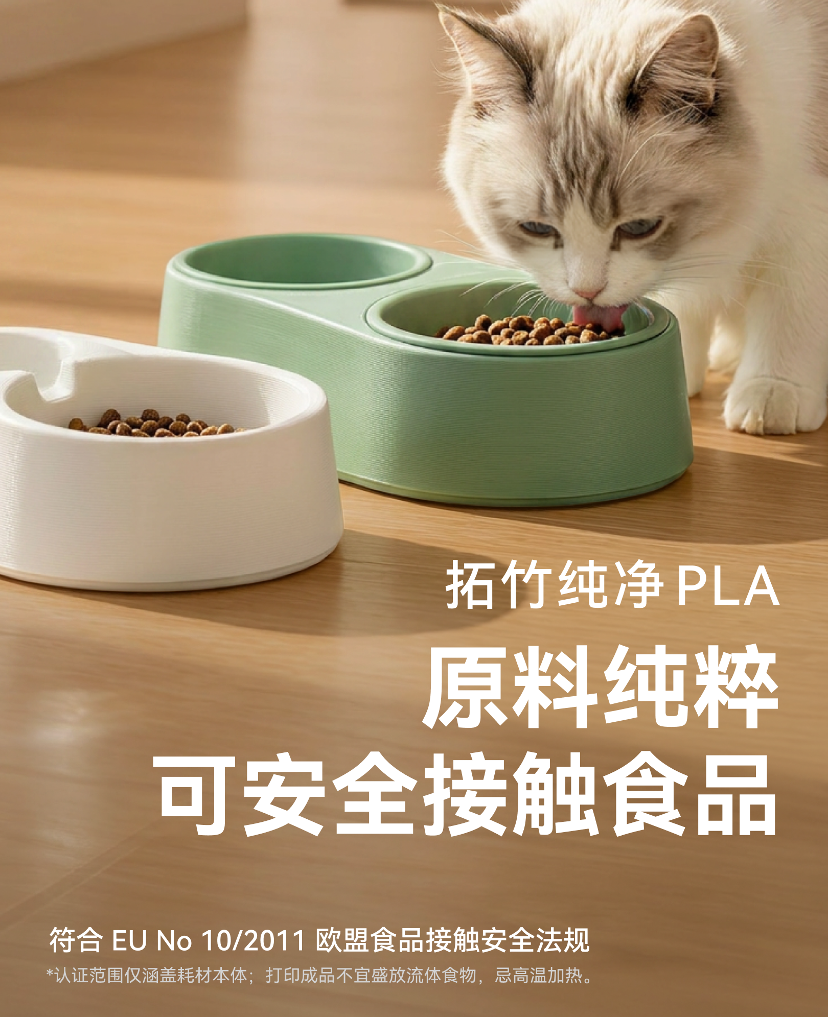
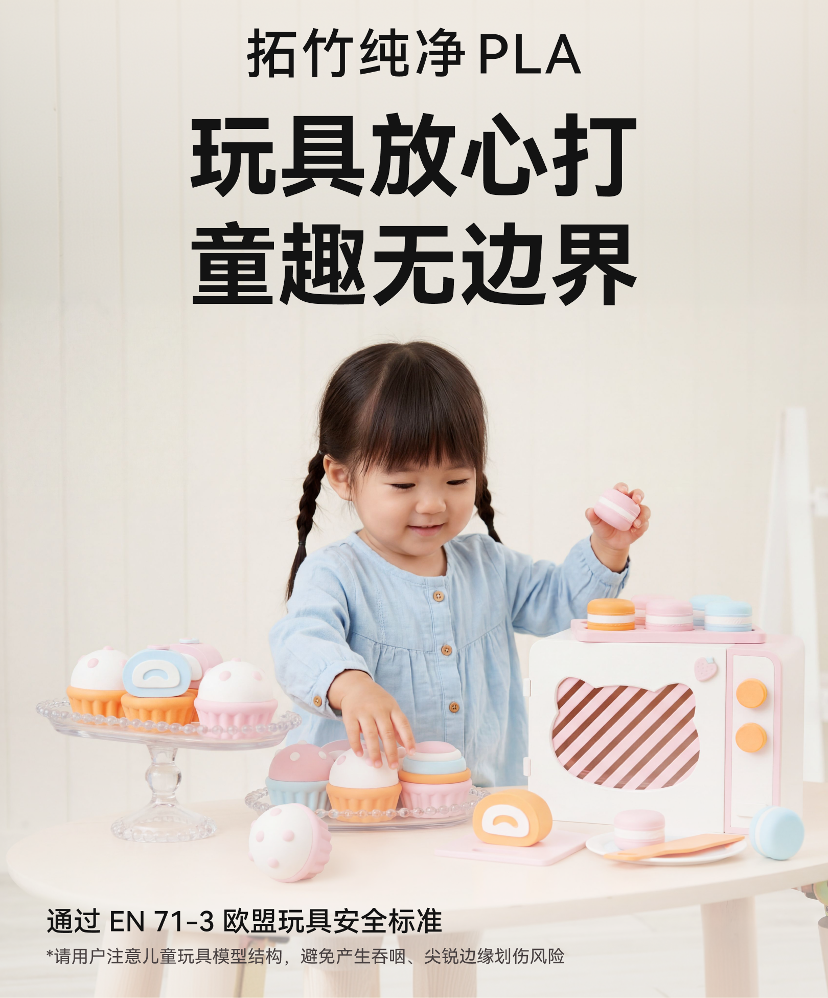
The material features a minimalist formula consisting of only five ingredients: Polylactic Acid (PLA), Acrylate Copolymer, Pigments, Ethylene Bis-stearamide, and Talc. It has secured three major international certifications: UL GREENGUARD (respiratory safety), EU No 10/2011 (food contact safety), and EN 71-3 (toy safety).
This marks the first time a consumer-grade 3D printing filament has disclosed its full ingredients and utilized a minimalist formula for food-contact certification. Behind this launch lies a clear signal: consumer 3D printing is entering a brand-new phase.
From “Ease of Use” to “Peace of Mind”
Bambu Lab’s true contribution to the industry over the past few years wasn’t just print speed; it was drastically lowering the barrier to entry for the average person.
By introducing auto-leveling, multi-color printing, out-of-the-box readiness, and a robust model ecosystem, they first solved the issue of usability, making 3D printers feel like genuine consumer electronics for the first time.
However, as 3D printers move into living rooms, studies, and children’s bedrooms, being “functional” is no longer enough.
An increasing number of users are concerned about whether materials are safe, if they emit odors, and if they are suitable for long-term indoor use—especially as the demand for 3D-printed toys and household items grows. Material safety is becoming the new focal point, an area that has been relatively neglected by the industry in the past.
Completing the “Home Integration” Puzzle
For a long time, most consumer filaments emphasized color, strength, and price. Very few products were willing to disclose their raw material composition or undergo systematic certification specifically for home-use scenarios.
In a sense, Bambu Lab’s launch of PLA Pure is the final piece of the puzzle for the “domesticated” 3D printer.
With the introduction of such minimalist-formula materials, we expect to see more similar filaments emerge. This will likely drive the establishment of industry—or even national—standards for food-grade 3D printing materials. As these standards mature, 3D printing will find an even faster route into the average household.
The “Sam’s Club” Connection
It is worth noting that Bambu Lab has already begun entering offline retail channels like Sam’s Club. Many Sam’s Club members choose the store precisely because they value “clean label” products with simple ingredients.
One can imagine a hypothetical conversation:
Sam’s Club: “Is this 3D printer suitable for a family home? Is the material safe?”
Bambu Lab: “Rest assured. Our PLA Pure formula contains only five ingredients.”
Sam’s Club: “What about safety certifications?”
Bambu Lab: “UL GREENGUARD, EU No 10/2011, EN 71-3—we have them all.”
It is 2026, and you can now manufacture anything at home.
The only thing you might be missing is the 3D printer itself.
 li, chen
 tan, wenjie