
 By li, chen
 I. The “Awakening” of a Factory Director: Huang Fangliang’s Breakthrough
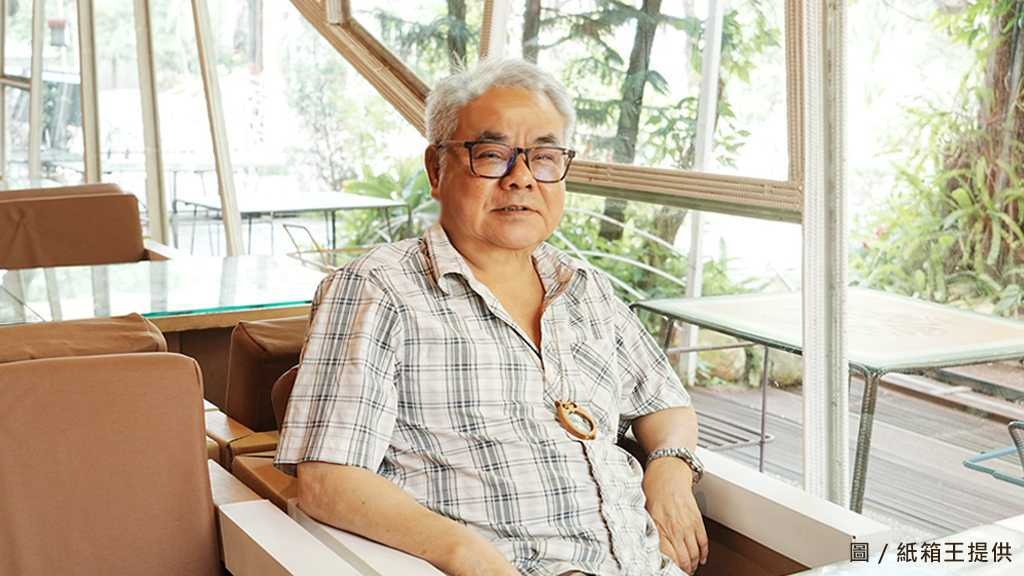
Before becoming the “King of Cartons,” Huang Fangliang was a typical packaging factory head, spending his days navigating orders and machinery. Back then, cardboard boxes were merely supporting characters on the industrial assembly line—waste material to be discarded once the product was removed.
However, during the industrial transformation wave around 2007, Huang underwent a profound psychological shift. He realized that as long as he remained in pure processing, he could never escape the fate of “price wars” and “obsolescence.” He began to wonder: If paper is no longer just a carrier for goods, can it be the product itself? Could it even be an entire world?
This shift in mindset transformed Huang from a “factory director” into a “creator.” He stopped researching how to lower the cost of a box and started diving into the structural aesthetics and mechanical limits of paper. It was this awakening—moving from “manufacturing” to “creation”—that birthed Carton King.
II. On-Site in Johor Bahru: Imagination Reconstructed by “Hard Paper”
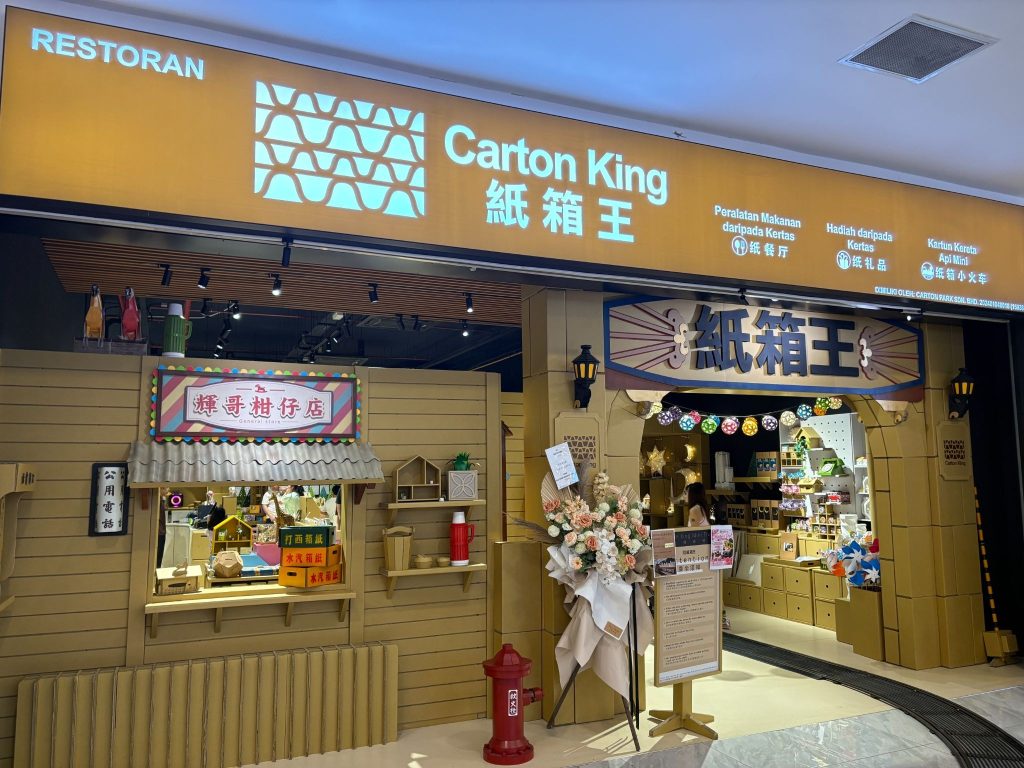
I recently visited the first Southeast Asian Carton King park in Johor Bahru, Malaysia. The immediate impression is that this isn’t just a tourist attraction; it’s a parallel universe made of paper.
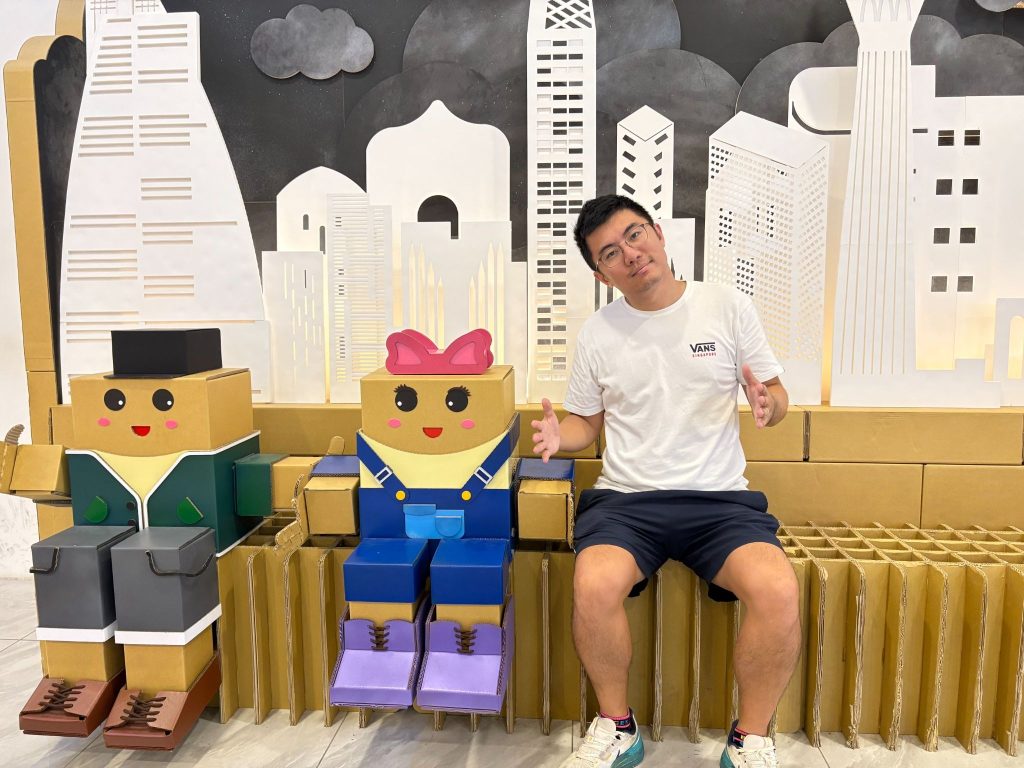
What struck me most were the children lingering in the park. In their world, paper is for drawing or making airplanes. But in the Johor Bahru park, paper becomes the Petronas Twin Towers standing meters high, a train that can actually carry passengers, and even the base supporting a boiling hot pot in the restaurant.
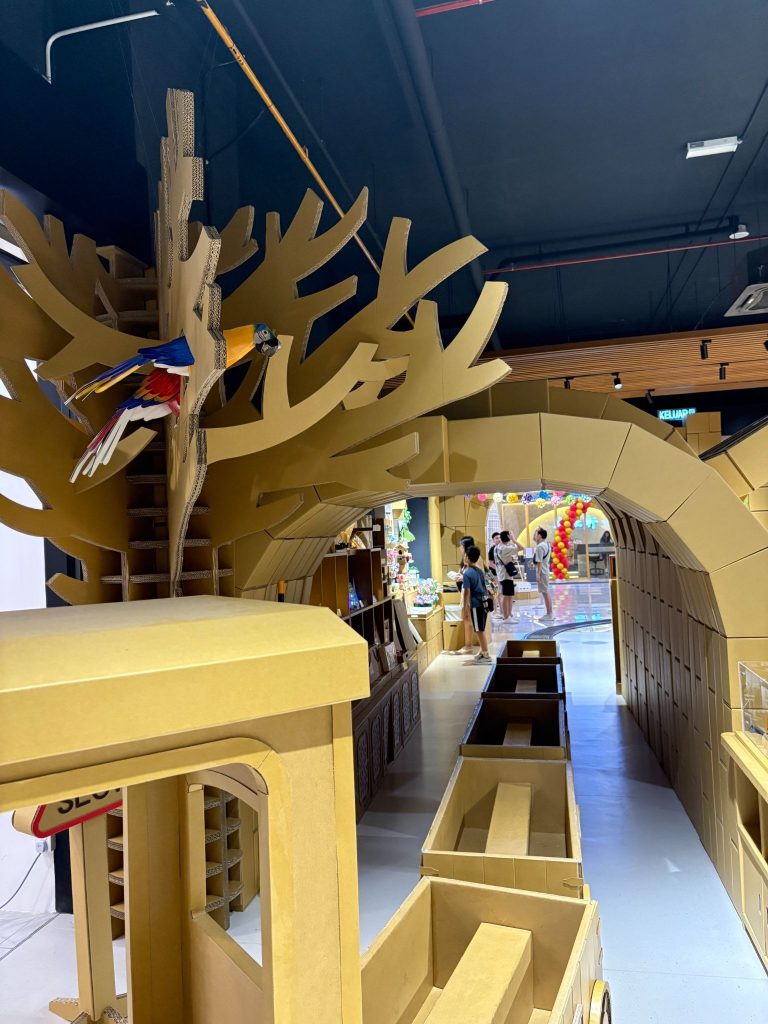
The visual impact of the scenes is immense:
- Amusement Facilities: Material that seems fragile is transformed through specific corrugated structures to support the weight of adults, achieving a balance between “high strength” and “lightweight.”
- Displays and Backdrops: Complex geometric cut-outs give the otherwise mundane corrugated paper a texture reminiscent of silk.
- Derivatives and Souvenirs: From exquisite paper wallets to waterproof paper hats, every item challenges the audience’s inherent perception of what “paper” can do.
Standing in the center of the park, you get a sense of illusion: Is this really just paper? This use of specific materials to achieve complex structures and functional needs feels remarkably similar to the 3D printing industry we follow today.
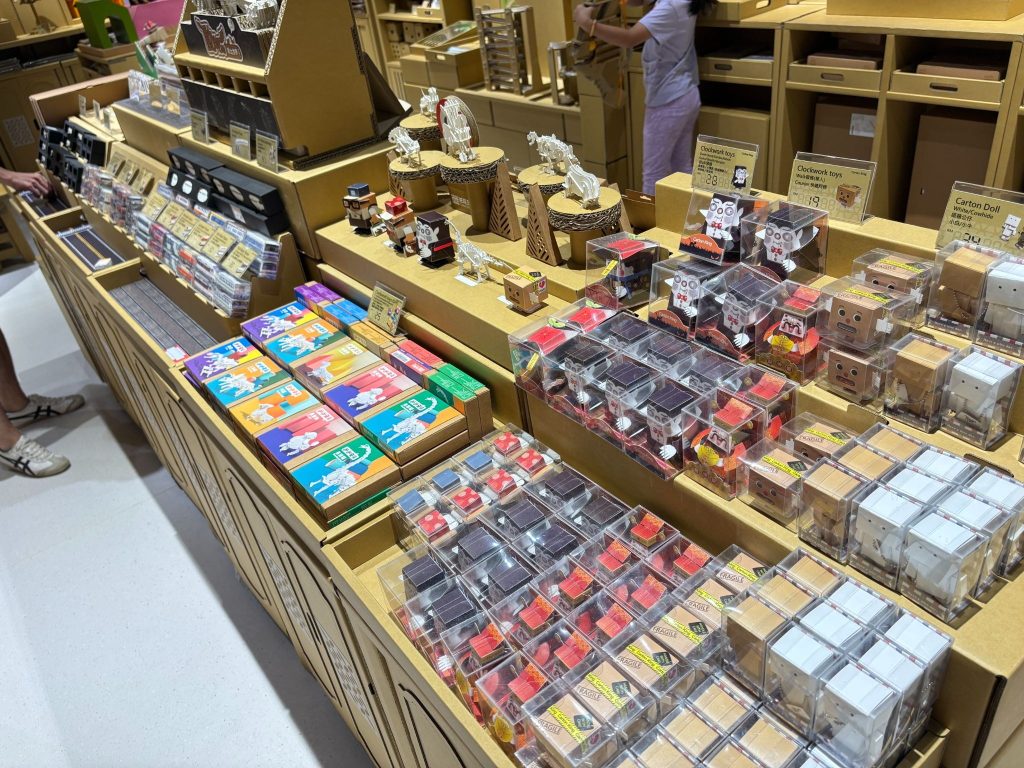
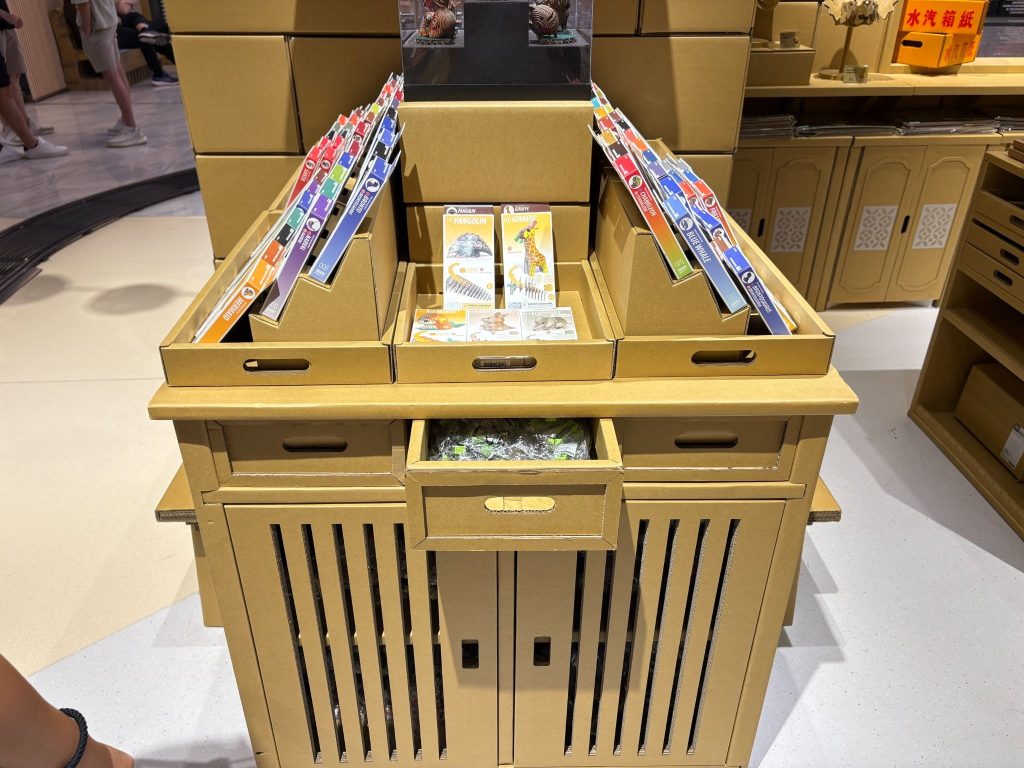
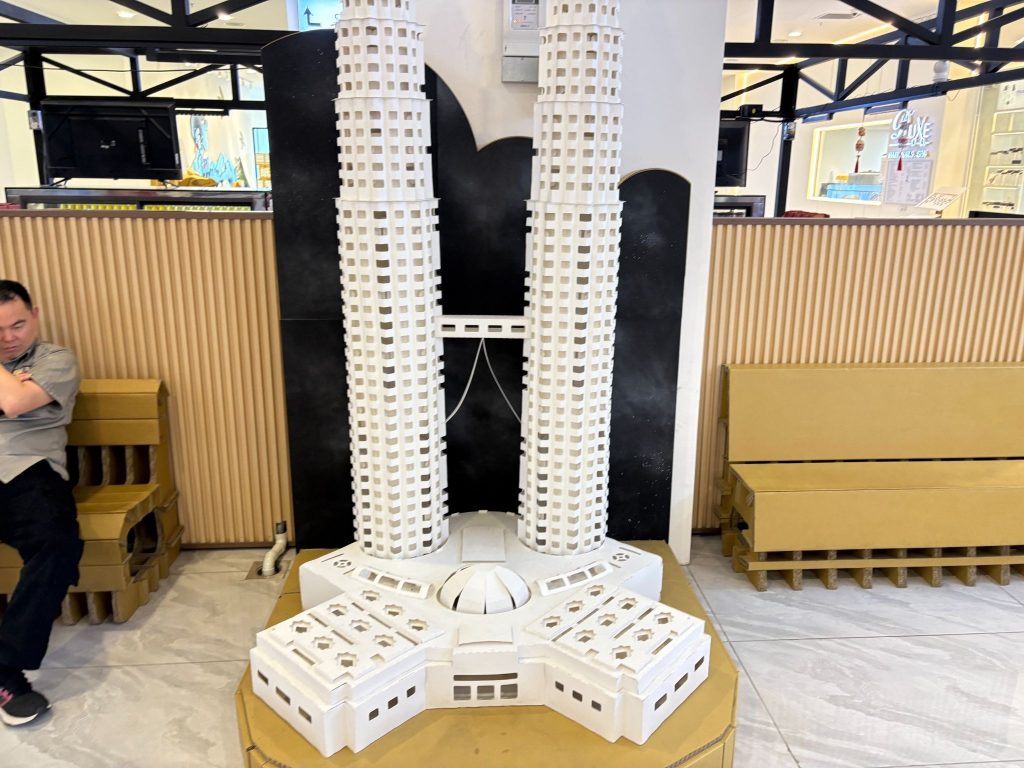
III. A Shared Logic: 3D Printing Enters “2007 Mode”
If you look closely at the moves of Bambu Lab, a leader in the 3D printing space, you will find a startling historical coincidence.
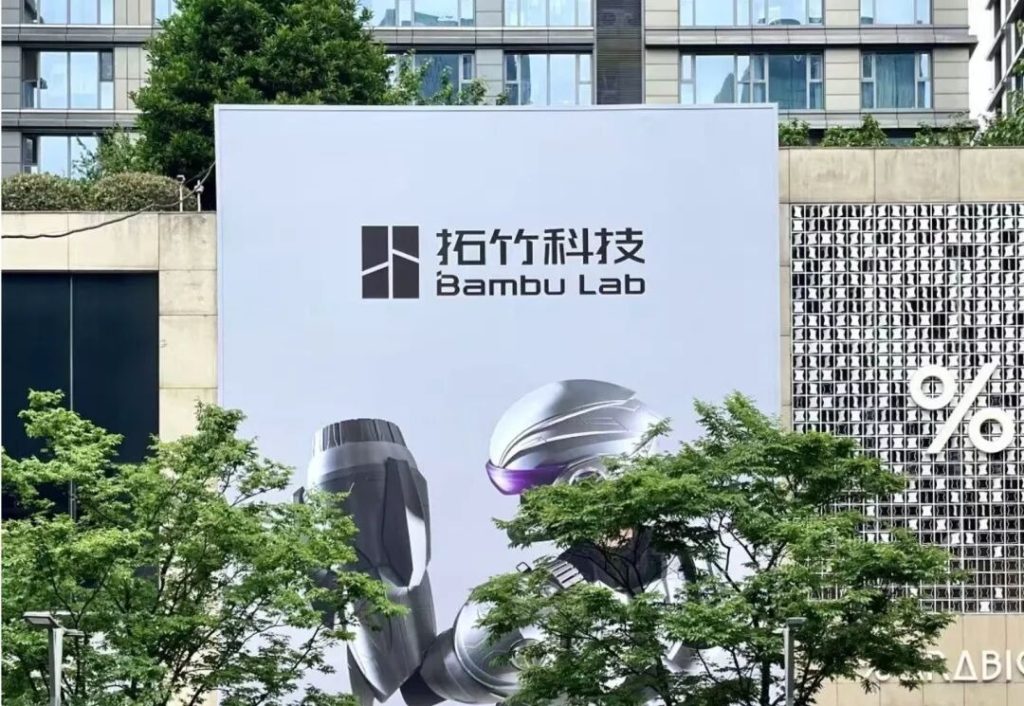
Bambu Lab recently set up its second flagship store in Hangzhou, while its products are already flourishing on geek desks and in “designer toy” shops worldwide. 3D printing is currently in its “ecological expansion phase,” much like Carton King was years ago:
- From “Desk Toys” to “Themed Spaces”: Just as Huang Fangliang turned cardboard from stationery into theme parks, Bambu Lab is using its MakerWorld community and flagship showrooms to tell the world: 3D printing isn’t just about making plastic figurines; it can be furniture, installation art, and a complete IP universe.
- The Chemistry of Manufacturing + Imagination + Theme: The key to Carton King’s success wasn’t selling “paper,” but selling the “infinite possibilities of paper.” Similarly, Bambu Lab’s success isn’t just about selling “printers,” but about selling the “power to create.”
- The End of the “Factory Mindset”: Huang Fangliang isn’t a factory director; he is a curator. The Bambu Lab team aren’t just engineers; they are ecosystem designers. Both are doing the same thing: blurring the boundaries between manufacturing and lifestyle.


IV. 2026: Don’t Look for the Future in the Factory
Today’s 3D printing ecosystem is almost a “pixel-perfect” replica of Carton King’s path to success: innovating through materials (from paper to PLA/PETG), utilizing structural ingenuity (from corrugation to infill), and finally landing on IP and themed derivatives.
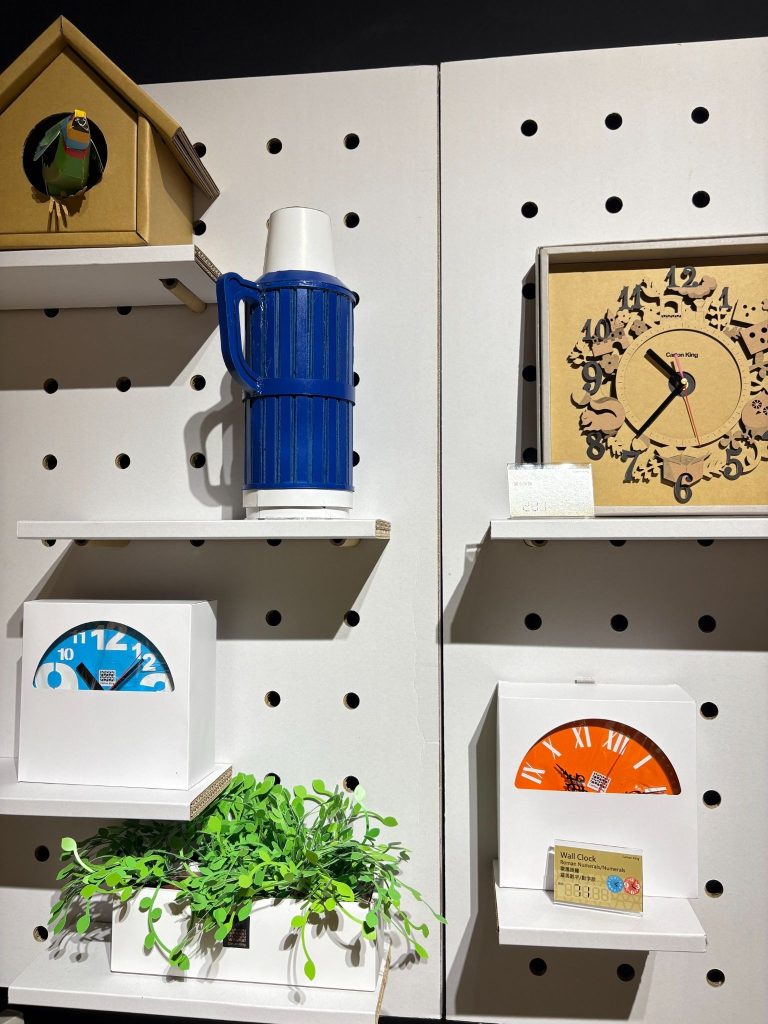
This “desktop-scale productivity” business model has not reached saturation in 2026; instead, it is showing incredible expansion. The Johor Bahru park remains crowded, and the Hangzhou flagship store is currently being fitted out. This tells us that consumers are always willing to pay for “imagination.”
We are used to looking at massive factories and optimizing efficiency on production lines. But perhaps the true future doesn’t lie in those smoking chimneys. It lies in that rideable paper train in Johor Bahru, and in the printing nozzles layering plastic in the Hangzhou flagship store.
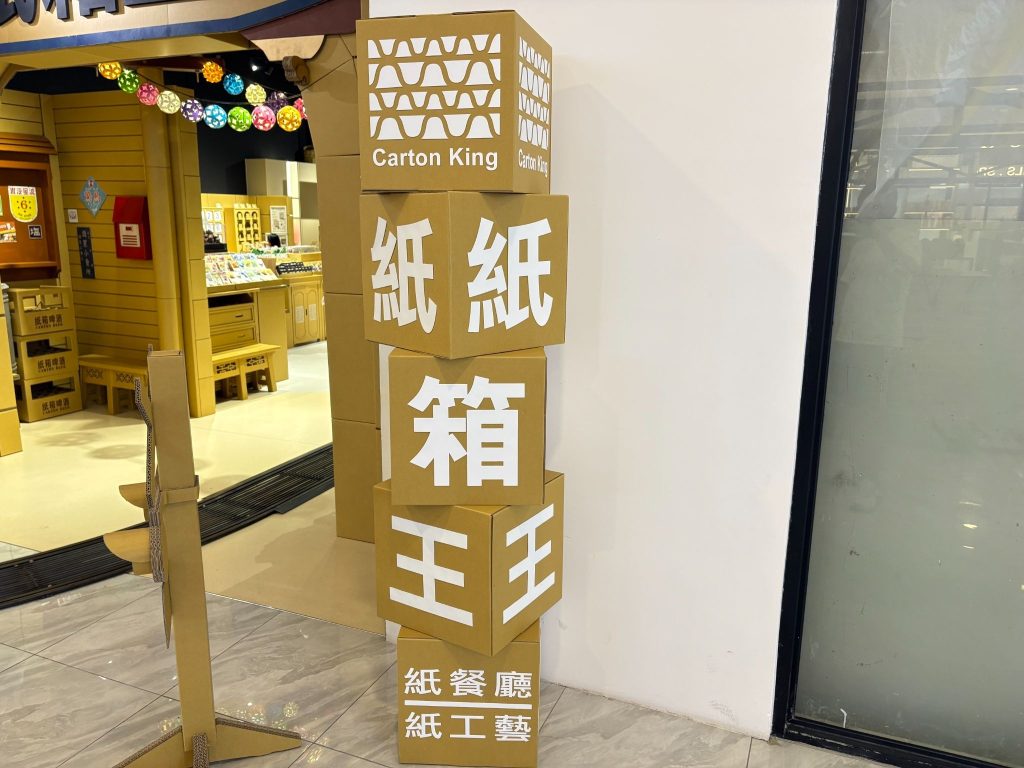
Look in that direction—there, you won’t find a cold factory mindset, but rather the warm, vibrant ambition of a creator.
 3dzyk
3dzyk
 tan, wenjie