
 By li, chen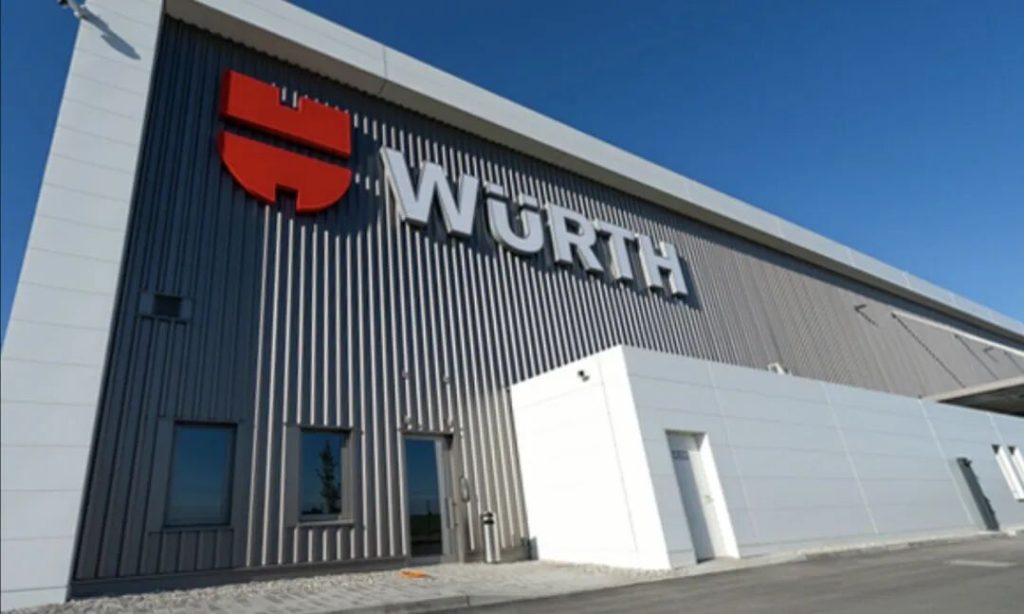
Würth Group (Würth Group) is a German family-owned company founded in 1945, holding a leading position in the global assembly and fastening market.
At the end of June this year, Würth Group confirmed via a brief LinkedIn statement of fewer than 50 words that it had closed its additive manufacturing business unit, Würth Additive. For the industrial 3D printing industry, this is undoubtedly a significant loss.
Würth Additive was once regarded as a representative example of a traditional industrial service provider venturing into 3D printing. Ultimately, however, this years-long exploration has come to a halt.
01 — From Fastening Giant to 3D Printing Service Provider
Würth is a multinational enterprise group that primarily serves craft, construction, automotive, and industrial customers, offering over 125,000 products including screws, anchors, tools, safety equipment, and chemical-technical products.
In addition to its core fastening business, Würth also operates in fields such as electrical wholesaling, electronics, and financial services.
However, Würth’s true strength lies in industrial supply chain management.
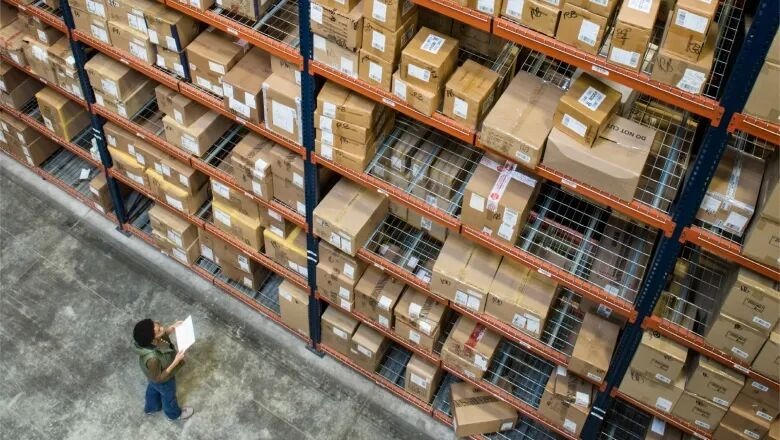
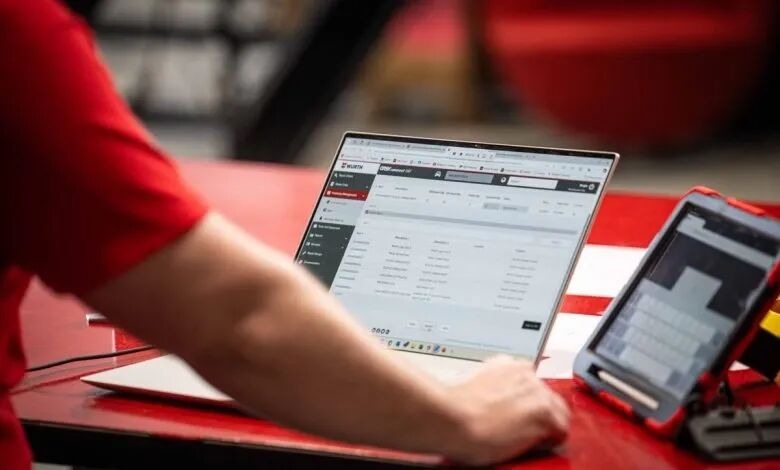
Through systems such as ORSY®, kanban shelving, barcodes, QR codes, and RFID tags, Würth helps customers manage factory inventory and achieve automated replenishment. In smart factories, its iDISPLAY electronic shelf labels can synchronously display part numbers, batch details, and real-time inventory status, reducing material shortages and equipment downtime.
It was on this business foundation that Würth began turning its attention to 3D printing.
02 — Why Did Würth Enter 3D Printing?
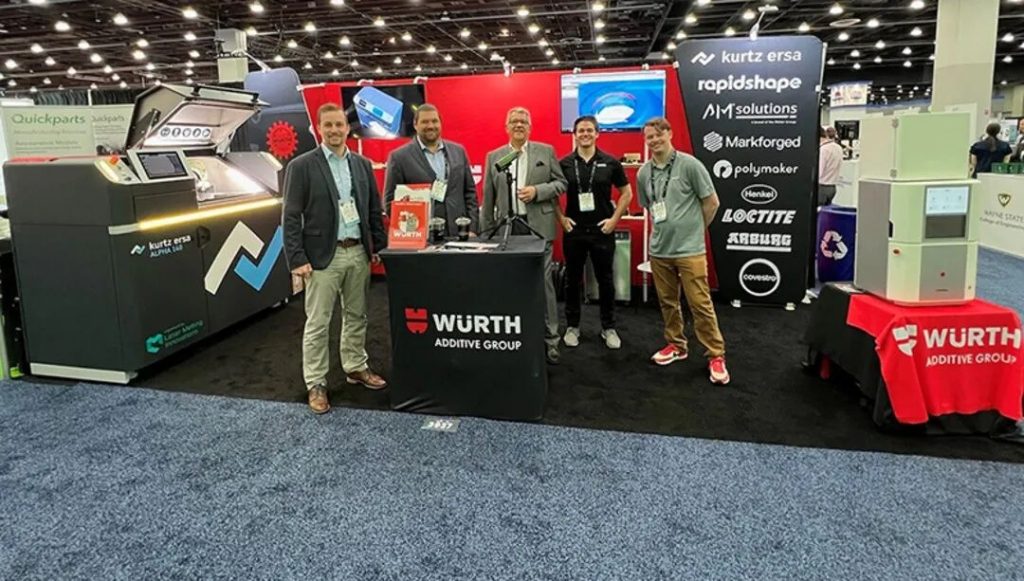
Würth began exploring additive manufacturing in 2017 and launched its “Wurth Additive Group” in 2021. Through this division, the company aimed to extend its industrial supply chain expertise into 3D printing. Its initial vision was built around three core ideas:
1. Replacing physical warehouses with digital inventory
Traditional factories often need to stock large quantities of spare parts such as brackets, nuts, fixtures, and other low-frequency components. These parts not only occupy warehouse space but may also sit idle for extended periods as equipment is updated.
Würth envisioned storing parts as CAD files. When equipment failed, customers could directly access the files from a digital catalog and complete 3D printing locally, eliminating the need to wait for parts to be shipped from other regions.
2. Bridging the gap for small-batch industrial parts
Industrial customers are not always willing to purchase expensive industrial-grade 3D printers for small quantities of parts, yet the demand for low-volume, customized components does exist.
Therefore, Würth aimed to leverage industrial 3D printing centers and service networks to bridge the gap between equipment procurement and parts demand, helping customers obtain needed components with lower upfront investment.
3. Providing vendor-neutral integration services
Würth did not intend to manufacture its own 3D printers. Instead, it sought to act as an integrator between equipment manufacturers, material suppliers, software providers, and end customers.
It would vet different metal, plastic, and composite equipment options, bundle hardware, materials, and software, while also helping customers manage complex issues such as quality control, production processes, and project management.
From a business logic perspective, this model seemed highly reasonable. Würth indeed invested substantial capital and resources to drive industrial customers toward adopting 3D printing.
But sound logic does not always translate into a viable business.
03 — From Hardware Ecosystem to Digital Inventory
Looking back at the development trajectory of Würth Additive, it can be roughly divided into three phases.
2020–2022: Building the Hardware Ecosystem
Following preliminary exploration, Würth Additive began systematically introducing industrial-grade 3D printing equipment and scanning systems.
Key partners during this period included:
- Markforged: Provided continuous carbon-fiber composite and metal 3D printing solutions, with its “Digital Forge” platform becoming a critical foundation for the digital inventory business.
- Arburg: Enabled pellet-based plastic additive manufacturing through its Freeformer equipment.
- Kurtz Ersa: Supplemented powder-bed metal 3D printing capabilities.
- Raise3D: Provided professional-grade polymer 3D printing equipment.
- Artec 3D: Delivered high-precision 3D scanning and reverse engineering capabilities.
- EOS: Supported SLS technology for select nylon parts projects.
By this stage, Würth Additive had essentially built a hardware ecosystem covering metals, polymers, composites, and 3D scanning.
2023–2024: Expanding Digital Inventory and Materials Capabilities
As the business focus gradually shifted toward digital inventory, Würth Additive further supplemented its capabilities in photopolymerization, powder sintering, and materials certification. Partners included B9Creations, Formlabs, Rapid Shape, as well as material companies such as Covestro, Polymaker, and Henkel.
Through materials certification and process validation, Würth aimed to bring 3D-printed parts into real-world factory applications.
2025–Mid 2026: Shifting Toward Automation and Heavy Industry
In its later stages, Würth Additive began strengthening software orchestration, automation, and enterprise-grade production capabilities.
For instance, it explored on-demand production at scale with HP, expanded into oil, gas, and energy applications with Baker Hughes and Nex, and introduced software from Twikit and Triditive for automated workflows, digital inventory assessment, and production quoting.
By this point, Würth Additive had formed a comprehensive portfolio spanning equipment, materials, software, and applications.
But a complete ecosystem does not guarantee a viable business model.
04 — The Six Major Challenges Faced by Würth Additive
1. Mismatch between traditional business and 3D printing models
Würth’s core business relies on high-volume sales, direct delivery, stable margins, and recurring demand.
As long as customers’ machines keep running, they continuously consume fasteners, tools, and other industrial supplies. This high-frequency demand and long-term partnership model has supported Würth’s vast global operations.
3D printing, however, emphasizes “high-mix, low-volume” production. Order quantities are small, demand fluctuates significantly, and per-part costs are higher.
This model does not fully align with Würth’s traditional large-scale industrial supply business.
2. Process consistency remains a challenge
Industrial applications require not only that parts can be printed, but also that their performance is stable, quality is controllable, and production is repeatable.
In practice, however, the quality of 3D-printed parts is influenced by various factors including equipment, materials, parameters, environment, and operator skill.
Even with excellent equipment, materials, and teams, there is no guarantee that every print will yield identical results. Establishing a stable production system still requires extensive practice, data accumulation, and supply chain coordination.
3. Market demand growth fell short of expectations
Equipment manufacturers frequently showcase success stories in industrial 3D printing. But in real manufacturing settings, many industries remain in the evaluation and trial phase.
Customers do not adopt new technology simply because it sounds advanced; they are not quick to change established procurement and production processes.
When the market size falls below expectations, the gap between supply and demand steadily consumes capital. Companies must not only serve existing customers but also invest substantial resources in market education, process validation, and convincing customers to change traditional procurement and production methods.
4. Overly dispersed customers, technologies, and regional focus
Würth has a vast customer network and broad geographic coverage, while also managing numerous equipment, material, and software brands. At different stages of development, Würth Additive’s focus regions and target industries were constantly shifting.
To connect equipment manufacturers with end customers globally requires simultaneously managing technology, industry verticals, regions, services, and after-sales support—an enormous operational challenge.
5. Project failures quickly erode customer trust
There is an often-overlooked issue in industrial 3D printing: even a well-designed solution does not guarantee successful implementation.
Even with excellent equipment, materials, software, customer needs, and service teams, project success is never assured. Equipment parameters, material batches, part design, post-processing, and usage environments can all affect the final outcome.
At its core, industrial certification is about trust. When failures accumulate, customer trust declines, the service provider’s brand suffers, and subsequent projects become even more difficult.
6. Technology and market dynamics change too quickly
From the establishment of Würth Additive to its closure, the 3D printing industry has undergone dramatic changes.
Equipment performance continues to improve, material systems are expanding, software is iterating rapidly, and market competition is intensifying. Meanwhile, some early equipment manufacturers and service providers have adjusted their business directions or even exited the market.
For an integrator like Würth, when partners, technology roadmaps, or customer needs shift, the entire system must be realigned—adding further operational pressure.
05 — Würth Is Not Alone in Exiting
In fact, the closure of Würth Additive is not an isolated case.
Over the past few years, several traditional industrial companies and 3D printing service platforms have attempted to reshape industrial supply chains with 3D printing, only to ultimately exit or scale back their operations.
| Company | Exit Timeline | Original Core Business | Additive Manufacturing Vision |
| Xerox — Elem Additive | August 2023 | Office equipment, digital documents, and IT services | Using wire-arc additive manufacturing to provide on-site metal parts production for military, maritime, and remote applications |
| Protolabs | October 2024 | Rapid injection molding and CNC prototyping | Leveraging industrial 3D printing equipment to rapidly deliver complex parts to aerospace, medical, and automotive customers |
| Fastenal | 2022–2023 (phased out) | Industrial fasteners and manufacturing tool supply | Helping customers shorten traditional manufacturing and maintenance cycles through custom 3D-printed metal parts |
| Shapeways | July 2, 2024 | Online 3D printing platform and automated file processing | Building centralized factories to produce end-use parts at scale using SLA, SLS, and metal 3D printing equipment |
The experiences of these companies demonstrate that possessing technology, equipment, customers, and capital does not guarantee the establishment of a sustainable industrial 3D printing business.
Final Thoughts
Agility in the industrial world is an appealing concept, but changing the value chain with “new” technology does not simply equate to “new” opportunities—far more groundwork is required. There are still players in this field, such as Oerlikon (semiconductor, defense, aerospace), actively pursuing additive manufacturing services globally.
We believe that technology itself continues to evolve, and different stages will have different champions. And additive manufacturing has yet to reach even 10% of total manufacturing output—the end is far from here; the journey ahead remains long.