Valued at RMB 4 Billion! Post-80s Female PhD at the Helm, 3D-Printed Drug Company Triastek Completes New Financing Round
Triastek: The “hidden champion” of the 3D printing pharmaceutical industry.
According to 3Dzyk, on July 13, 2026, Triastek (Nanjing) Pharmaceutical Technology Co., Ltd. (hereinafter referred to as “Triastek”) announced the completion of a new strategic financing round. Investors include Shanghai Minhang District Financial Investment Development Co., Ltd., Shanghai Lingang Digital Science Private Equity Fund Management Co., Ltd., and Hangzhou Industrial Investment Group Co., Ltd. also participated in this round.
According to reports, this round of financing will be primarily used for the construction of Triastek’s Shanghai International R&D and Production Center, the clinical advancement of oral peptide pipelines, and the expansion of international cooperation business. Previously, Triastek’s wholly-owned subsidiary, Triastek (Shanghai) Pharmaceutical Technology Co., Ltd., had completed its registration and will focus on oral peptide drug R&D, production, and international collaboration in the future.
The significance of this financing round lies not only in securing additional capital but also in marking Triastek’s transition from a technology platform development stage toward clinical development and industrialization.
01
—
Who is Triastek? And what are 3D-printed drugs?
Founded in 2015, Triastek is a Chinese enterprise dedicated to the R&D and industrialization of 3D-printed pharmaceuticals. The company has independently developed Melt Extrusion Deposition (MED®) technology and, building on this, has further established process systems such as MED combined with Micro-Injection Molding (MED&MIM) and MED combined with Semi-Solid Extrusion (MED&SSE).
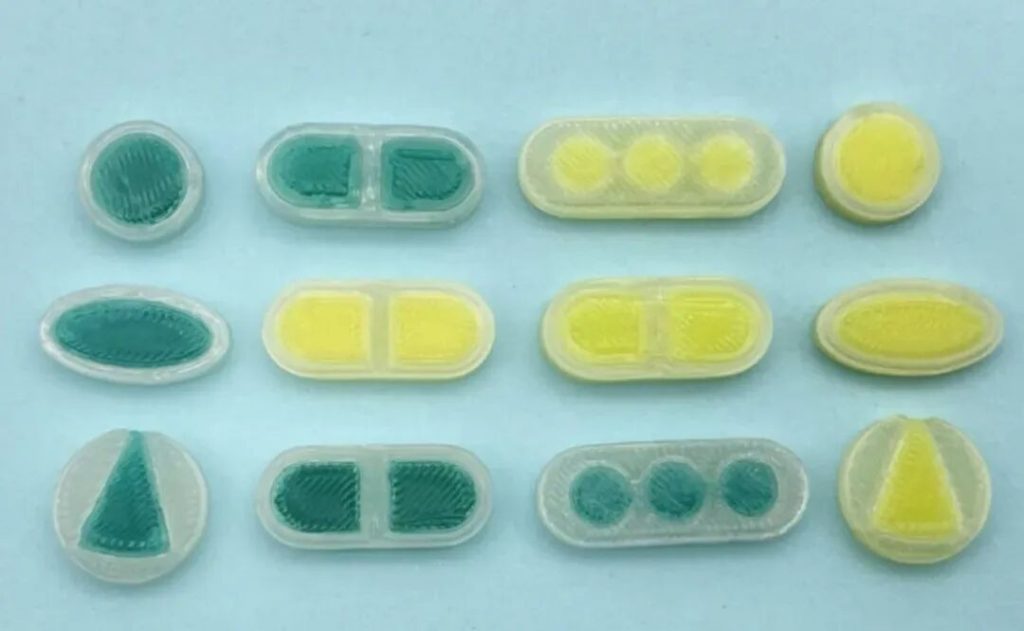
3D-printed drugs are not merely about altering the external appearance of tablets. Instead, they leverage digital models to precisely design the internal structure, material distribution, and release pathways of drugs, transforming formulation development from a traditional “trial-and-error” approach to a predictable and controllable digital workflow, thereby addressing technical challenges in complex drug delivery.
It is understood that Triastek is the first and currently the only platform-based enterprise in China focused exclusively on 3D-printed drug technology. In September 2025, the company obtained the country’s first Drug Manufacturing License for 3D-printed drugs and is also the sole Chinese pharmaceutical company selected for the U.S. FDA’s Emerging Technology Program.
At present, Triastek leads globally in the number of 3D-printed drugs approved for clinical trials. Its five products—D23, T20G, T24, T25, and T26—have all received clinical trial approvals, positioning the company at the forefront of the global 3D-printed pharmaceutical vertical.
02
—
The 80s Female PhD Bets on 3D-Printed Pharmaceuticals
As a relatively low-key player in the 3D printing industry, Triastek rarely appears in the public spotlight, and the entrepreneurial story behind it is little known.
How did Dr. Cheng Senping, a post-80s PhD and founder and CEO of the company, embark on the path of 3D-printed pharmaceutical entrepreneurship? Based on a previous exclusive interview with Cheng Senping in Ningjing Interview and other publicly available sources, her entrepreneurial journey can be traced back to 2010 when she started her first business in the United States.
Cheng Senping earned her bachelor’s degree in clinical medicine from Nanjing Medical University and later pursued a PhD in toxicology at the University of Kentucky in the U.S. After graduating in 2010, she founded Pan-Pacific Biopharma in San Francisco with support from Yangtze River Pharmaceutical Group, marking her first entrepreneurial venture.
In 2013, Cheng Senping returned to Nanjing due to family reasons.
Compared to joining academia or becoming a professional manager, entrepreneurship always held greater appeal for her. In 2014, she founded Jixing Medicine to engage in international pharmaceutical consulting and collaboration. In 2015, she co-founded Triastek with formulation expert Li Xiaoling, turning her sights to the then-nascent field of 3D-printed drugs.
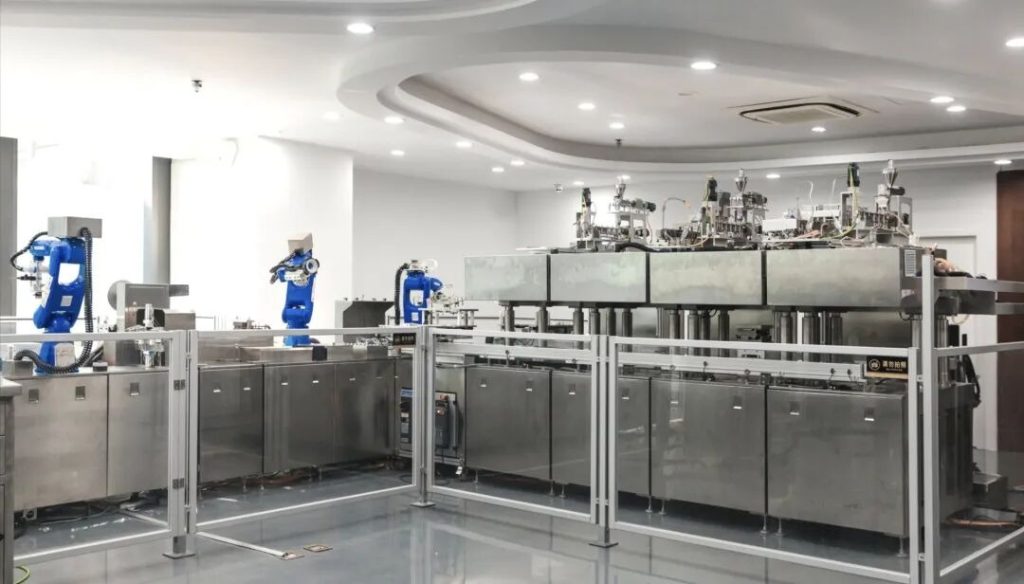
In the absence of mature equipment and technical precedents, the team started from prototype machines and went through 13 iterations. Ultimately, after three years, they developed a hot-melt extrusion deposition 3D printing device for pharmaceuticals and built a pilot production line.
03
—
Triastek’s New Strategy: Focusing on Oral Peptides
In this round, Triastek has established oral peptides as its new strategic focus.
For a long time, oral delivery of peptide drugs has faced challenges such as gastrointestinal degradation, low mucosal permeability, and insufficient bioavailability, which is why most products still rely on injection administration. Overcoming the oral absorption barrier has thus become a core challenge in peptide drug development.
To address this pain point, Triastek developed the 3D Microstructure Oral Biologics Delivery Platform (3DμS-OM). This platform employs a combined MED and SSE 3D printing process, maintaining the stability of peptide and biologic raw materials while designing formulation structures and shell materials to precisely deliver drugs to more suitable absorption regions in the gastrointestinal tract, thereby improving bioavailability and reducing food effects.
Based on this platform, Triastek’s T25 octreotide acetate tablets have received clinical trial approvals for new drugs in both China and the United States, intended for the treatment of acromegaly.
The entry of T25 into clinical trials marks Triastek’s transition from process validation to product and clinical validation, and also provides an important benchmark for the application of 3D printing technology in the oral peptide field.
▍Final Toughts from 3Dzyk
As one of the 3D printing companies listed in the “2024 China Invisible Unicorn Top 500”, Triastek was previously valued at RMB 3–4 billion. With the completion of this new strategic financing round, its valuation is expected to further surpass RMB 4 billion.
In fact, within the 3D printing industry, “hidden champions” like Triastek are not uncommon. These companies often go deep into niche segments, and while they may not enjoy high public visibility, they have established strong technological moats and industrialization capabilities.
Examples include BMF Precision, which focuses on micro-nano 3D printing, Chenglian Technology, which specializes in digital manufacturing of metal dental restorations, and HeyGears, which continues to expand in the digital dentistry field.

 By 3dzyk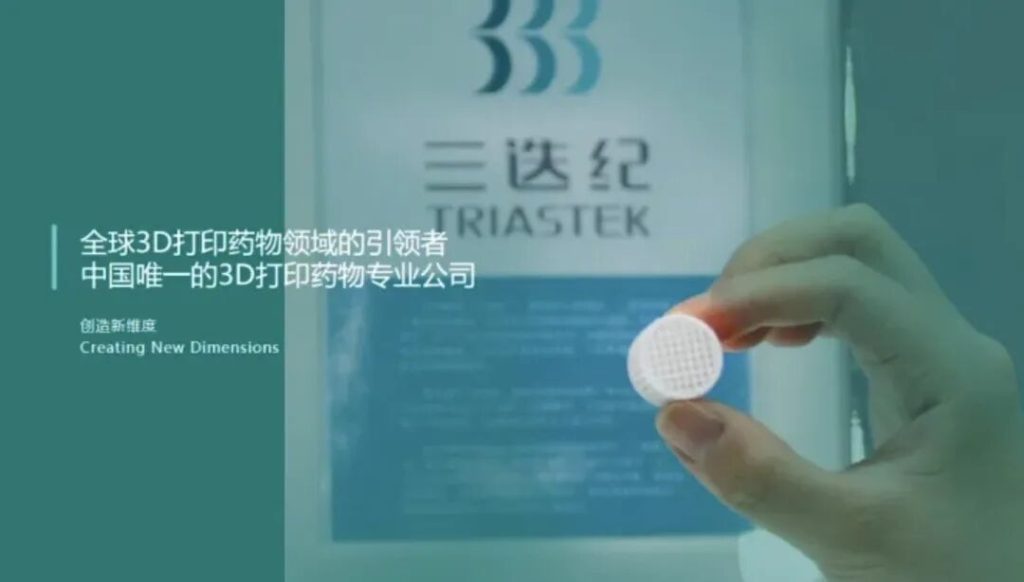


 li, chen