
 By 3dzyk
 At the consumer-grade 3D printing table, Snapmaker now holds a much stronger hand.
On July 8, 2026, Snapmaker (快造科技) announced the completion of its 1 billion RMB Series C funding round. This stands as the largest single financing event in the primary market for consumer 3D printing over the past two years. The round was led by Cathay Capital, with Future Forum joining as a strategic investor. Existing shareholders, including Meituan Strategic Investment, Meituan Dragonball, Hillhouse Venture Capital (GLV), and Shunwei Capital, continued to double down with follow-on investments.
Six months ago, Snapmaker was widely referred to as a “dark horse.” Today, “unicorn” seems far more fitting.
Looking back, the constant influx of new investors alongside deep support from old ones highlights exactly why capital favors Snapmaker: it perfectly captured the next major evolution of consumer FDM—multi-toolhead, multi-color, and multi-material printing.
As it stands, Snapmaker is the company most poised to define this entire category.
01. FDM Competition Formally Enters the “Multi-Head Era”
Over the past few years, desktop 3D printers completed a massive cycle of upgrades focused on speed, color, and reliability. This wave pushed 3D printers from being merely “usable” to genuinely “user-friendly,” triggering a boom in market volume. Last year, China’s 3D printer exports surpassed 5 million units; in the first five months of this year alone, that figure reached 2.94 million, putting the full-year projection on track to push past 8 million units.
However, the further the market advances, the more glaring its legacy limitations become.
Current mainstream multi-color solutions rely heavily on a single nozzle repeatedly retracting, feeding, and flushing filament. While this achieves multi-color prints, it yields massive material waste, long wait times, and poor efficiency.
This is where the significance of the Snapmaker U1 comes in.
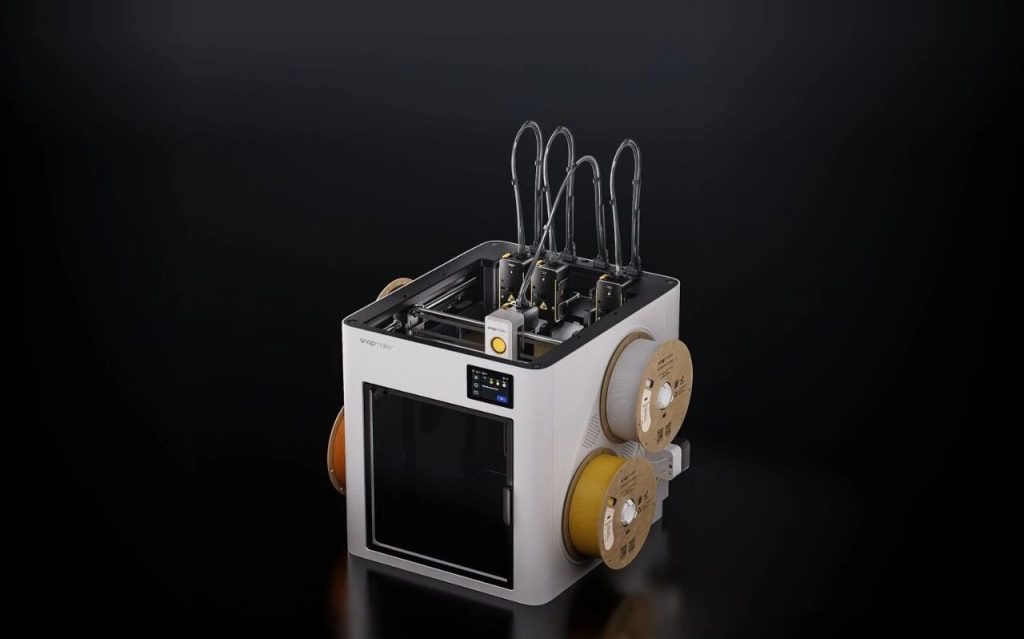
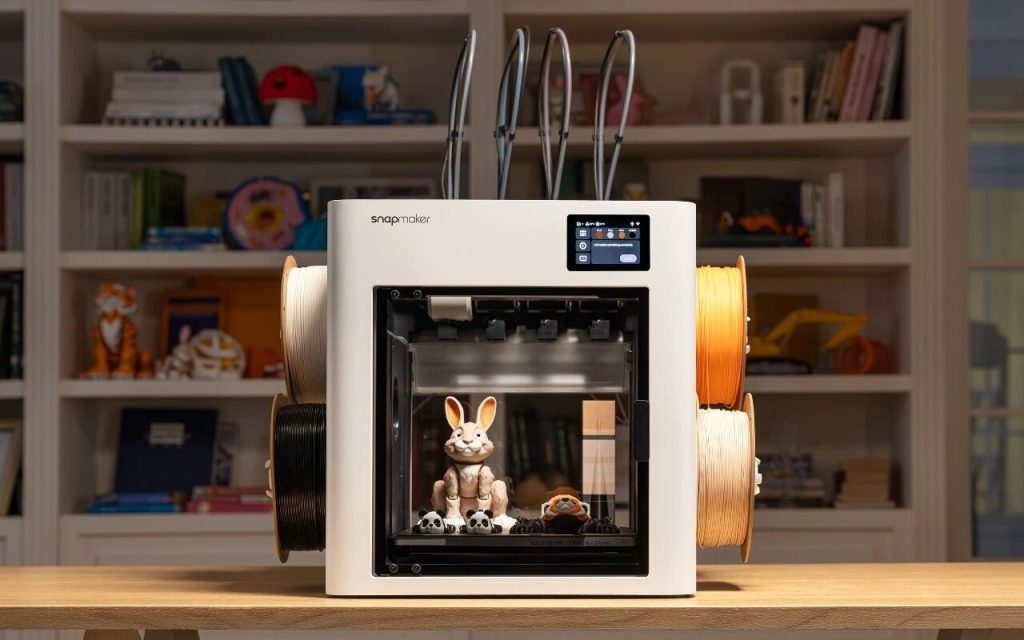
When the U1 debuted in 2025, it bypassed the single-nozzle material swapping route entirely. Instead, it opted for four independent toolheads powered by the SnapSwap™ system, slashing single-tool swapping times from roughly 2 minutes down to just 5 seconds, while drastically reducing material waste.
This isn’t just a bump in technical specs; it’s a complete workflow revolution.
The U1 essentially changes the logic from “swapping materials” to “swapping tools,” bringing multi-color and multi-material printing much closer to genuine creative needs. For users, printing efficiency can jump by up to 5x, filament waste drops by roughly 80%, and the horizon for combining rigid and flexible materials (like TPU and PVA) expands dramatically.
This is the true disruption Snapmaker brings to the table: they aren’t just patching up existing systems; they are rebuilding the underlying architecture of next-generation consumer multi-color FDM.
02. Turning the Tide with Sheer Product Muscle
The story of Snapmaker began with a simple, engineer-driven vision. In 2016, Daniel Chen founded Snapmaker in Shenzhen with the dream of “enabling everyone to create freely in the physical world.” Since then, almost every time the company made waves, it was the product doing the talking.
- 2017: The Snapmaker Original raised 15 million RMB on Kickstarter.
- 2019: The Snapmaker 2.0 raised 5400 million RMB.
- 2025: The U1 raised 150 million RMB, backed by over 20,000 global users—shattering crowdfunding records in the global 3D printing category.
Domestically, upon its “Double 12” shopping festival debut, the U1 hit the number one spot in JD.com’s category within 2 hours, clearing over 2,000 units sold. Six months later during the “618” mega-sale, Snapmaker took the crown for the fastest growth across all 3D printing categories on JD. On Tmall, the U1 ranked fourth on the 618 PLA Printer Bestseller List, sitting just behind three hot-selling models from Bambu Lab.
This proved the U1 wasn’t a short-lived flash in the pan; it validated its true product strength through real orders, user acclaim, and over 100,000 delivered units. From its first-generation product to the U1, Snapmaker has demonstrated that genuine core capabilities will always be recognized by the market.
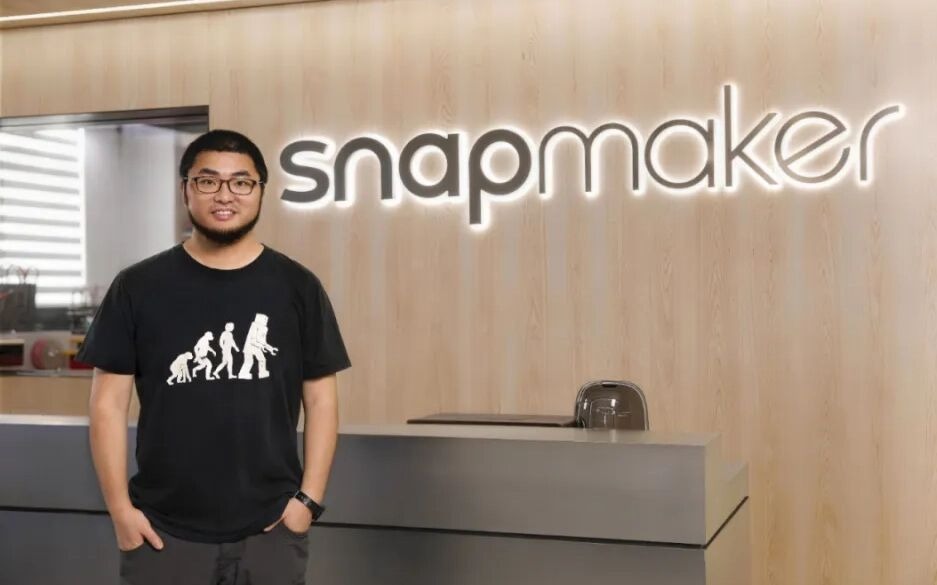
Daniel Chen’s view on industry competition perfectly mirrors the path Snapmaker has carved out over the years. He once noted that healthy, high-level competition is excellent for the industry as a whole—much like the NBA or the UEFA Champions League. High-level match-ups attract massive attention, and exciting games pull in more resources, which in turn breeds more elite players, creating a positive, self-sustaining loop.
Snapmaker stepping back into the spotlight with the U1 is a direct reflection of this elite-level competition taking place.
03. Moving From Hardware Sales to a New Consumer Gateway
Snapmaker’s massive funding isn’t an isolated event. It takes place against a broader backdrop: consumer 3D printing is entering an entirely new stage. Where it was once viewed purely as a hardware business, venture capital now sees a track capable of birthing a brand new consumer gateway.
According to data from China Insights Consultancy (CIC), from 2020 to 2024, the global consumer 3D printing market size grew from $1.5 billion to $4.1 billion, representing a compound annual growth rate (CAGR) of about 28%. It is projected that from 2025 to 2029, the market will balloon from $4.9 billion to $16.9 billion, climbing at an accelerated CAGR of roughly 33%.
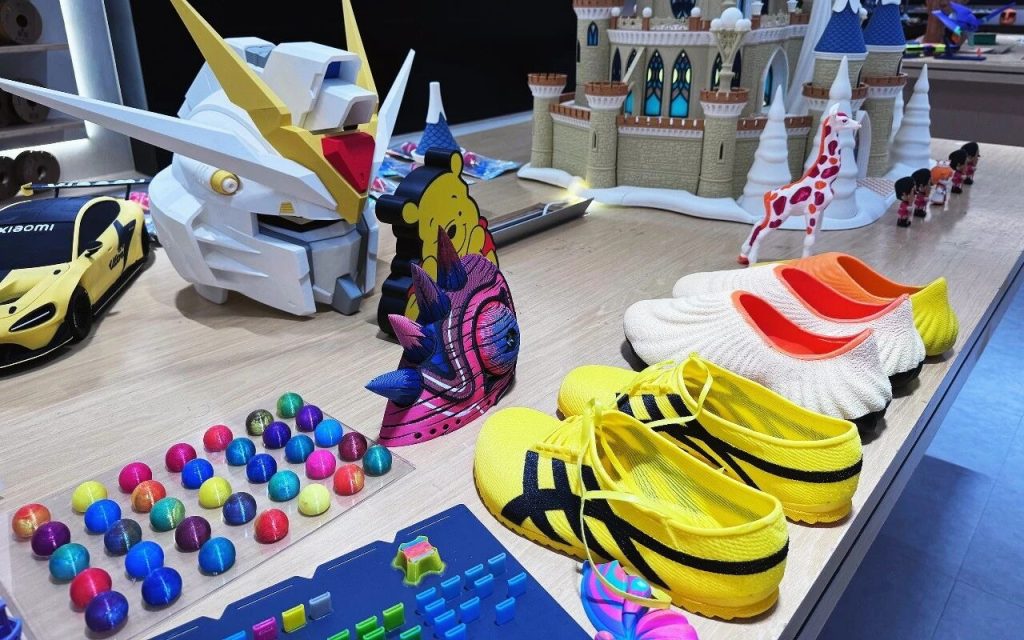
Behind this multi-billion dollar market is a shift akin to moving “from black-and-white to color.”
In the past, regular users needed to understand modeling, slicing, and machine tuning to get into 3D printing. Today, machines are cheaper, faster, and more stable; models are abundant, software is more intuitive, and AI is dramatically lowering the creative barrier. Consumer 3D printing is looking more and more like consumer electronics rather than traditional industrial tools.
The user base is widening, too. It’s no longer confined to engineers, geeks, and makers; it’s moving into households, education, designer toys, anime figures, IP merchandise, and content creator studios. Simultaneously, the rise of brick-and-mortar 3D printing hubs gives everyday people more opportunities to see, experience, and buy into the technology.
Thus, this massive financing round is a victory lap not just for Snapmaker, but for the upward trajectory of the entire industry.
▍Final Thoughts
Snapmaker didn’t catch the eye of top-tier capital by pitching hollow concepts. It did so because the U1 tackled the core pain points of sluggish multi-color and multi-material workflows head-on. If the ultimate goal of the industry is to put a 3D printer in every household, the architectural innovation Snapmaker brought via the U1 certainly brings us a step closer to that reality.
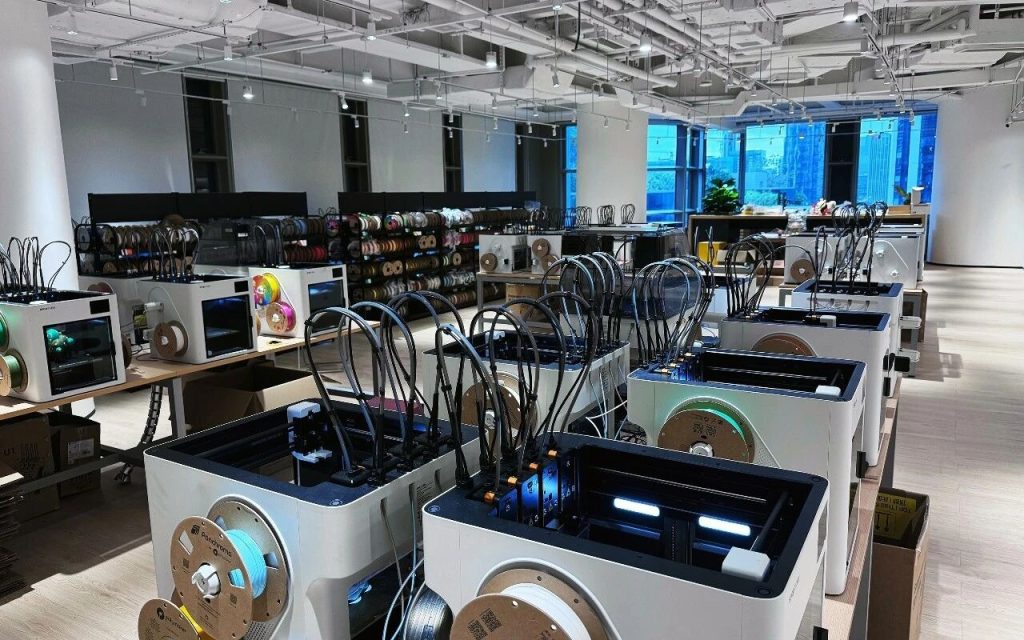
The endgame of consumer 3D printing isn’t just about selling hardware. Hardware is the entry point, filaments drive recurring purchases, software dictates the user experience, model content secures loyalty, and AI acts as the lever to lower the creative barrier.
The battle for the next-generation consumer 3D printing ecosystem has officially begun. And this time, Snapmaker has arrived with a significantly larger war chest.