
 By 3dzyk
 Printing metal at home may finally become reality.
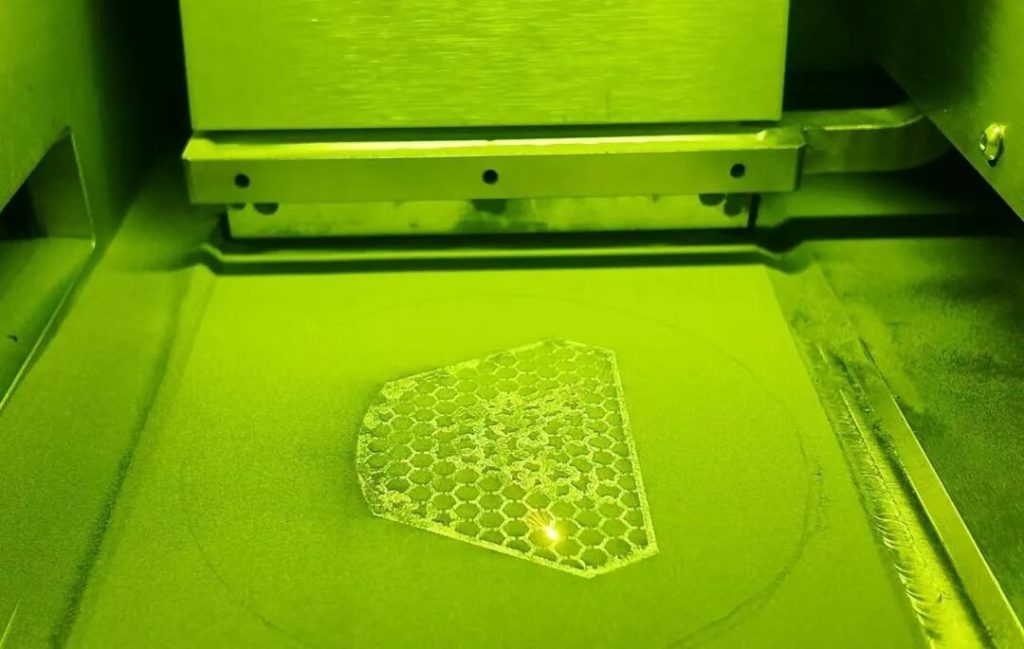
In the past, metal 3D printing was far removed from ordinary people.
It usually appeared in factories, laboratories, and high-end manufacturing facilities. The equipment was expensive, complicated to operate, and physically large. For school innovation projects, individual makers, or people who wanted to create personalized metal items, metal 3D printing remained something that could be admired from afar but was difficult to access.
Now, that barrier is being lowered.
According to 3Dzyk, Jiangsu Chromium Platinum Digital Technology Co., Ltd. (hereinafter referred to as “Chromium Platinum“) recently announced that its DP-C1 consumer-grade AI metal 3D printer will soon make its global debut and will be exhibited at the 2026 Global Consumer Electronics Expo at Shenzhen Convention & Exhibition Center (Futian) from June 24–26, Booth 9A798.

In our view, the appearance of the Chromium Platinum DP-C1 represents an attempt to transform SLM metal 3D printing from an industrial machine into a product closer to the consumer market. Through a compact machine design, AI modeling, one-click generation and printing, the idea of “printing metal at home” is, for the first time, no longer so far-fetched.
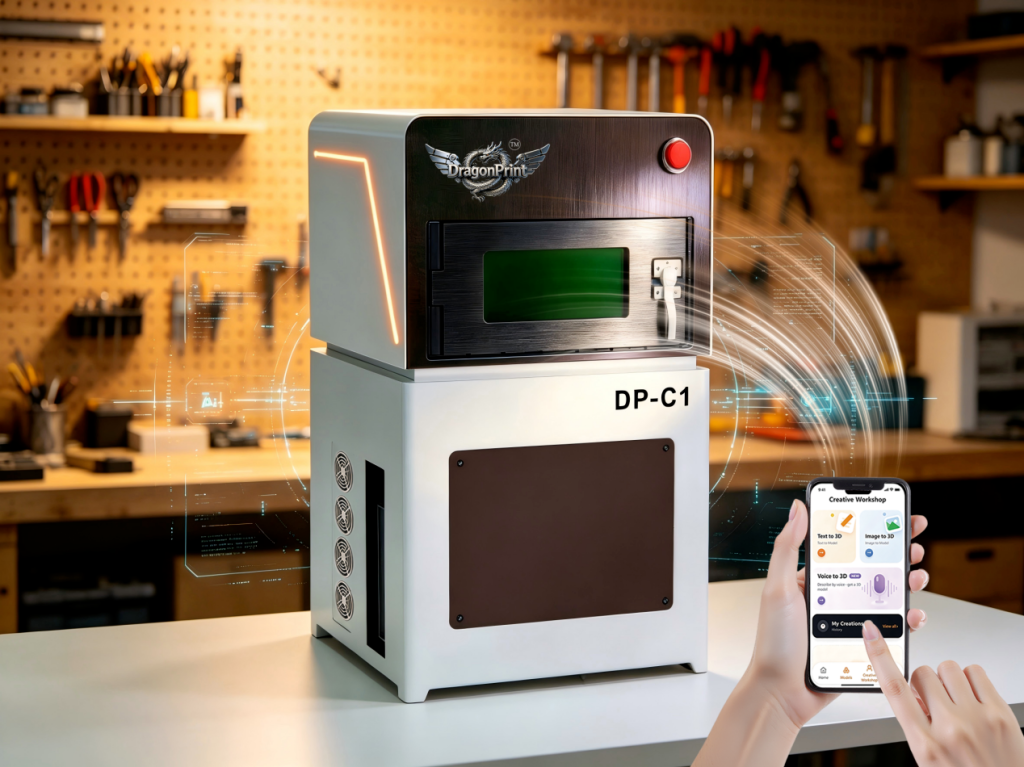
If the path of “AI + consumer-grade + metal 3D printing” can prove successful, it may eventually complement desktop CNC machines and engraving machines, together opening new scenarios for personal manufacturing and small-batch metal processing.
Chromium Platinum DP-C1 Did Not Appear Out of Thin Air
In fact, the DP-C1 is not a completely new story suddenly introduced by Chromium Platinum.
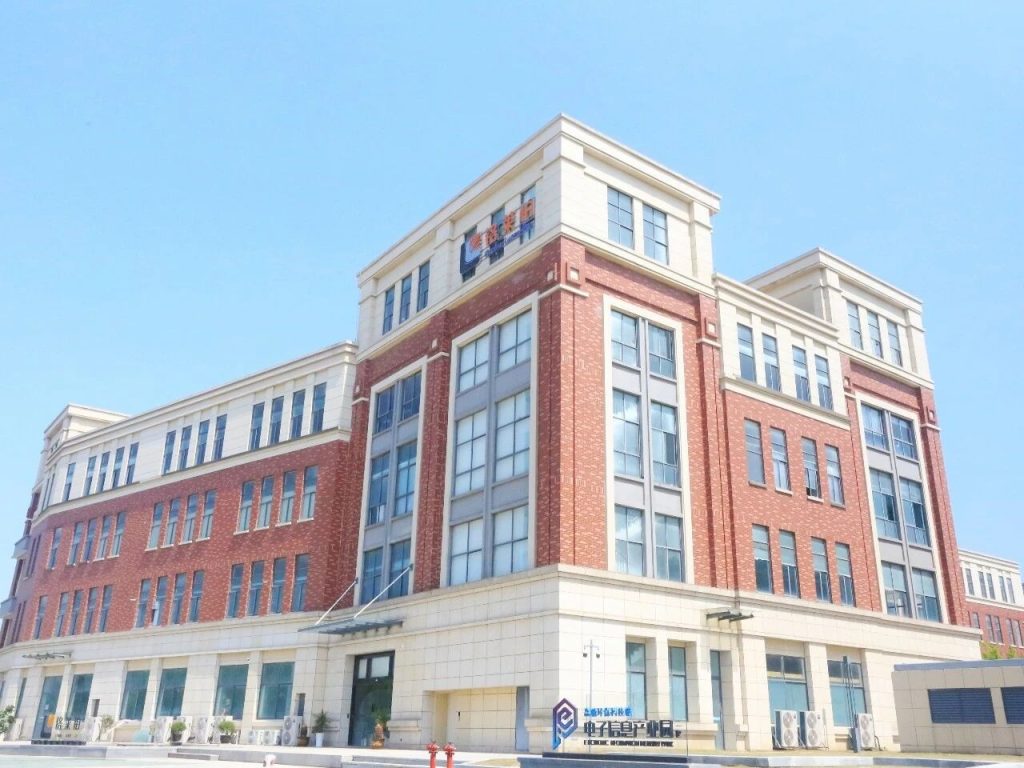
Chromium Platinum was established in 2023, with its headquarters in Yancheng, Jiangsu Province. Previously, the company mainly focused on the research, development, and production of industrial-grade SLM metal 3D printing equipment, with product models ranging from desktop-level systems to large-scale industrial machines.
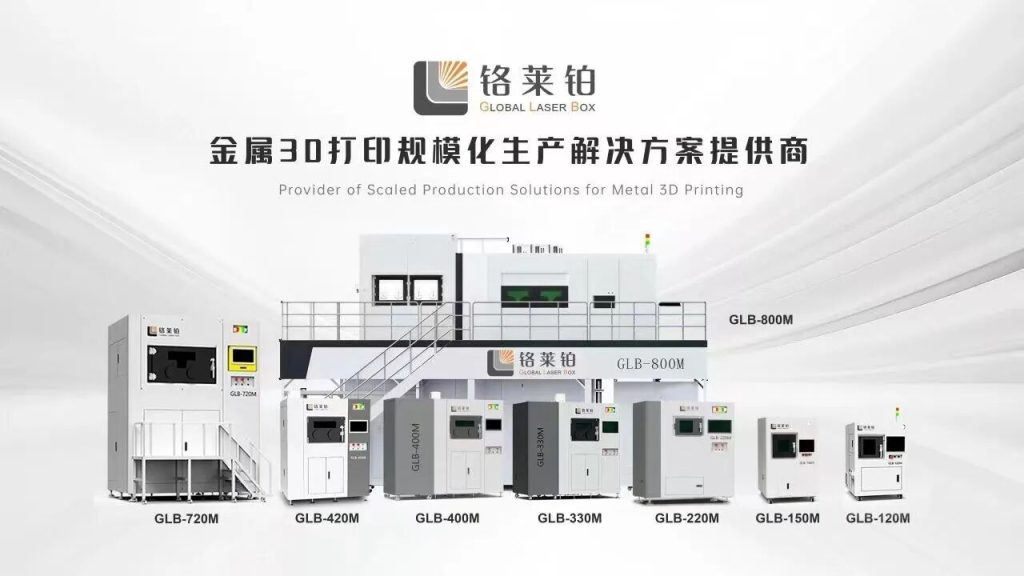
According to available information, its equipment has already been sold to more than 60 countries and regions worldwide, with cumulative sales exceeding 1,000 units. The company has also established four industrial bases and two R&D centers within China.
More importantly, Chromium Platinum has already laid groundwork in the miniaturization and desktopization of metal 3D printing.
For example, it launched the GLB-120M desktop metal 3D printer for the dental industry. Occupying only 0.39 square meters of floor space, it can be directly integrated into clinics, dental laboratories, and similar environments.
Therefore, the arrival of the DP-C1 is not unexpected.
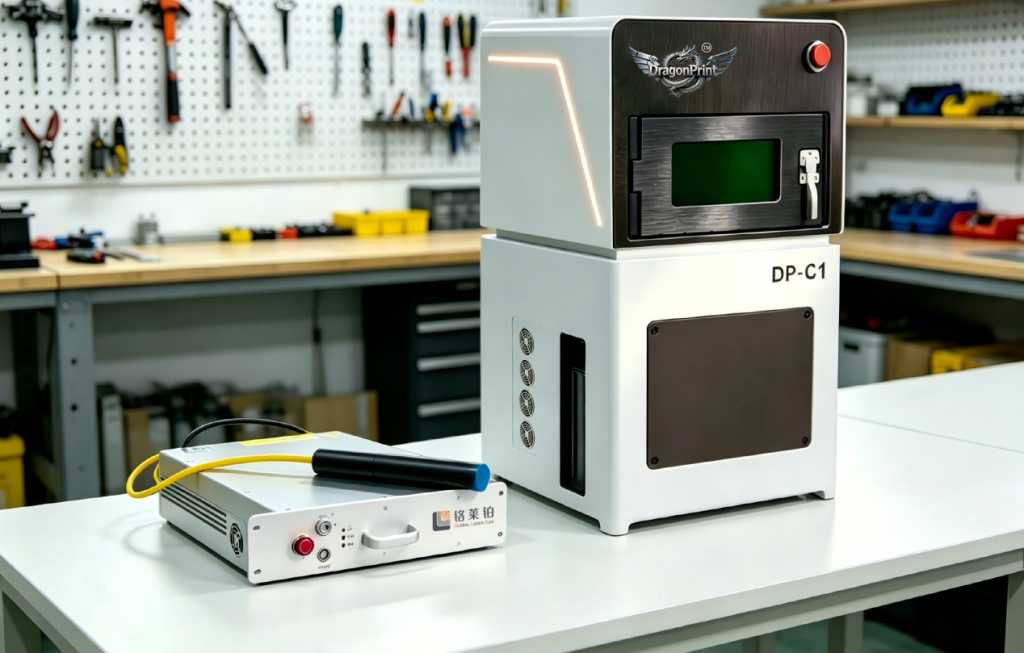
The DP-C1 measures 500 mm × 515 mm × 830 mm, making it very close to a desktop-class machine. It is only slightly taller than FDM 3D printers such as the Bambu Lab H2D and Creality K2 Plus.
In other words, it not only continues Chromium Platinum’s experience in miniaturizing SLM metal 3D printing equipment, but also further introduces AI modeling, lightweight hardware, and a model ecosystem into consumer-level applications.
Self-Developed Laser Technology Is Chromium Platinum’s Confidence
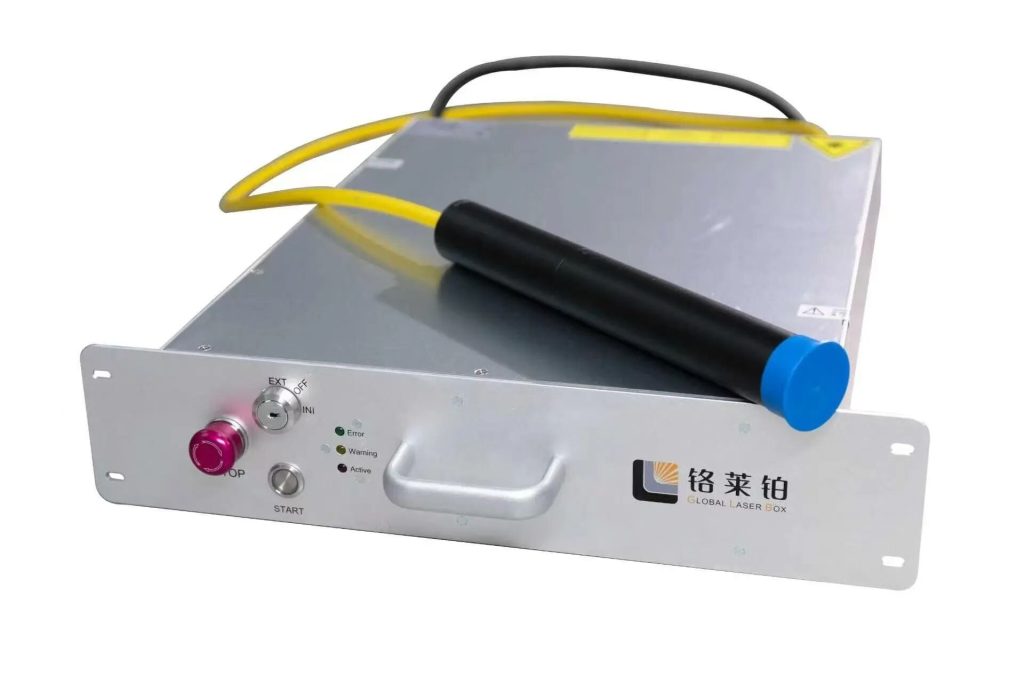
The key to making the DP-C1 a consumer-oriented product is not merely reducing the machine’s physical dimensions. Its core components also needed to be redesigned and adapted.
Among these, the most critical component is Chromium Platinum’s self-developed 300W air-cooled fiber laser.
Compared with traditional water-cooled systems, this laser adopts an integrated air-cooling design, resulting in a more compact structure, higher heat dissipation efficiency, and greater suitability for desktop and home-use equipment.
Printing Solutions and AI Optimization
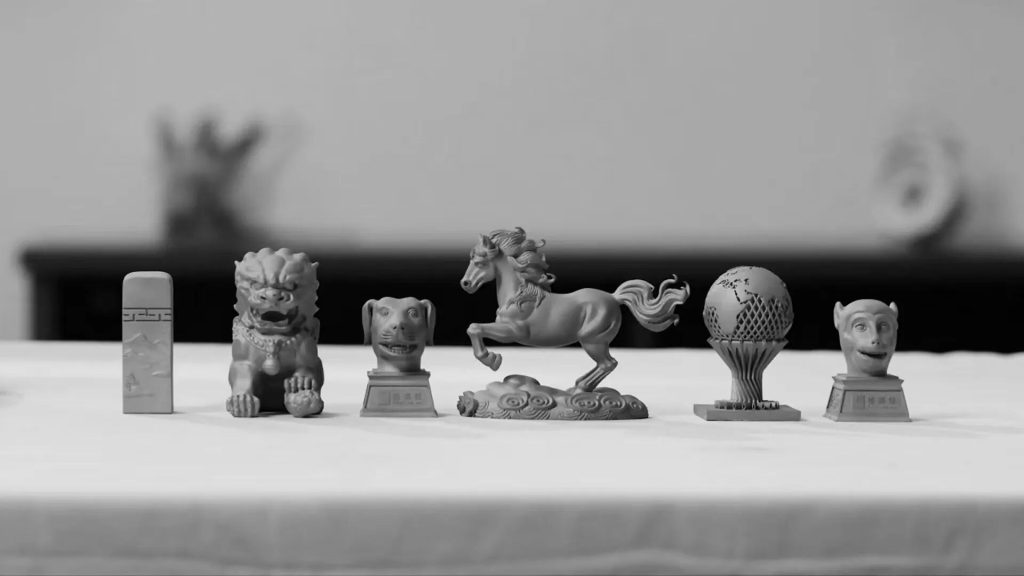
For its printing solution, the DP-C1 uses stainless steel printing, making it suitable for applications such as:
- Personalized jewelry
- Cultural and creative ornaments
- Small precision components
- Educational and scientific research projects
At the same time, the machine incorporates AI dynamic path optimization and error-correction algorithms, enabling it to automatically adjust printing trajectories and compensate for model deviations, thereby improving printing stability and consistency.
In other words, the DP-C1 is not simply a smaller version of industrial equipment. From the laser source and material solution to path-planning algorithms, the entire system has been redesigned to suit the size, power-consumption, and reliability requirements of consumer-grade metal 3D printing.
Even Without Modeling Skills, You Can Try Printing Metal
In the past, performing metal printing required users to first learn 3D modeling, slicing software, and a considerable number of process parameters.
For ordinary makers, students, or home users, this step alone often kept them from getting started.
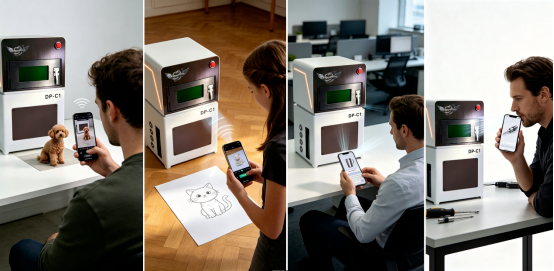
Chromium Platinum has developed an AI modeling system for the DP-C1, attempting to simplify the process into:
Provide input → Generate model → Slice → Print
Users can generate models by:
- Taking photos
- Uploading 2D images
- Entering text descriptions
- Giving voice instructions
The system can generate corresponding 3D models based on these inputs.
For example:
- Take a photo of a physical object, and the system can recognize it and generate a 3D model.
- Upload a logo, hand-drawn sketch, or flat graphic, and it can be converted into a three-dimensional metal part.
- Input text or symbols, and the system can generate nameplates, commemorative ornaments, or identification components.
- If users do not wish to type, they can simply use voice commands to describe what they want to create.
Simply put, the DP-C1 attempts to hand over tasks that previously required professional software and modeling expertise to AI.
As a result, metal 3D printing changes from something only people with modeling skills can enjoy to something anyone with an idea can try.
Building a Model Community and Opening the “AI Democratization Era” of Metal Creation
Chromium Platinum has also created an integrated hardware-and-software ecosystem.
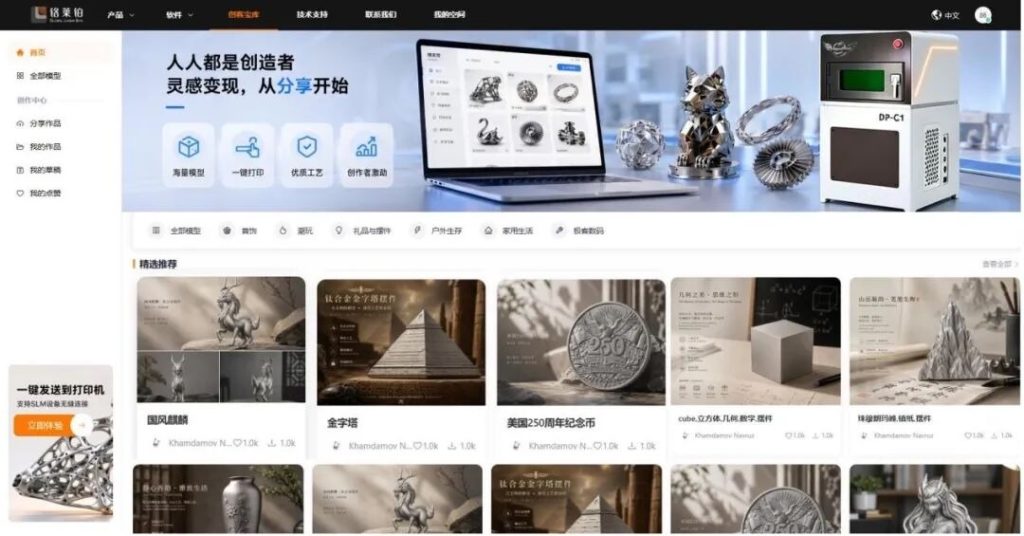
The company has launched IronNova — a global maker community and Creative Workshop — an open-source model library. Together they provide more than 10,000 metal model files free of charge, creating a closed-loop ecosystem consisting of: AI-powered equipment + open-source resources + maker community interaction. This further lowers the barriers to creation and reduces user costs.
Personalized Metal Creations for Everyday Interests
Leveraging the machine’s capabilities and the large ecosystem of design resources, users can independently create:
- Motorcycle modification parts
- Off-road vehicle accessories
- RV modification components
- Outdoor camping equipment
- Interior decoration ornaments
- Custom fishing accessories
- Various other personalized metal products
These creations allow users to add unique and personal touches to their hobbies, homes, lifestyles, and modification projects.
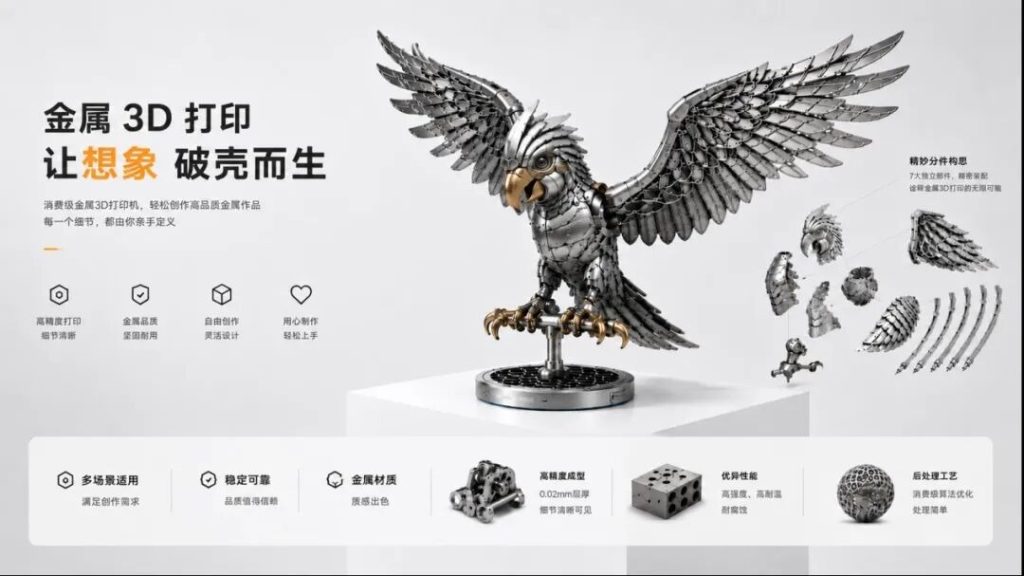
A New Era for Consumer Metal 3D Printing
The global debut of the DP-C1 fills what Chromium Platinum describes as a gap in the global additive manufacturing industry within the consumer segment.
Metal 3D printing is officially moving beyond the era of high professional barriers and entering a new age of AI-enabled creation for everyone.
From an industry perspective, the product promotes the transition of metal additive manufacturing technology from a tool primarily serving high-end industrial demand to one that supports widespread creative applications.
Potential benefits include:
- Upgrading innovation and STEM education
- Supporting the development of personalized customization industries
- Promoting maker culture among the general public
Looking Ahead
As consumer-grade AI metal 3D printing becomes more widespread, it may give rise to entirely new market segments, including:
- Personalized metal cultural and creative products
- Lightweight vehicle modification components
- School innovation and training programs
- Educational maker projects
These emerging applications could become one of the key drivers of the next wave of growth in the global 3D printing industry.
 li, chen