
 By li, chen
 In high-value manufacturing sectors—such as large aircraft final assembly, nuclear reactor component docking, and deep-sea equipment integration—measurement technology is undergoing a paradigm shift from “offline inspection” to “in-line process control.” In 2026, British startup K3 Metrology has emerged at the forefront with its core technological platform, METRALIS™. Concurrently, Chinese forces, represented by Tianjin University and Shining 3D, are making the leap from “followers” to “peers” along this track via differentiated pathways.
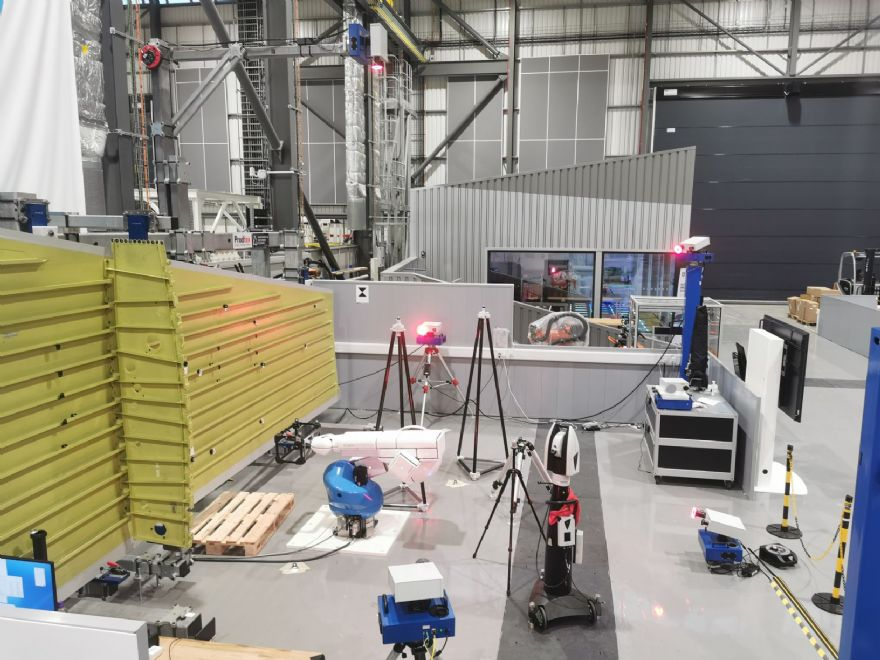
A Technological Leap: From “Single-Point Sampling” to “Full-Field Real-Time Tracking”
For a long time, Large Volume Metrology (LVM) has been dominated by laser trackers. Although highly accurate, these devices are inherently limited to “serial sampling”: an operator must hold a reflective target sphere and capture points one by one along a predetermined path. For tasks like aircraft wing assembly, this point-to-point sampling is not only inefficient but also requires the production process to pause to accommodate the metrology “sampling window.”
The emergence of the METRALIS™ platform marks the maturation of a parallel measurement architecture. No longer reliant on tracking a single laser source, it utilizes a distributed network of laser sensors to achieve synchronous, continuous tracking of multiple targets within a space. This dimensional upgrade from “points” to a “field” empowers the system to capture dynamic displacements. When structural components weighing several tons undergo minute shifts during the docking process, the system outputs coordinate changes as real-time streaming data, serving as the underlying nervous system for closed-loop manufacturing.
“Downclosing” Laboratory DNA: K3 Metrology’s Technological Moat
K3 Metrology’s core competitiveness originates from the UK’s National Physical Laboratory (NPL). Achieving sub-micron precision in controlled laboratory environments is not uncommon, but bringing it onto an industrial shop floor rife with vibration, temperature fluctuations, and dust interference is an entirely different challenge. The moat guarding METRALIS lies in its self-calibration algorithms and environmental compensation mechanisms, which correct errors caused by physical variables such as air refractive index and thermal drift in real time. Bringing this “traceability” on-site means manufacturing enterprises no longer need to transfer workpieces into climate-controlled rooms. Instead, they can complete “admission-to-production” workflows directly on the assembly line, drastically compressing cycle times.
The “Twin-Engine Drive” of Chinese Precision Measurement: Academic Accumulation and Industrial Breakthroughs
In this global competitive landscape, China is not only the largest market but also a hotbed for technological innovation. Academic institutions, epitomized by Tianjin University, and leading enterprises, represented by TenYoun 3D, are constructing a “large-volume metrology ecosystem” unique to China.
Academic System Integration: Tianjin University’s wMPS Technology
Tianjin University possesses deep expertise in the field of precision testing. Its self-developed Workspace Measurement Positioning System (wMPS) shares a logical synergy with K3’s METRALIS. Similarly utilizing a distributed transmitter base station architecture, wMPS achieves high-precision positioning across large-scale spaces through the spatial intersection of multiple light beams. This technology has already been field-tested and verified on China’s aviation final assembly lines and satellite assembly setups. Tianjin University’s breakthrough lies in solving the massive data processing challenges associated with multi-station collaboration, enabling high-frequency coordinate acquisition akin to an “indoor GPS” within large-volume spaces, and providing an autonomous, controllable foundational framework for domestic high-end manufacturing.
Efficiency Transformation on the Industrial Side: TenYoun 3D and Chinaso Metrology
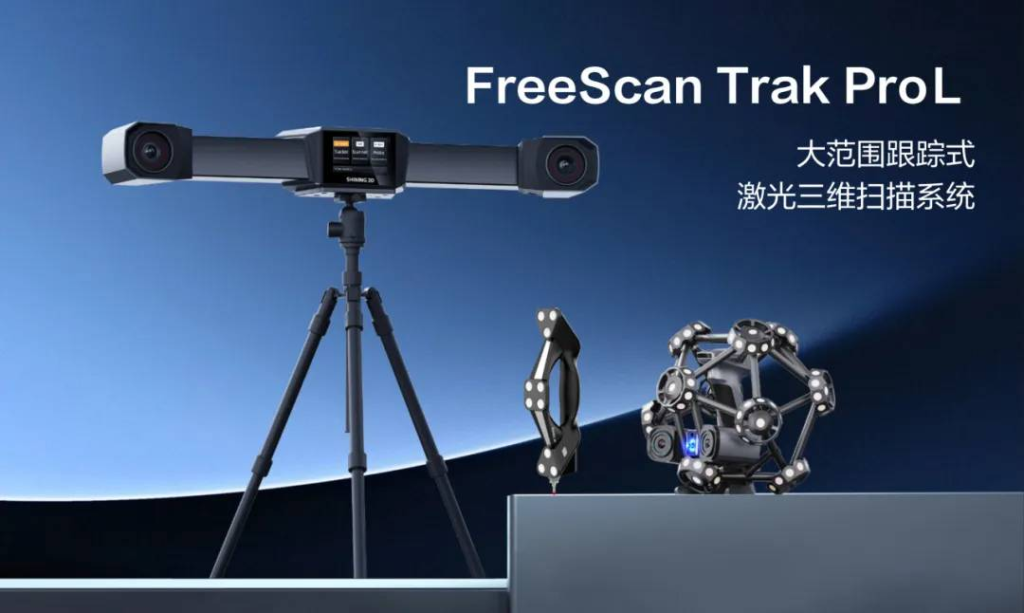
On the commercialization front, Shining 3D (the parent company of TenYoun 3D) has integrated photogrammetry with laser scanning technology to solve the problem of rapidly capturing the complete surface morphology of large workpieces. Its large-scale scanning solutions are no longer restricted to “coordinate points”; instead, they can rapidly generate 3D digital models for real-time comparison against original CAD designs.
Meanwhile, manufacturers such as Chinaso Metrology have broken foreign monopolies on standalone precision hardware through breakthroughs in the localization of laser trackers. In 2026 industrial applications, these domestic devices have begun integration into robotic workstations, achieving preliminary measurement-assisted assembly.
Outlook: The Convergence of Chinese Opportunities and Global Technology
The rise of K3 Metrology combined with the advancement of local Chinese forces reveals three core trends shaping the future of industrial metrology:
- Transition from “Equipment” to “Systems”: Future opportunities no longer lie in selling an exceptionally high-performing tracker, but in providing a dynamic coordinate reference framework integrated directly into the production line. If Chinese companies can deeply couple existing domestic hardware with distributed monitoring logic similar to K3’s—developing “Measurement-Assisted Assembly (MAA)” solutions tailored to local flexible production lines—they will achieve a qualitative leap.
- Independent Breakthroughs in Foundational Hardware: METRALIS’s reliance on high-frequency, single-frequency lasers and high-speed synchronous detectors highlights high-end metrology’s dependency on the foundational physics industry. Against the backdrop of domestic substitution, breaking through the performance bottlenecks of underlying physical sensors is an inevitable hurdle on China’s path to becoming a metrology powerhouse.
- Digital Twinning of Data Assets: Massive streams of real-time coordinates are used not only for position feedback but also represent the truest physical projections of a digital twin. The future battleground lies in leveraging AI algorithms to mine historical measurement data, predicting material fatigue and deformation trends before deviations even occur—thereby shifting the paradigm from “post-event measurement” to “pre-emptive prediction.”

Conclusion
K3 Metrology’s philosophy is to “bring laboratory precision to the shop floor,” whereas the advantage of Chinese forces lies in “integrating precision metrology into a massive industrial supply chain.” As the academic accumulation of wMPS merges with the rapid scanning technologies of the industrial sector, Chinese manufacturing is welcoming an efficiency revolution driven by “perceived precision.” When measurement ceases to be a burden on production and instead becomes the sensitive nervous system driving automation, China’s manufacturing transition from “big” to “strong” will have truly found its physical foundation.
 3dzyk
3dzyk
 tan, wenjie