
 By li, chen
 The explosive era of 3D-printed liquid cooling is arriving.
‘

In the past, we have repeatedly reported on the application of metal 3D printing in AI server liquid cooling, and have always paid attention to when this technology could truly move toward scaled production.
Now, mass production orders have truly arrived.
Recently, Tepuchuang Laser Technology (Wenzhou) Co., Ltd., located in Wenzhou, Zhejiang, took on an order for AI server liquid cooling heat dissipation workpieces, totaling 50,000 units with a value of 30 million yuan. The products are aimed at NVIDIA’s server liquid cooling supply chain.
More notably, this batch of products has already entered the actual production and delivery stage.
01
15 machines running at full capacity, orders booked through the end of the year
It is understood that the Tepuchuang Wenzhou factory currently has 15 metal 3D printing systems in production, arranged across 3 production lines, with a monthly output of approximately 1,000 units.
The first batch of 3D-printed liquid cooling manifolds was delivered in August this year. The company has also purchased an additional 5 metal 3D printing systems to further expand capacity.
Tepuchuang stated that orders are currently fully saturated, with production schedules booked through the end of 2026.
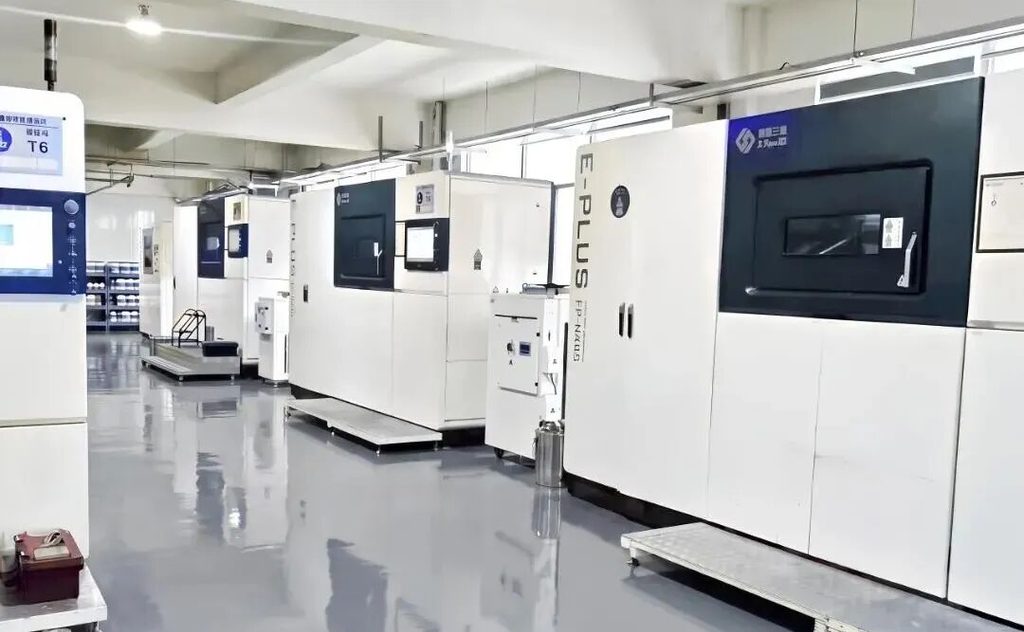
According to Resource Library, Tepuchuang was founded in 2023 and mainly provides metal 3D printing solutions for the mold sector. In June this year, it established an advanced manufacturing center in Wenzhou, and by the end of July, it had secured its first orders from Foxconn and other core supply chain manufacturers—NVIDIA’s tier-one suppliers.
From setting up the factory to taking on orders and achieving delivery, Tepuchuang took just a few short months.
For the entire 3D printing industry, at least based on currently public information, this order fired the first shot in the scaled mass production of metal 3D-printed liquid cooling components.
02
Why does liquid cooling need 3D printing?
As AI server power consumption continues to rise, liquid cooling is becoming an important heat dissipation method for high-density computing equipment.
And the advantages of metal 3D printing are precisely reflected in the manufacturing of complex liquid cooling structures.
Traditional CNC machining, brazing, and other processes have certain limitations when manufacturing complex internal flow channels and thin-walled sealed structures.
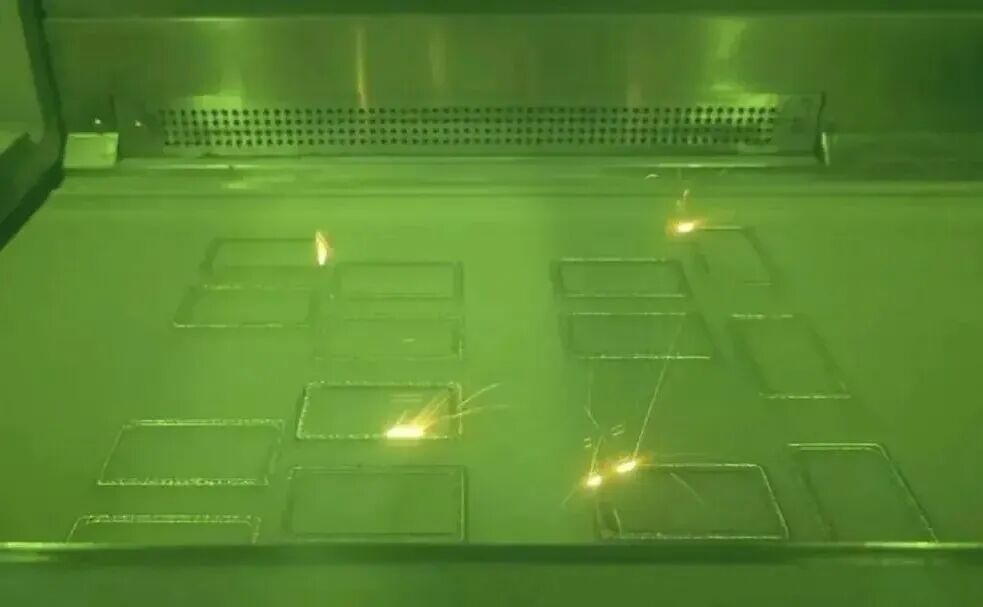
In comparison, metal 3D printing can directly manufacture complex internal flow channels, achieving integrated forming and reducing welding and assembly, thereby lowering potential leakage risks while providing greater design freedom for optimizing heat dissipation structures.
Of course, to truly achieve mass production, simply being able to print is far from enough. Tepuchuang this time used self-developed metal powder materials and collaborated with domestic metal 3D printing equipment company E-Plus 3D on equipment customization and process coordination.
According to the company, its technical advantages are mainly reflected in material independence, integrated forming, and consistency control in batch production, with product quality ensured through post-processing and airtightness testing.
This also shows that for liquid cooling 3D printing to move toward scale, it is no longer simply a competition of printing equipment, but a comprehensive competition of materials, equipment, processes, and quality control.
03
3D-printed liquid cooling has finally taken an important step
As AI computing demand continues to grow, liquid cooling is becoming a rapidly expanding market. Data shows that China’s liquid cooling data center market reached 15.98 billion yuan in 2025 and is expected to grow to 47.04 billion yuan by 2028.
Facing such a market worth tens of billions of yuan, metal 3D printing is also beginning to welcome real mass production opportunities.
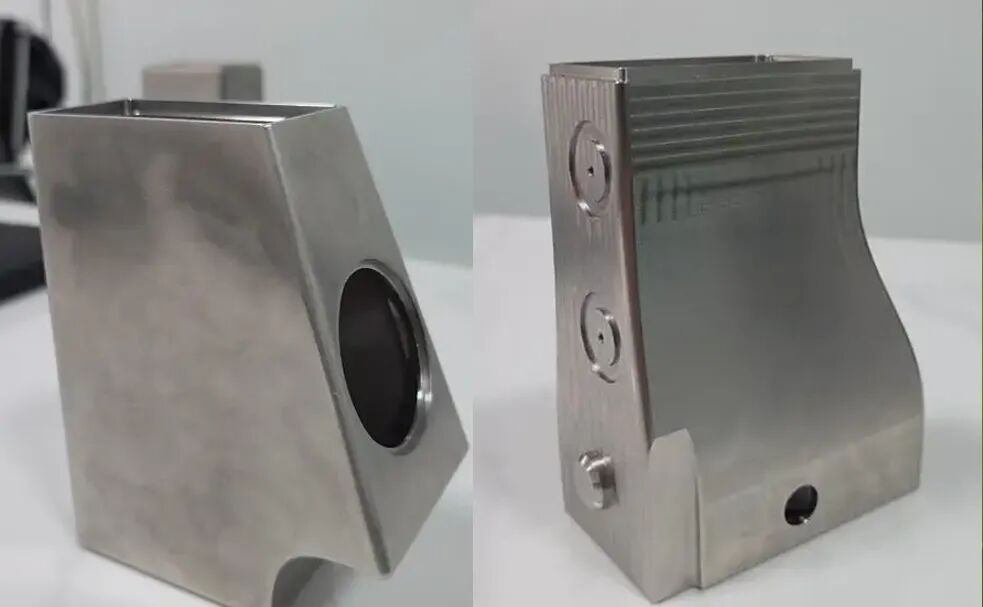
Moreover, this order comes from NVIDIA’s server liquid cooling supply chain. As the global leader in AI computing, its supply chain beginning to adopt 3D printing technology undoubtedly sets a good precedent for the industry.
A 50,000-unit order, a 30 million yuan contract, and production lines already in operation all send a positive signal: metal 3D printing is gaining real commercial demand in the high-end computing heat dissipation sector.
Of course, this is only the beginning.
As AI computing demand continues to grow, we have reason to expect more mass production orders for metal 3D printing in the liquid cooling sector.
Who will be next? Let’s wait and see.
 3dzyk
3dzyk